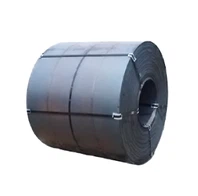
As a reliable supplier of A387GR11CL2 parts, I've witnessed firsthand the intricate dance between machining allowance and the final quality of these crucial components. A387GR11CL2, a chromium-molybdenum alloy steel plate used mainly in pressure vessels for elevated-temperature service, demands precision at every stage of production. The machining allowance, the extra material left on a part during the initial manufacturing process for subsequent machining operations, plays a pivotal role in determining the part's final quality.
Understanding Machining Allowance
Machining allowance is not a one - size - fits - all concept. It varies depending on multiple factors such as the manufacturing method, the complexity of the part's shape, and the required surface finish. For A387GR11CL2 parts, which are often used in high - stress applications, the right machining allowance is crucial.
When we start with a raw A387GR11CL2 billet or plate, the initial material has some inherent irregularities. These can be in the form of surface roughness, dimensional inaccuracies due to the casting or forging process, and internal stresses. The machining allowance provides the buffer needed to remove these imperfections.
Positive Effects of Appropriate Machining Allowance
Dimensional Accuracy
One of the most significant benefits of an appropriate machining allowance is achieving high - precision dimensional accuracy. In pressure vessel applications, even the slightest deviation from the specified dimensions can lead to catastrophic failures. A sufficient machining allowance allows the machinist to remove any excess material and bring the part to the exact size and shape required by the design.
For example, in the production of flanges made from A387GR11CL2, an accurate diameter and thickness are essential for proper sealing and connection. With an appropriate machining allowance, we can use turning, milling, or grinding operations to precisely control these dimensions. This ensures that the flange will fit perfectly with other components in the pressure vessel system, reducing the risk of leaks and improving overall safety.
Surface Finish
The surface finish of A387GR11CL2 parts is also greatly influenced by the machining allowance. A smooth surface finish is crucial in pressure vessel applications as it reduces the likelihood of corrosion initiation and improves the fatigue resistance of the part.
When there is enough machining allowance, we can use fine - finishing operations such as polishing or honing. These operations remove the rough surface layer left by the previous manufacturing processes, leaving behind a smooth and uniform surface. A smooth surface also improves the flow of fluids inside the pressure vessel, reducing turbulence and potential damage to the part over time.
Stress Relief
During the manufacturing process of A387GR11CL2 parts, internal stresses are generated. These stresses can cause the part to warp or crack over time, especially when subjected to high temperatures and pressures in service. An appropriate machining allowance allows for stress - relieving operations.
By removing a controlled amount of material, we can release some of the internal stresses. For instance, in a thick - walled A387GR11CL2 pressure vessel shell, a series of machining passes can be used to gradually reduce the wall thickness while relieving the internal stresses. This results in a more stable and reliable part that is less likely to fail under service conditions.
Negative Effects of Inadequate or Excessive Machining Allowance
Inadequate Machining Allowance
If the machining allowance is too small, it becomes difficult to remove all the surface imperfections and achieve the required dimensional accuracy. The part may end up with rough surfaces, dimensional deviations, and high levels of internal stresses.
In some cases, if there is not enough material to remove the surface defects, these defects can act as stress concentrators. This significantly reduces the fatigue life of the part and increases the risk of failure, especially in cyclic loading applications. For example, in a heat exchanger tube made from A387GR11CL2, inadequate machining allowance can lead to uneven wall thickness and rough inner surfaces, which can cause premature corrosion and blockages.
Excessive Machining Allowance
On the other hand, an excessive machining allowance also has its drawbacks. First, it increases the machining time and cost. More material needs to be removed, which requires more machining passes and longer machine - running times. This not only increases the production cost but also reduces the overall productivity.
Moreover, excessive machining can introduce new internal stresses into the part. As the cutting forces are applied over a larger volume of material, the part may experience deformation and stress concentration. This can lead to a decrease in the part's mechanical properties and overall quality.
Comparison with Other Pressure Vessel Materials
When comparing A387GR11CL2 with other pressure vessel materials like P335GH, P295GH, and SA516GR70, the machining allowance requirements may vary.
P335GH is a European standard pressure vessel steel with different chemical composition and mechanical properties compared to A387GR11CL2. It may require a different machining allowance due to its specific casting and forging characteristics. For example, P335GH may have a different rate of heat transfer during machining, which can affect the amount of material that needs to be removed to achieve the desired surface finish and dimensional accuracy.
P295GH, another European standard steel, is often used in lower - temperature pressure vessel applications. Its lower strength and different microstructure may result in different machining behaviors. The machining allowance for P295GH parts may be adjusted based on the fact that it is less likely to have high - internal stresses compared to A387GR11CL2, which is designed for elevated - temperature service.
SA516GR70, a common pressure vessel steel in the American market, has its own unique properties. It is a carbon steel, and its machining allowance requirements may differ from those of A387GR11CL2 due to differences in hardness, ductility, and corrosion resistance. Understanding these differences is crucial for suppliers to ensure the optimal quality of parts made from different materials.
Conclusion
In conclusion, the machining allowance has a profound effect on the final quality of A387GR11CL2 parts. An appropriate machining allowance is essential for achieving dimensional accuracy, good surface finish, and stress relief. Inadequate or excessive machining allowance can lead to a range of problems, from reduced fatigue life to increased production costs.


As a supplier of A387GR11CL2 parts, we are committed to optimizing the machining allowance for each part to ensure the highest quality. We work closely with our customers to understand their specific requirements and use advanced machining techniques to produce parts that meet or exceed industry standards.
If you are in the market for high - quality A387GR11CL2 parts or have any questions about machining allowance and its impact on part quality, we encourage you to contact us for a procurement discussion. Our team of experts is ready to provide you with the best solutions for your pressure vessel needs.
References
- ASME Boiler and Pressure Vessel Code, Section VIII, Division 1.
- ASTM A387/A387M - 20 Standard Specification for Pressure Vessel Plates, Alloy Steel, Chromium - Molybdenum.
- Metal Machining Handbook, Industrial Press Inc.