

Wear Plate
Your Professional Wear Plate Supplier
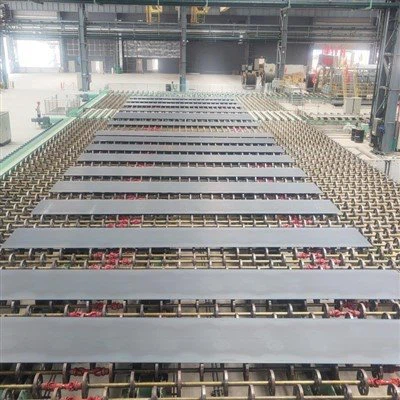
The factory covers an area of 202000 square meters.The company has established Chenggang Wuyang and other major steel mills and traders across the country.The main products include medium and heavy steel plates,hot rolled coils, cold rolled pickled plates ,profiles building materials,etc.,with annual sales of more than 300 thousand tons.In addition to serving many domestic end-users and large and medium-sized projects,the products are exported to Europe,South America and Southeast Asia.
Why Choose Us
Rich experience
Wuhan institute has been deeply engaged in the calcium silicate board / fiber cement board industry for more than 40 years, so far, it has cooperated with many large group companies such as shera, saint-gobain, ask, conch cement, etc., and has cooperated in more than 200 production lines in the world.
Professional team
We 400 employees, including 16 professor-level senior engineers, 70 senior engineers, 90 engineers with medium-grade professional title or above, and 310 technical staff with other majors.
One-stop Solution
Make meticulous production arrangements according to the order schedule; rapid production capacity, one-stop service at home.
Quality customer service
Our dedicated team is always ready to answer your questions, provide you with detailed information about our products and guide you in your choice. We understand that every customer is unique.
-
![NM550]()
NM550
NM550 is a high-strength wear-resistant steel plate that offers exceptional resistance to abrasionAdd to Inquiry -
![NM360 Abrasion Resistant Plate]()
NM360 Abrasion Resistant Plate
NM360 Abrasion Resistant Plate is a high-strength steel plate known for its hardness of 360 HBWAdd to Inquiry -
![NM500 Wear Steel Plate]()
NM500 Wear Steel Plate
NM500 Wear Steel Plate is a high-strength, wear-resistant steel plate known for its excellentAdd to Inquiry -
![NM360 Abrasion Resistant Plate]()
NM360 Abrasion Resistant Plate
NM360 Abrasion Resistant Plate is a plate which is high in carbon and alloyed with a range ofAdd to Inquiry -
![NM400 Abrasion Plate]()
NM400 Abrasion Plate
NM400 Abrasion Plate is a high-strength, wear-resistant steel plate with a hardness of 400 HBWAdd to Inquiry -
![NM500 Wear Steel Plate]()
NM500 Wear Steel Plate
NM500 Wear Steel Plate is a high-strength, wear-resistant steel plate known for its excellentAdd to Inquiry -
![NM600 Abrasion Steel Plate]()
NM600 Abrasion Steel Plate
NM600 is a highly durable and wear-resistant steel plate known for its exceptional strength andAdd to Inquiry


Advantages of Wear Plate
Abrasion Resistance
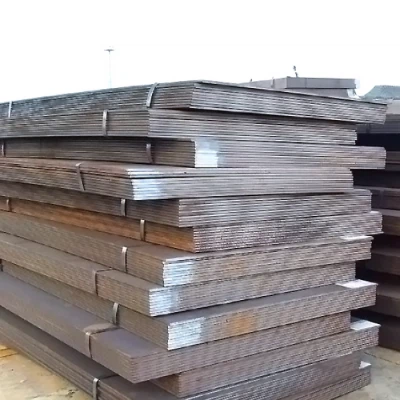
One of the primary advantages of wear resistant steel plates is their abrasion resistance. This quality is a result of the alloy composition of the steel and the heat treatment process that the steel undergoes.
Impact Resistance
Another advantage of wear resistant steel plate is their impact resistance. This quality allows the steel to absorb energy from impact rather than being damaged by it. This makes wear resistant plates ideal for applications with a risk of impact or collision.
Corrosion Resistance
Wear resistant steel plate also has corrosion resistance due to the addition of chromium to their alloy composition. This element forms a thin layer of chromium oxide on the surface of the steel, which acts as a barrier against corrosion.
Temperature Resistance
Wear resistant plates can also withstand high temperatures due to their high carbon content. This makes them ideal for applications with a risk of exposure to high temperatures, such as in foundries or furnaces.
Low Maintenance
Wear resistant steel plates require little maintenance, as they are not susceptible to rust or corrosion. This makes them ideal for use in applications where there is no easy access to maintenance or replacement.
Types of Wear Plate
Chrome Carbide Overlay Plate:
These plates are made by welding chromium carbide on a mild steel base. They offer excellent abrasion resistance and can withstand high levels of wear and tear. These plates are suitable for mining, construction, and power generation equipment applications.
Quenched and Tempered Steel Plate:
These plates are quenched and tempered to increase their hardness and strength. They offer excellent impact resistance and are used in applications where high wear and tear are expected.
High Manganese Steel Plate:
These plates are made from austenitic manganese steel and offer excellent abrasion resistance. They are used in underground and open-pit mining applications, cement plants, and crushing and screening equipment.
Hardox Plate:
This plate type is made from a special type of alloy steel known as Hardox. It offers excellent wear resistance and is used in dump trucks, excavators, and bulldozers.
What Kind Of Things Are Wear Plates Used For?
In manufacturing, especially in any production line where material that finds itself in bulk handling is used, wear plates are fitted to conveyors, feeders and transfer chutes used in the movements.

Mining and Quarrying
In mining, Wear plates protect equipment that experience abrasive wear due to rocks and minerals such as crushers, chutes, and hoppers.
Construction Equipment
Construction machines as bulldozers, excavators, and loaders include common wear plates at joints where dirt, sand, and gravel are met daily.
Agriculture
In fact in agriculture they defend apparatuses such as plows and tillers that operate in grime and stone.
Transportation of Abrasive Materials
In the industries of transporting items that cause abrasion such as coal, iron ore or grain, Wear Plates assist in minimizing the wear and tear on trucks, containers and ships with high transportation frequency.

Wear plates are available in two standard sizes, namely, Narrow and Regular. The plate and overlay lengths of both types of plates are 3.05m. The plate width of the narrow variant is 1.22m while its overlay width is 1.14m. The regular-sized wear plates come with a plate width of 1.52m and overlay width of 1.42m.
The thicknesses of wear plates depend on the type of overlay. Overlays are usually formed on stainless steel, 44W (300W) carbon steel, or 516 Grade 70 for pressure applications.
Wear plates are available across several thickness specifications. The Chrome overlay type comes in three types, namely, T138 with 9mm-18mm thickness range; T156 with 10mm-30mm thickness range; and T157 with 11mm-33mm thickness range. The Complex overlay T161 is specified with a thickness range from 10mm to 30mm while the Tungsten overlay T170 can be custom made.
How To Install And Replace Wear Plates
Safety First: Ensure the equipment is fully shut down and locked out to prevent accidental start-up. Wear appropriate protective gear, including safety glasses, gloves, and hard hats.
Tools & Materials: Gather all necessary tools (e.g., wrenches, sockets, hammers, and torque wrenches) and replacement wear plates, ensuring they match the specifications of the original parts.
Inspection: Before starting, inspect the area where the wear plates will be installed or replaced. Identify any damage to the surrounding structure or components that may affect the installation process.
Disconnect Connections: If the wear plates are connected to other components via bolts or fasteners, carefully loosen and remove them. Use the appropriate tools to avoid damaging threads or surfaces.
Gentle Removal: Gently pry or lift the worn plates out, taking care not to damage adjacent parts. In some cases, heating the plates with a torch may be necessary to loosen stubborn fittings.
Clean-up: Once removed, thoroughly clean the area where the new plates will be installed, removing any debris, rust, or residual material.
Positioning: Carefully align the new wear plates with the mounting surface, ensuring they fit snugly and are properly oriented.
Fastening: Secure the plates in place using the original bolts or fasteners, tightening them to the manufacturer's recommended torque specifications. Use a torque wrench to ensure accuracy and prevent over-tightening.
Verification: Once installed, visually inspect the wear plates to ensure they are securely fastened and properly aligned. Check for any gaps or misalignments that could compromise their effectiveness.
Documentation: Record the installation date, part numbers, and any notes about the process in the equipment's maintenance log.
Testing: If possible, perform a functional test of the equipment to ensure the new wear plates are functioning correctly and causing no issues.
Monitoring: Regularly inspect the wear plates for signs of wear or damage, and replace them promptly as needed to maintain optimal performance and extend equipment life.
FAQ
As one of the leading wear plate manufacturers and suppliers in China, we warmly welcome you to wholesale wear plate for sale here from our factory. All our products are with high quality and low price.
wear plate for grinding equipment, wear plate for recycling equipment, weldable wear plate