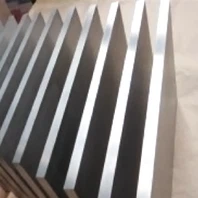
Hey there! As a supplier of 1045 steel plates, I often get asked about the best welding methods for this particular type of steel. So, I thought I'd put together this blog post to share some insights on what welding methods work well with 1045 steel plates.
First off, let's talk a bit about 1045 steel. It's a medium - carbon steel that contains about 0.45% carbon. This gives it a good balance of strength and toughness, making it suitable for a wide range of applications like machinery parts, shafts, and gears. However, the carbon content also means that it has some specific requirements when it comes to welding.
Shielded Metal Arc Welding (SMAW)
One of the most common welding methods for 1045 steel plates is Shielded Metal Arc Welding, also known as stick welding. It's a popular choice because it's relatively simple and can be used in various environments, including outdoors.

In SMAW, an electrode covered in flux is used. The flux creates a protective gas shield around the weld pool, preventing oxidation and contamination. For 1045 steel, electrodes like E7018 are often recommended. These electrodes provide good mechanical properties and are suitable for welding medium - carbon steels.
The advantage of SMAW is that it doesn't require complex equipment. You just need a welding machine, electrodes, and some basic safety gear. It's also great for welding thick 1045 steel plates. However, it does have some drawbacks. The welding speed is relatively slow, and the quality of the weld can be affected by the skill of the welder.
Gas Metal Arc Welding (GMAW)
Gas Metal Arc Welding, or MIG welding as it's commonly called, is another option for welding 1045 steel plates. In GMAW, a continuous solid wire electrode is fed through a welding gun, and a shielding gas is used to protect the weld pool.
For 1045 steel, a mixture of argon and carbon dioxide (usually around 75% argon and 25% carbon dioxide) is often used as the shielding gas. This combination provides good weld quality and penetration. GMAW is known for its high welding speed and good bead appearance. It's also relatively easy to learn, making it a great choice for both professional welders and hobbyists.
However, GMAW is more sensitive to wind and draft compared to SMAW. It also requires a more complex setup, including a gas cylinder, wire feeder, and welding gun.
Gas Tungsten Arc Welding (GTAW)
Gas Tungsten Arc Welding, or TIG welding, is a precise welding method that's well - suited for welding 1045 steel plates, especially when high - quality welds are required. In GTAW, a non - consumable tungsten electrode is used to create the arc, and a filler metal can be added if needed.
A shielding gas, usually pure argon, is used to protect the weld area. GTAW allows for very fine control of the weld, making it ideal for thin 1045 steel plates or for welding in tight spaces. The welds produced by GTAW are clean and have excellent mechanical properties.
But GTAW is a slow process and requires a high level of skill. It's also more expensive than SMAW and GMAW because of the equipment and the cost of the shielding gas.
Submerged Arc Welding (SAW)
Submerged Arc Welding is a high - productivity welding method that's often used for welding thick 1045 steel plates. In SAW, the arc is submerged under a layer of granular flux. This flux not only protects the weld pool but also provides additional alloying elements to the weld.
SAW offers high welding speeds, deep penetration, and good weld quality. It's commonly used in industries where large - scale welding of thick plates is required, such as in the manufacturing of pressure vessels and bridges. However, it's a more complex process and requires specialized equipment.
Considerations for Welding 1045 Steel Plates
When welding 1045 steel plates, pre - heating is often necessary. The carbon content in 1045 steel can lead to the formation of hard and brittle martensite during welding, which can cause cracking. Pre - heating the steel to a temperature between 200°F and 400°F (93°C - 204°C) helps to slow down the cooling rate and reduce the risk of cracking.
Post - weld heat treatment is also important. After welding, the welded area should be stress - relieved by heating it to a specific temperature and then slowly cooling it. This helps to improve the mechanical properties of the weld and reduce residual stresses.
Other Related Steel Plates
If you're also interested in other types of steel plates, you might want to check out SA516GR70, P295GH, and P335GH Pressure Plate SA516GR70. These are all high - quality steel plates used in different applications, especially in the pressure vessel industry.
Conclusion
In conclusion, there are several welding methods suitable for 1045 steel plates, each with its own advantages and disadvantages. SMAW is a simple and versatile option, GMAW offers high speed and good appearance, GTAW provides precision, and SAW is great for high - productivity welding of thick plates.
If you're in the market for 1045 steel plates or have any questions about welding them, feel free to reach out. We're here to help you make the best choice for your project. Whether you're a small - scale fabricator or a large industrial manufacturer, we can supply you with high - quality 1045 steel plates. So, don't hesitate to contact us for more information and to start the procurement process.
References
- ASME Boiler and Pressure Vessel Code
- AWS Welding Handbook
- Various industry - specific research papers on welding medium - carbon steels.