Hey there! As a supplier of ASTM A514, I often get asked about the hardness of this steel. So, I thought I'd take a moment to break it down for you.
First off, let's talk a bit about ASTM A514. It's a high-strength, quenched, and tempered alloy steel plate. This type of steel is known for its excellent strength and toughness, which makes it a popular choice in a variety of industries, like construction, heavy equipment manufacturing, and bridge building.
Now, when it comes to the hardness of ASTM A514, it's important to understand that hardness can vary depending on several factors. One of the key factors is the heat treatment process. ASTM A514 goes through a quenching and tempering process. Quenching involves rapidly cooling the steel from a high temperature, which causes the formation of a very hard and brittle structure called martensite. Then, tempering is done to reduce the brittleness and improve the toughness of the steel.
The hardness of ASTM A514 is typically measured using the Rockwell hardness test. In general, the hardness of ASTM A514 can range from around 237 to 331 HB (Brinell hardness), which roughly corresponds to a Rockwell hardness of C22 - C35. But again, these values can vary based on the specific heat treatment and the thickness of the plate.
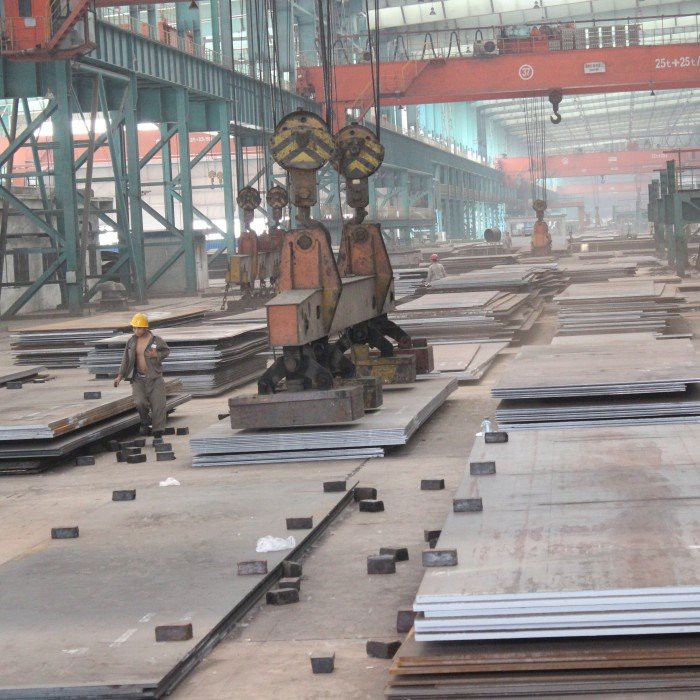
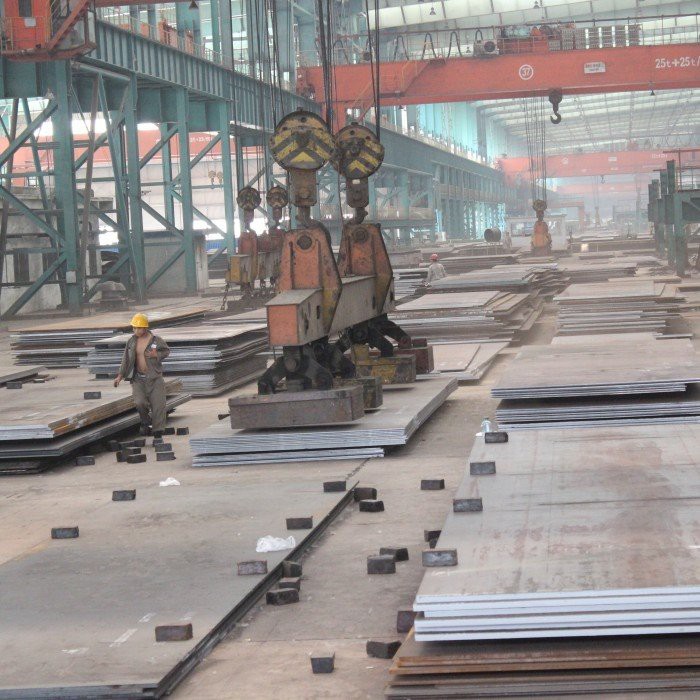
Thicker plates might have a slightly different hardness profile compared to thinner ones. This is because the cooling rate during the quenching process can be different for different thicknesses. Thicker plates may not cool as rapidly in the center, which can result in a slightly lower hardness in that area compared to the surface.
Another thing that can affect the hardness is the chemical composition of the steel. ASTM A514 has specific requirements for elements like carbon, manganese, silicon, and others. These elements play a role in determining the final hardness and other mechanical properties of the steel. For example, carbon is a key element that contributes to the hardness of steel. A higher carbon content generally leads to a harder steel, but it can also make the steel more brittle.
Now, let's compare ASTM A514 with some other high - strength steels. There are steels like S690QL1, S690QL, and S890QL. These steels also have high strength and hardness. However, their hardness and other properties are designed for different applications.
S690QL and S690QL1 are both quenched and tempered steels with a minimum yield strength of 690 MPa. They are often used in applications where high strength and good weldability are required, such as in the construction of cranes and other heavy machinery. The hardness of S690QL and S690QL1 can be in a similar range to ASTM A514, but they may have different chemical compositions and heat treatment processes, which can result in slightly different performance characteristics.
S890QL, on the other hand, has an even higher minimum yield strength of 890 MPa. It is used in applications where extremely high strength is needed, like in the mining and oil - and - gas industries. The hardness of S890QL is generally higher than that of ASTM A514, which is consistent with its higher strength requirements.
When it comes to choosing between these steels, it really depends on your specific application. If you need a steel that can handle high stress and has good toughness, ASTM A514 might be a great choice. But if you need an even higher strength steel for more demanding applications, S890QL could be more suitable.
As a supplier of ASTM A514, I've seen how this steel performs in different real - world applications. I've worked with customers in the construction industry who use ASTM A514 for building high - rise structures. The high strength and appropriate hardness of the steel ensure the structural integrity of these buildings, even under heavy loads.
In the heavy equipment manufacturing sector, ASTM A514 is used to make components like booms and frames. The hardness of the steel allows these components to withstand the wear and tear of daily use, as well as the high stresses generated during operation.
If you're in the market for ASTM A514 or any of the other high - strength steels I mentioned, I'd be more than happy to help. Whether you need a small quantity for a prototype or a large order for a big project, I can provide you with the right steel at a competitive price. Just reach out to me, and we can have a detailed discussion about your requirements.
I hope this blog post has given you a better understanding of the hardness of ASTM A514. If you have any more questions or need further information, feel free to ask. Looking forward to hearing from you and potentially working together on your next project!
References
- ASTM International standards for A514 steel
- Materials science textbooks on high - strength steels
- Technical data sheets from steel manufacturers