

Pressure Vessel Plate
Your Professional Pressure Vessel Plate Supplier
The factory covers an area of 202000 square meters.The company has established Chenggang Wuyang and other major steel mills and traders across the country.The main products include medium and heavy steel plates,hot rolled coils, cold rolled pickled plates ,profiles building materials,etc.,with annual sales of more than 300 thousand tons.In addition to serving many domestic end-users and large and medium-sized projects,the products are exported to Europe,South America and Southeast Asia.
Why Choose Us
Rich experience
Wuhan institute has been deeply engaged in the calcium silicate board / fiber cement board industry for more than 40 years, so far, it has cooperated with many large group companies such as shera, saint-gobain, ask, conch cement, etc., and has cooperated in more than 200 production lines in the world.
Professional team
We 400 employees, including 16 professor-level senior engineers, 70 senior engineers, 90 engineers with medium-grade professional title or above, and 310 technical staff with other majors.
One-stop Solution
Make meticulous production arrangements according to the order schedule; rapid production capacity, one-stop service at home.
Quality customer service
Our dedicated team is always ready to answer your questions, provide you with detailed information about our products and guide you in your choice. We understand that every customer is unique.
-
![SA516GR70]()
SA516GR70
Steel plates with a thickness of ASME (ASTM) SA516GR70 (A516GR70) ≤ 40 can also be delivered byAdd to Inquiry -
![P335GH]()
P335GH
P335GH is a model number that could refer to a variety of products across different industries,Add to Inquiry -
![SA516GR70]()
SA516GR70
SA516 Gr70 is produced to a fine grain practice and is considered the backbone of the pressureAdd to Inquiry -
![P275NL1]()
P275NL1
P275NL1 is a type of container plate that is commonly used in the manufacturing of pressureAdd to Inquiry -
![astm a537 16Mo3]()
astm a537 16Mo3
16Mo3 is a type of boiler and pressure vessel steel commonly used in the manufacturing ofAdd to Inquiry -
![P295GH]()
P295GH
P295GH is a type of container plate specifically designed for high-temperature applications, suchAdd to Inquiry -
![P335GH Pressure Plate SA516GR70]()
P335GH Pressure Plate SA516GR70
P355GH Pressure Plate SA516GR70 is a container plate widely used in the manufacturing of pressureAdd to Inquiry -
![SA285GrA]()
SA285GrA
SA285GrA is a type of container plate specifically designed for low to intermediate tensileAdd to Inquiry -
![ASTM A537CL2 SA285GrB]()
ASTM A537CL2 SA285GrB
SA285GrB is a type of container plate specifically designed for low to intermediate tensileAdd to Inquiry -
![SA285GrC A387GR11CL2]()
SA285GrC A387GR11CL2
SA285GrC A387GR11CL2 is a type of container plate specifically designed for low to intermediateAdd to Inquiry -
![SA387GR11 A387 steel plate]()
SA387GR11 A387 steel plate
ASTM(SA387GR11CL2) ASME A387GR22CL2 used to manufacture boilers and pressure vessels. The steelAdd to Inquiry


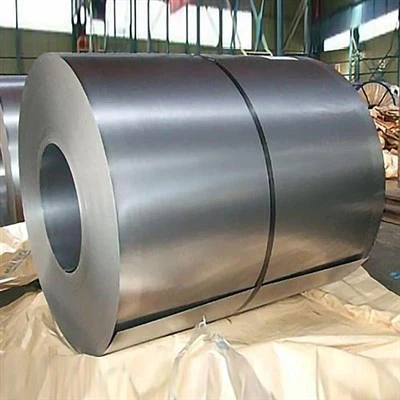


Advantages of Pressure Vessel Plate
Strength and Toughness: Pressure vessel plates must exhibit high tensile strength to withstand the internal pressures exerted by the contained gases or liquids.
Ductility: Despite their high strength, pressure vessel plates must maintain sufficient ductility to allow for fabrication processes such as forming, bending, and welding.
Corrosion Resistance: Many pressure vessels operate in corrosive environments or contain corrosive substances.
Temperature Resistance: Pressure vessels frequently operate at elevated or cryogenic temperatures. Pressure vessel plates must maintain their mechanical properties across a wide temperature range, resisting creep at high temperatures and embrittlement at low temperatures.
Weldability: Since pressure vessels are typically fabricated by welding multiple plate sections together, pressure vessel plates must possess excellent weldability.
Uniformity and Consistency: Pressure vessel plates require uniform thickness, composition, and properties throughout their entire surface area.
Low Impurity Content: High-quality pressure vessel plates have strict limitations on impurities such as sulfur and phosphorus, which can negatively impact mechanical properties and weldability.
Grain Structure: The microstructure of pressure vessel plates is carefully controlled to achieve the desired combination of strength, toughness, and ductility.
Application of Pressure Vessel Plate
Boiler Manufacturing
In boiler manufacturing, pressure vessel steel plates are used to construct the boiler shells and tubesheets. These plates must withstand high temperatures and pressures generated during the combustion process while ensuring efficient heat transfer for steam generation.
Petrochemical Industry
The petrochemical industry relies on pressure vessel steel plates for constructing reactors, distillation columns, and storage tanks.
Oil And Gas Exploration
Pressure vessel steel plates are essential in oil and gas exploration, where they are used in the fabrication of pipeline compressors, heat exchangers, and pressure vessels for offshore and onshore operations.
Aerospace
In the aerospace industry, pressure vessel steel plates are employed in the construction of fuel tanks, hydraulic systems, and engine components.
Power Generation
Pressure vessel steel plates play a crucial role in power generation, particularly in nuclear reactors and thermal power plants.
Food Processing
In food processing, pressure vessel steel plates are utilized for manufacturing autoclaves and sterilization chambers. These plates maintain hygiene standards by providing a sterile environment for processing food products, ensuring compliance with food safety regulations.
Pharmaceutical Industry
The pharmaceutical industry employs pressure vessel steel plates in the production of reactors and storage tanks used for chemical synthesis and pharmaceutical manufacturing processes.
Automotive Manufacturing
In automotive manufacturing, pressure vessel steel plates are used in fuel tanks and hydraulic systems where durability and safety are paramount.
Carry a range of pressure vessel steel plate including:
- ASTM A285 Specification
- ASME SA285 Specification
- ASTM A516 Specification
- ASME SA516 Specification
- EN 10028 Specification
- BS 1501 Specification
- DIN 17155 Specification
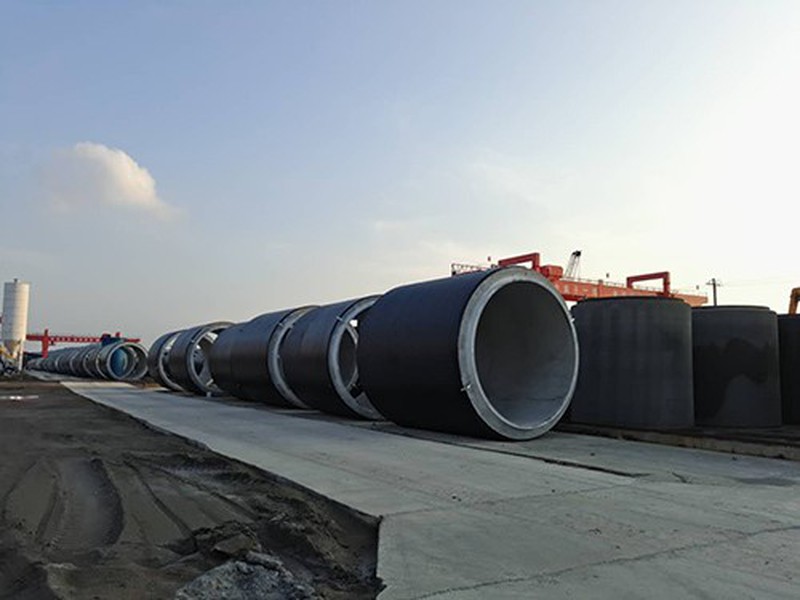
How Are Pressure Vessel Plate Manufactured?
Raw Material Selection: High-quality alloy steel is chosen based on the specific requirements of the Pressure Vessel Plate. Common materials include carbon steel, low-alloy steel, and stainless steel.
Melting and Refining: The selected alloy is melted in electric arc furnaces or basic oxygen furnaces. Advanced refining techniques, such as vacuum degassing, are often employed to remove impurities and achieve the desired chemical composition.
Continuous Casting: The molten steel is cast into slabs using continuous casting machines. This process ensures uniform solidification and minimizes segregation of alloying elements.
Hot Rolling: The cast slabs are reheated and passed through a series of rolling mills to reduce thickness and achieve the desired plate dimensions.
Heat Treatment: Depending on the material grade and required properties, the plates undergo various heat treatment processes such as normalizing, quenching, and tempering. These treatments optimize the microstructure and mechanical properties of the steel.
Surface Finishing: The plates are typically descaled and may undergo additional surface treatments to enhance corrosion resistance or prepare them for subsequent fabrication processes.
Cutting and Sizing: The plates are cut to the required dimensions using methods such as plasma cutting, water jet cutting, or mechanical shearing.
Common Grades Of Pressure Vessel Plate
ASTM A516
One of the most popular grades, ASTM A516 plates are used for moderate- to low-temperature applications. They are known for excellent weldability and notch toughness, making them ideal for pressure vessels and boilers.
ASTM A537
This grade is heat-treated to enhance tensile and impact strength, suitable for higher-pressure applications. ASTM A537 plates are often found in storage tanks and heat exchangers where increased strength is required.
ASTM A285
Designed for low- and intermediate-tension applications, ASTM A285 plates are used in situations where moderate pressures and temperatures are expected, such as storage tanks and pressure vessels in food processing.
EN10028-3 P355
This European standard steel plate is widely used for pressure equipment across industries in Europe. Known for high yield strength and good toughness, P355 is often used in the fabrication of boilers and pressure equipment.
ASTM A387
For applications where high heat is a factor, ASTM A387 chrome-molybdenum alloy plates provide enhanced thermal resistance and strength. They’re used in environments where both high pressure and high temperatures exist, such as in chemical plants.
SA 516 Gr 70
This grade is highly versatile and widely used in pressure vessels. It is known for its high tensile strength, corrosion resistance, and weldability, making it a popular choice in oil and gas applications.
FAQ
As one of the leading pressure vessel plate manufacturers and suppliers in China, we warmly welcome you to wholesale pressure vessel plate for sale here from our factory. All our products are with high quality and low price.
pressure vessel plate testing standards, pressure vessel plate price standards, pressure vessel plate delivery standards