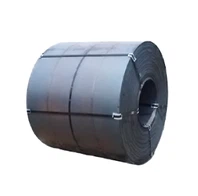
As a supplier of A387 steel plates, I've spent a fair amount of time thinking about how to boost the strength of these plates without sacrificing their toughness. It's a bit of a balancing act, but with some know - how and the right approach, it's definitely achievable.
First off, let's understand what A387 steel plates are all about. A387 steel is commonly used in pressure vessels and boilers, where it needs to withstand high pressures and temperatures. It comes in different grades, like the SA387GR11 A387 steel plate. Each grade has its own unique properties, but the overall goal is to have a material that's strong enough to handle the tough conditions while still being tough enough to resist cracking and other forms of damage.
Alloying Elements
One of the key ways to enhance the strength of A387 steel plates is through the use of alloying elements. These are like secret ingredients that can change the properties of the steel. For example, adding elements like chromium (Cr), molybdenum (Mo), and vanadium (V) can have a significant impact.
Chromium is great for improving corrosion resistance and also helps in increasing the strength of the steel. It forms a protective oxide layer on the surface of the steel, which not only protects it from rust but also makes the steel more stable at high temperatures. Molybdenum, on the other hand, increases the hardenability of the steel. This means that the steel can be heat - treated more effectively to achieve higher strength. Vanadium is known for its ability to refine the grain structure of the steel. A finer grain structure generally leads to better strength and toughness.
However, it's important not to go overboard with these alloying elements. Adding too much can actually have a negative impact on the toughness of the steel. So, it's all about finding the right balance. For instance, if you add too much chromium, the steel might become brittle. That's why we, as suppliers, work closely with metallurgists to ensure that the alloying ratios are just right.
Heat Treatment
Heat treatment is another crucial factor in enhancing the strength of A387 steel plates without sacrificing toughness. There are several heat - treatment processes that can be used, such as quenching and tempering.
Quenching involves heating the steel to a high temperature and then rapidly cooling it. This process creates a hard and strong microstructure in the steel. But if you stop there, the steel will be very brittle. That's where tempering comes in. Tempering is the process of reheating the quenched steel to a lower temperature and then cooling it slowly. This helps to relieve the internal stresses created during quenching and improves the toughness of the steel.
The key to successful heat treatment is to control the temperature and the cooling rate precisely. Different grades of A387 steel require different heat - treatment parameters. For example, the SA516GR70 might have different heat - treatment requirements compared to the A387 steel plates. We have to make sure that we follow the industry standards and best practices when it comes to heat treatment to get the desired results.
Grain Refinement
As I mentioned earlier, grain refinement plays a big role in improving the strength and toughness of A387 steel plates. A finer grain structure means that there are more grain boundaries in the steel. These grain boundaries act as barriers to the movement of dislocations, which are responsible for plastic deformation. When the dislocations are blocked, the steel becomes stronger.
There are a few ways to achieve grain refinement. One method is through controlled rolling. This involves rolling the steel at specific temperatures and with specific reductions in thickness. By doing this, we can break up the large grains and create a finer grain structure. Another way is through the use of grain - refining agents during the steel - making process. These agents can promote the formation of fine grains during solidification.
Quality Control
Throughout the process of enhancing the strength of A387 steel plates, quality control is of utmost importance. We need to make sure that every plate we supply meets the required standards. This involves a series of tests, such as hardness testing, tensile testing, and impact testing.
Hardness testing helps us to determine the hardness of the steel, which is related to its strength. Tensile testing measures the strength and ductility of the steel under tension. Impact testing, on the other hand, assesses the toughness of the steel by subjecting it to a sudden impact.
We also use non - destructive testing methods, like ultrasonic testing and magnetic particle testing, to detect any internal defects in the steel plates. By catching these defects early, we can ensure that only high - quality plates are sent to our customers.


Comparison with Other Steel Grades
It's always useful to compare A387 steel plates with other steel grades used in similar applications, like P295GH. P295GH is also a popular choice for pressure vessels, but it has different properties compared to A387 steel.
P295GH is generally known for its good weldability and formability. However, when it comes to high - temperature strength, A387 steel often has an edge. The alloying elements and the heat - treatment processes used in A387 steel make it more suitable for applications where high strength at elevated temperatures is required.
Conclusion
In conclusion, enhancing the strength of A387 steel plates without sacrificing toughness is a multi - faceted process. It involves careful selection of alloying elements, precise heat treatment, grain refinement, and strict quality control. As a supplier, we're constantly looking for ways to improve our products and meet the ever - growing demands of our customers.
If you're in the market for high - quality A387 steel plates, or if you have any questions about how we can enhance the strength and toughness of these plates for your specific application, don't hesitate to reach out. We're here to help you find the best solutions for your needs.
References
- ASME Boiler and Pressure Vessel Code
- ASTM International standards for A387 steel
- Various research papers on steel alloying and heat treatment