Hey there! As a supplier of ASTM A514, I've gotten a ton of questions about its microstructure. So, I thought I'd break it down in this blog post.
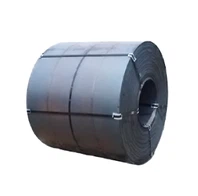
First off, let's talk about what ASTM A514 is. It's a high-strength, quenched, and tempered alloy steel plate. It's used in a bunch of heavy-duty applications like construction equipment, bridges, and offshore structures. The reason it's so popular is its excellent strength and toughness, which are a direct result of its unique microstructure.
The microstructure of ASTM A514 is mainly composed of martensite. Martensite is a super-hard and strong phase that forms when austenite, another phase of steel, is rapidly cooled. This rapid cooling, known as quenching, doesn't give the carbon atoms in the austenite enough time to diffuse out and form other phases. Instead, they get trapped in the iron lattice, creating a highly distorted and supersaturated structure. This is what gives martensite its high strength and hardness.
But here's the thing: martensite is also pretty brittle on its own. That's why after quenching, ASTM A514 goes through a tempering process. Tempering involves heating the steel to a specific temperature below its critical point and holding it there for a certain amount of time. This allows some of the internal stresses in the martensite to relieve, and it also allows the formation of some other phases like tempered martensite and carbide particles.
Tempered martensite is a bit softer and more ductile than regular martensite. The carbide particles that form during tempering act as barriers to dislocation movement, which helps to improve the steel's strength and toughness. So, by carefully controlling the tempering process, we can achieve the right balance of strength, hardness, and toughness in ASTM A514.


Now, let's compare ASTM A514 with some other high-strength steel plates. For example, A514GRF High Strength Steel Plate is a specific grade of ASTM A514. It has similar microstructure characteristics but might have some slight variations in composition and properties depending on the exact manufacturing process.
Another couple of high-strength steels are S890QL and S960QL. These steels also have a martensitic or bainitic microstructure, but their alloying elements and heat treatment processes are different from ASTM A514. S890QL and S960QL are often used in applications where extremely high strength is required, like in the mining and heavy machinery industries.
As a supplier, I've seen firsthand how important it is to understand the microstructure of these steels. It helps us to choose the right steel for the right application. For example, if a customer needs a steel plate for a structure that will be subjected to high impact loads, we need to make sure the steel has the right balance of strength and toughness. And that all comes down to the microstructure.
If you're in the market for high-strength steel plates like ASTM A514, A514GRF High Strength Steel Plate, S890QL, or S960QL, I'd love to chat with you. Whether you have questions about the microstructure, the properties, or the application, I'm here to help. Just reach out to me, and we can start the conversation about finding the perfect steel for your project.
References
- ASM Handbook Volume 9: Metallography and Microstructures
- Steel Heat Treatment: Metallurgy and Technologies by George E. Totten and G. Eric Totten