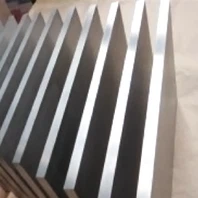
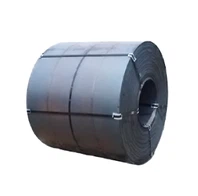
As a seasoned supplier of Pipe Line Plate, I've witnessed firsthand the critical role that corrosion resistance plays in the performance and longevity of pipelines. In this blog post, I'll delve into the corrosion resistance properties of Pipe Line Plate, exploring the factors that influence it, the testing methods used to evaluate it, and the importance of choosing the right plate for your specific application.
Understanding Corrosion in Pipeline Systems
Corrosion is a natural process that occurs when metals react with their environment, leading to the deterioration of the metal over time. In pipeline systems, corrosion can have serious consequences, including leaks, structural failures, and environmental damage. The primary factors that contribute to corrosion in pipelines include:
- Environmental Conditions: The presence of moisture, oxygen, and other corrosive agents in the environment can accelerate the corrosion process. For example, pipelines located in coastal areas or areas with high humidity are more susceptible to corrosion due to the increased presence of salt and moisture in the air.
- Pipeline Material: The type of metal used in the pipeline can also affect its corrosion resistance. Different metals have different levels of inherent corrosion resistance, and some metals are more prone to corrosion than others. For example, carbon steel is a commonly used material for pipelines, but it is relatively susceptible to corrosion compared to other metals such as stainless steel.
- Fluid Composition: The composition of the fluid being transported through the pipeline can also play a role in corrosion. For example, pipelines carrying acidic or alkaline fluids are more likely to experience corrosion than those carrying neutral fluids.
Corrosion Resistance Properties of Pipe Line Plate
Pipe Line Plate is designed to have excellent corrosion resistance properties to ensure the long-term performance and reliability of pipeline systems. The corrosion resistance of Pipe Line Plate is influenced by several factors, including:
- Alloy Composition: The alloy composition of the Pipe Line Plate plays a crucial role in its corrosion resistance. Different alloying elements can be added to the steel to enhance its corrosion resistance. For example, the addition of chromium to steel can form a protective oxide layer on the surface of the metal, which helps to prevent corrosion. Other alloying elements such as nickel, molybdenum, and copper can also improve the corrosion resistance of the steel.
- Surface Finish: The surface finish of the Pipe Line Plate can also affect its corrosion resistance. A smooth and clean surface is less likely to accumulate dirt, debris, and other corrosive agents, which can help to prevent corrosion. Additionally, a surface treatment such as coating or galvanizing can provide an additional layer of protection against corrosion.
- Heat Treatment: Heat treatment can also improve the corrosion resistance of Pipe Line Plate. By subjecting the steel to specific heat treatment processes, the microstructure of the steel can be modified, which can enhance its corrosion resistance. For example, quenching and tempering can improve the hardness and toughness of the steel, which can help to prevent corrosion.
Testing Methods for Evaluating Corrosion Resistance
To ensure the quality and performance of Pipe Line Plate, it is important to evaluate its corrosion resistance using appropriate testing methods. Some of the commonly used testing methods for evaluating the corrosion resistance of Pipe Line Plate include:


- Salt Spray Testing: Salt spray testing is a widely used method for evaluating the corrosion resistance of metals. In this test, the Pipe Line Plate is exposed to a salt spray environment for a specified period of time, and the extent of corrosion is then evaluated. The results of the salt spray test can provide an indication of the relative corrosion resistance of the Pipe Line Plate.
- Immersion Testing: Immersion testing involves immersing the Pipe Line Plate in a corrosive solution for a specified period of time. The extent of corrosion is then evaluated by measuring the weight loss of the sample or by examining the surface of the sample using microscopy. Immersion testing can provide more detailed information about the corrosion resistance of the Pipe Line Plate under specific conditions.
- Electrochemical Testing: Electrochemical testing is a more advanced method for evaluating the corrosion resistance of metals. In this test, the Pipe Line Plate is subjected to an electrochemical potential, and the resulting current is measured. The electrochemical behavior of the sample can provide information about its corrosion resistance, including its corrosion rate and its susceptibility to localized corrosion.
Importance of Choosing the Right Pipe Line Plate
Choosing the right Pipe Line Plate is crucial for ensuring the long-term performance and reliability of pipeline systems. When selecting Pipe Line Plate, it is important to consider the following factors:
- Application Requirements: The specific requirements of the pipeline application, such as the operating temperature, pressure, and fluid composition, should be taken into account when selecting Pipe Line Plate. For example, pipelines carrying corrosive fluids may require a Pipe Line Plate with higher corrosion resistance properties.
- Corrosion Resistance: The corrosion resistance of the Pipe Line Plate is one of the most important factors to consider. It is important to choose a Pipe Line Plate that has excellent corrosion resistance properties to ensure the long-term performance and reliability of the pipeline system.
- Cost: The cost of the Pipe Line Plate is also an important factor to consider. While it is important to choose a Pipe Line Plate that meets the application requirements and has excellent corrosion resistance properties, it is also important to consider the cost-effectiveness of the plate.
Our Product Offerings
At our Pipe Line Plate Factory, we offer a wide range of Pipe Line Plate products with excellent corrosion resistance properties. Our products include LX70 and LX65 Pipe Line Plate, which are designed to meet the specific requirements of various pipeline applications.
Our Pipe Line Plate products are manufactured using high-quality materials and advanced manufacturing processes to ensure the highest level of quality and performance. We also offer a range of surface treatments and coatings to enhance the corrosion resistance of our Pipe Line Plate products.
Contact Us for Procurement
If you are in the market for high-quality Pipe Line Plate with excellent corrosion resistance properties, we invite you to contact us for procurement. Our team of experts can provide you with detailed information about our products and help you choose the right Pipe Line Plate for your specific application. We look forward to working with you to meet your pipeline needs.
References
- ASM Handbook, Volume 13A: Corrosion: Fundamentals, Testing, and Protection. ASM International, 2003.
- NACE International Standard TM0177-2016: Laboratory Testing of Metals for Resistance to Sulfide Stress Cracking and Stress Corrosion Cracking in H2S Environments. NACE International, 2016.
- ASTM International Standard G4-16: Standard Practice for Conducting Cyclic Salt Spray (Fog) Testing. ASTM International, 2016.