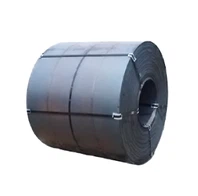
Hey there! As a pressure vessel plate supplier, I often get asked about the yield strength of pressure vessel plates. It's a crucial topic because the yield strength determines how well these plates can withstand pressure without permanent deformation. So, let's dive in and explore what yield strength is and why it matters in the world of pressure vessel plates.
What's Yield Strength Anyway?
Yield strength is the point at which a material starts to deform plastically. Before reaching the yield strength, the material will return to its original shape when the load is removed. But once it hits that yield point, the deformation becomes permanent. It's like when you stretch a rubber band gently; it goes back to normal. But pull it too hard, and it won't return to its original state.
In the case of pressure vessel plates, we need to know the yield strength because pressure vessels are used in all sorts of industries, from oil and gas to chemical processing. These vessels are designed to hold liquids or gases under high pressure, and if the plates don't have the right yield strength, they could fail, leading to dangerous situations.
Factors Affecting Yield Strength
The yield strength of pressure vessel plates isn't a fixed number. It can be influenced by several factors:
- Material Composition: Different alloys and elements in the plate can have a big impact on its yield strength. For instance, adding small amounts of certain metals like manganese or nickel can increase the strength of the steel used in pressure vessel plates.
- Heat Treatment: How the plate is heat-treated can also change its yield strength. Processes like annealing, quenching, and tempering can alter the microstructure of the material, making it stronger or more ductile.
- Thickness: Thicker plates may have different yield strengths compared to thinner ones. This is because the internal stresses and grain structure can vary based on the thickness of the plate.
Common Types of Pressure Vessel Plates and Their Yield Strengths
- SA516GR70: This is a widely used grade for pressure vessel plates. You can find more info about it on this SA516GR70 and also SA516GR70 page. SA516GR70 typically has a yield strength of around 260 - 345 MPa (38 - 50 ksi). It's known for its good notch toughness and is suitable for use in low- to medium-pressure applications.
- P295GH: Another popular choice, you can check details on the P295GH page. P295GH has a minimum yield strength of 295 MPa (42.8 ksi). It's often used in European standards for pressure vessels and has good weldability and formability.
Measuring Yield Strength
To determine the yield strength of a pressure vessel plate, we use a test called a tensile test. In this test, a sample of the plate is pulled in a machine until it breaks. The machine records the amount of force applied and the elongation of the sample. By analyzing the data, we can find the point at which the material starts to deform plastically, which is the yield strength.
Why Yield Strength is Crucial for Pressure Vessels
As I mentioned earlier, pressure vessels operate under high pressure. If the yield strength of the plate is too low, the vessel could start to deform or even rupture under normal operating conditions. This could lead to leaks of dangerous substances, explosions, or other disasters.
On the other hand, if we use plates with a much higher yield strength than necessary, it can increase the cost of the pressure vessel. That's why it's important to choose the right grade of pressure vessel plate with the appropriate yield strength for the specific application.
How to Choose the Right Pressure Vessel Plate Based on Yield Strength
When you're looking for pressure vessel plates, here are some steps to follow:
- Understand the Application: Know the maximum pressure and temperature that the vessel will be exposed to. This will help you determine the minimum yield strength required.
- Consult Standards and Codes: There are various industry standards and codes that specify the requirements for pressure vessel plates. Make sure the plate you choose meets these standards.
- Work with a Reputable Supplier: As a supplier, I can tell you that working with someone who has experience and knowledge in pressure vessel plates is crucial. We can help you select the right grade based on your needs.
Our Role as a Supplier
At our place, we understand the importance of yield strength in pressure vessel plates. We offer a wide range of grades, including SA516GR70 and P295GH, with different yield strengths to meet various customer requirements.


We also have a quality control process in place to ensure that our plates meet the specified yield strength and other mechanical properties. Our team of experts can provide technical support and advice to help you choose the right plate for your pressure vessel project.
Let's Connect and Discuss Your Needs
If you're in the market for pressure vessel plates, we'd love to hear from you. Whether you're working on a new project or need to replace existing plates, we can help you find the right solution. Reach out to us to discuss your requirements, and we'll work together to get you the best pressure vessel plates at a competitive price.
References
- "Metallurgy for the Non - Metallurgist" by John D. Verhoeven
- "Pressure Vessel Design Manual" by Dennis C. Taylor