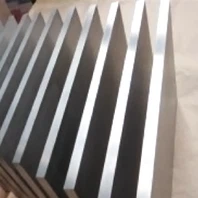
Hey there! As a supplier of ASME SA516, I often get asked about the pre - heating temperature for welding this material. So, I thought I'd write this blog to share some insights on this topic.
First off, let's understand what ASME SA516 is. ASME SA516 is a standard specification for pressure vessel plates, carbon steel, for moderate - and lower - temperature service. It comes in different grades like Grade 55, Grade 60, Grade 65, and Grade 70, each having slightly different mechanical properties.
The pre - heating temperature for welding ASME SA516 is crucial because it helps prevent cracking in the weld area. When we weld, the rapid heating and cooling can cause stress in the material, and if the stress is too high, it can lead to cracks. Pre - heating the material before welding reduces this stress by making the temperature change more gradual.
The pre - heating temperature depends on several factors. One of the most important factors is the thickness of the plate. Generally, as the thickness of the ASME SA516 plate increases, the pre - heating temperature also needs to be higher. For thinner plates (less than 1 - inch thick), the pre - heating temperature might be relatively low, around 100°F to 200°F (38°C to 93°C). But for thicker plates (over 2 inches thick), we might need to pre - heat to 250°F to 350°F (121°C to 177°C).
Another factor is the carbon equivalent of the material. The carbon equivalent is a measure of how likely the material is to harden during welding. A higher carbon equivalent means a greater risk of cracking, and thus, a higher pre - heating temperature is required. ASME SA516 has different carbon equivalents depending on the grade, and this affects the pre - heating requirements.


The welding process also plays a role. For example, shielded metal arc welding (SMAW) and gas metal arc welding (GMAW) might have slightly different pre - heating temperature requirements. SMAW is a more traditional welding process, and it might require a bit higher pre - heating compared to GMAW in some cases.
Now, let's talk about some industry standards. The American Society of Mechanical Engineers (ASME) provides guidelines on pre - heating temperatures for welding ASME SA516. These standards are based on years of research and practical experience in the industry. It's really important to follow these standards to ensure the quality and safety of the welded joints.
In addition to ASME standards, there are also other industry - recognized codes like the American Welding Society (AWS) codes. These codes offer more detailed information on welding procedures, including pre - heating temperatures.
As a supplier of ASME SA516, I've seen many customers who are confused about the pre - heating requirements. Some might think that pre - heating is not necessary, especially for thinner plates. But trust me, even for thin plates, pre - heating can improve the quality of the weld.
I'd also like to mention some related products. If you're in the market for other types of steel plates, we also offer S355JR. S355JR is a low - alloy steel plate that's widely used in various engineering applications. It has good strength and weldability, and the pre - heating requirements for welding S355JR are also important to consider.
Another product we have is NM450 Abrasion Resistant Wear Plates. These plates are designed to withstand wear and abrasion, and they are often used in mining, construction, and other heavy - duty industries. Welding these plates also requires proper pre - heating to ensure a strong and durable weld.
And we have P265GH Plate A516 Gr 70. P265GH is a pressure vessel steel plate, and it has similar pre - heating considerations as ASME SA516 Grade 70.
When it comes to determining the exact pre - heating temperature for your specific ASME SA516 welding project, it's a good idea to consult with a welding engineer. They can take into account all the factors like plate thickness, carbon equivalent, and welding process to give you the most accurate pre - heating temperature.
We also offer technical support to our customers. If you're not sure about the pre - heating requirements for your ASME SA516 plates, just reach out to us. Our team of experts can help you figure out the right pre - heating temperature and provide you with all the necessary information for a successful welding project.
In conclusion, the pre - heating temperature for welding ASME SA516 is a critical factor in ensuring the quality and integrity of the weld. It depends on plate thickness, carbon equivalent, and the welding process. By following industry standards and getting professional advice, you can achieve great welding results.
If you're interested in purchasing ASME SA516 or any of our other products, don't hesitate to contact us for a quote. We're here to help you with all your steel plate needs and make sure your projects are a success.
References:
- ASME Boiler and Pressure Vessel Code
- American Welding Society (AWS) Welding Codes