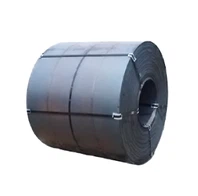
The ASTM A537 standard covers carbon - manganese - silicon steel plates for fusion - welded pressure vessels. These plates are available in two different classes (ASTM A537CL1 and ASTM A537CL2), which are suitable for various pressure vessel applications due to their good strength and toughness properties. The quenching and tempering process plays a crucial role in achieving the desired mechanical properties of ASTM A537 steel plates. As a reliable ASTM A537 supplier, I'd like to delve into the details of this important heat - treatment process.
Understanding Quenching and Tempering
Quenching and tempering are two distinct but closely related heat - treatment processes. Quenching involves rapidly cooling the steel from a high temperature to a lower one, which usually results in the formation of a hard and brittle martensite structure. Tempering, on the other hand, is a subsequent process where the quenched steel is reheated to a relatively lower temperature and then cooled at a controlled rate. This process helps to relieve internal stresses, reduce brittleness, and improve the toughness of the steel while maintaining a reasonable level of hardness.
The Quenching Process for ASTM A537
Heating
The first step in the quenching process for ASTM A537 steel is heating the plates to a specific austenitizing temperature. For ASTM A537 steel, the austenitizing temperature typically ranges from 850 - 900°C (1562 - 1652°F). Heating the steel to this temperature range allows the carbon and other alloying elements to dissolve uniformly in the austenite phase. This uniform distribution of elements is essential for achieving consistent mechanical properties throughout the plate.
We use advanced heating furnaces that are precisely controlled to ensure accurate temperature profiles. The heating rate is also carefully regulated to avoid thermal shock, which could cause cracking or other defects in the plates. A slow and controlled heating rate, usually around 100 - 150°C per hour, is often employed to heat the ASTM A537 plates to the austenitizing temperature.
Holding Time
Once the ASTM A537 plates reach the austenitizing temperature, they are held at this temperature for a certain period. The holding time depends on the thickness of the plates. Thicker plates require a longer holding time to ensure that the entire cross - section reaches the austenitizing temperature and the alloying elements are fully dissolved. Generally, for every 25 mm (1 inch) of plate thickness, a holding time of about 30 - 60 minutes is recommended.
Quenching Medium
After the holding period, the plates are rapidly cooled in a quenching medium. For ASTM A537 steel, water or oil is commonly used as the quenching medium. Water quenching provides a very high cooling rate, which is effective in forming a high - strength martensite structure. However, it also increases the risk of cracking due to the high thermal stresses generated during rapid cooling. Oil quenching, on the other hand, has a slower cooling rate compared to water quenching. This slower rate reduces the risk of cracking but may result in a lower hardness compared to water - quenched steel. The choice between water and oil quenching depends on the specific requirements of the application, the thickness of the plates, and the desired mechanical properties.
The Tempering Process for ASTM A537
Reheating
Following quenching, the ASTM A537 plates are reheated for tempering. The tempering temperature for ASTM A537 steel usually ranges from 550 - 650°C (1022 - 1202°F). This temperature is carefully selected to balance the hardness and toughness of the steel. Reheating the quenched steel to this temperature range allows the martensite to transform into a more stable and ductile structure, such as tempered martensite or bainite.
Holding Time During Tempering
Similar to the quenching process, the plates are held at the tempering temperature for a specific period. The holding time during tempering also depends on the thickness of the plates. A general rule of thumb is to hold the plates for about 1 - 2 hours per 25 mm (1 inch) of thickness. This holding time ensures that the internal stresses are fully relieved and the desired microstructural changes occur throughout the plate.
Cooling After Tempering
After the holding period at the tempering temperature, the plates are cooled at a controlled rate. A slow cooling rate, such as air cooling, is often used to prevent the formation of new internal stresses. This controlled cooling helps to maintain the stability of the tempered structure and the desired mechanical properties of the ASTM A537 steel.
Importance of Quenching and Tempering for ASTM A537
The quenching and tempering process significantly enhances the mechanical properties of ASTM A537 steel. By quenching the steel, we can achieve a high level of hardness, which is important for applications where wear resistance and strength are required. However, the as - quenched steel is very brittle, which makes it unsuitable for many pressure - vessel applications. Tempering the quenched steel reduces the brittleness and improves the toughness, making the ASTM A537 plates more ductile and resistant to fracture.
In pressure - vessel applications, the combination of high strength and good toughness provided by quenched and tempered ASTM A537 steel is crucial. These plates can withstand high internal pressures and sudden load changes without failing. Moreover, the quenching and tempering process also improves the fatigue resistance of the steel, which is important for pressure vessels that are subjected to cyclic loading.
Comparison with Other Pressure - Vessel Steels
When comparing ASTM A537 with other pressure - vessel steels such as SA516GR70, P295GH, and ASTM A537CL2 SA285GrB, the quenching and tempering process gives ASTM A537 an edge in terms of strength - to - toughness ratio. SA516GR70 is a common carbon steel for pressure vessels, but it may not have the same high - strength properties as quenched and tempered ASTM A537. P295GH is a European standard steel for pressure vessels, and its mechanical properties can be adjusted through heat treatment, but the quenching and tempering of ASTM A537 can provide more precise control over hardness and toughness. ASTM A537CL2 SA285GrB is another steel used in pressure - vessel construction, but ASTM A537 generally offers better performance after quenching and tempering, especially in high - stress applications.
Quality Control in the Quenching and Tempering Process
As a supplier of ASTM A537, we implement strict quality - control measures throughout the quenching and tempering process. We conduct regular inspections of the heating furnaces to ensure that the temperature and heating rate are accurately controlled. Non - destructive testing methods, such as ultrasonic testing and magnetic particle testing, are used to detect any potential defects in the plates before and after heat treatment.
We also perform mechanical property tests, including tensile tests, impact tests, and hardness tests, on the quenched and tempered ASTM A537 plates. These tests ensure that the plates meet the specified mechanical properties according to the ASTM A537 standard. Only when the plates pass all the quality - control tests are they approved for shipment to our customers.
Contact for Purchase and洽谈
If you are in need of high - quality ASTM A537 steel plates that have undergone a precise quenching and tempering process, we are here to meet your requirements. Our experienced team can provide you with detailed information about the products and the heat - treatment process. We are committed to delivering products that meet your exact specifications and quality expectations. Please feel free to contact us for further discussions on your procurement needs.


References
- ASTM International. ASTM A537/A537M - 18a, Standard Specification for Pressure Vessel Plates, Carbon - Manganese - Silicon Steel, Heat - Treated.
- ASM Handbook Volume 4: Heat Treating. ASM International.
- Metals Handbook: Properties and Selection: Irons, Steels, and High - Performance Alloys. ASM International.