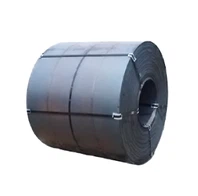
As a supplier of 1045 steel plates, I am often asked about the fatigue strength of this material. Fatigue strength is a crucial property, especially in applications where the material is subjected to cyclic loading. In this blog post, I will delve into what fatigue strength is, how it pertains to 1045 steel plates, and why it matters in various industries.
Understanding Fatigue Strength
Fatigue strength refers to the maximum stress that a material can withstand for a specified number of cycles without failing. Unlike static strength, which deals with the material's ability to resist a single, constant load, fatigue strength is concerned with repeated or fluctuating loads. These cyclic loads can come from various sources, such as vibrations, thermal cycling, or mechanical movements.
When a material is exposed to cyclic loading, microscopic cracks can initiate and propagate over time. Eventually, these cracks can grow large enough to cause the material to fail, even if the applied stress is well below the material's ultimate tensile strength. The fatigue strength of a material is determined through fatigue testing, where specimens are subjected to cyclic loading until failure. The results are then plotted on an S-N curve, which shows the relationship between the applied stress (S) and the number of cycles to failure (N).
Fatigue Strength of 1045 Steel Plate
1045 steel is a medium carbon steel that is known for its good strength, toughness, and machinability. It is commonly used in a wide range of applications, including automotive components, machinery parts, and structural members. The fatigue strength of 1045 steel plate depends on several factors, including its chemical composition, heat treatment, surface finish, and the type of loading it is subjected to.
- Chemical Composition: The carbon content in 1045 steel is typically around 0.42 - 0.50%. This medium carbon content gives the steel a good balance of strength and ductility. Other alloying elements, such as manganese, silicon, and sulfur, can also affect the fatigue strength. For example, manganese can improve the hardenability of the steel, while sulfur can reduce its toughness and fatigue resistance.
- Heat Treatment: Heat treatment plays a significant role in determining the fatigue strength of 1045 steel plate. Quenching and tempering are common heat treatment processes used to improve the strength and hardness of the steel. By carefully controlling the quenching and tempering parameters, the microstructure of the steel can be optimized, resulting in better fatigue resistance. For instance, a fine-grained microstructure can help to prevent crack initiation and propagation, thereby increasing the fatigue strength.
- Surface Finish: The surface finish of the steel plate can also have a major impact on its fatigue strength. A smooth surface finish can reduce stress concentrations and prevent crack initiation. On the other hand, a rough or pitted surface can act as stress raisers, increasing the likelihood of crack formation and reducing the fatigue life of the material. Therefore, it is important to ensure that the 1045 steel plate has a good surface finish, especially in applications where fatigue is a concern.
- Type of Loading: The type of cyclic loading, such as tension - compression, bending, or torsion, can affect the fatigue strength of 1045 steel plate. Different loading modes can induce different stress distributions within the material, which can influence the crack initiation and propagation mechanisms. For example, bending loads can cause higher stresses on the outer surface of the plate, while torsion loads can induce shear stresses.
Factors Affecting Fatigue Life
In addition to the factors mentioned above, there are several other factors that can affect the fatigue life of 1045 steel plate in real - world applications:
- Environmental Conditions: Exposure to corrosive environments can significantly reduce the fatigue strength of 1045 steel plate. Corrosion can cause pitting and surface damage, which can act as stress raisers and accelerate crack initiation. For example, in marine environments, the presence of saltwater can lead to corrosion of the steel, reducing its fatigue resistance.
- Stress Concentration: Geometric features such as holes, notches, and fillets can create stress concentrations in the steel plate. These stress concentrations can increase the local stress levels, making the material more susceptible to fatigue cracking. Designers should carefully consider the geometry of the component to minimize stress concentrations and improve the fatigue life.
- Loading Frequency: The frequency of the cyclic loading can also affect the fatigue life of the steel plate. At high frequencies, the material may experience thermal effects due to internal friction, which can lead to softening and reduced fatigue strength.
Importance of Fatigue Strength in Different Industries
The fatigue strength of 1045 steel plate is of great importance in various industries:
- Automotive Industry: In the automotive industry, 1045 steel is used in components such as crankshafts, connecting rods, and gears. These components are subjected to cyclic loading during the operation of the vehicle. A high fatigue strength is essential to ensure the reliability and durability of these parts, as a fatigue failure can lead to serious safety issues.
- Machinery Industry: In machinery, 1045 steel plates are used in the construction of machine frames, shafts, and other moving parts. These parts are often subjected to repeated loading, and a good fatigue strength is necessary to prevent premature failure and ensure the smooth operation of the machinery.
- Structural Engineering: In structural applications, 1045 steel plates can be used in bridges, buildings, and other structures. These structures are exposed to various types of cyclic loads, such as wind loads and seismic loads. A high fatigue strength is crucial to ensure the long - term integrity of the structure.
Related Steel Products
If you are looking for other steel products with different properties, we also offer a range of pressure vessel plates, such as SA285GrC A387GR11CL2, P275NL1, and astm a537 16Mo3. These products are suitable for different applications and have their own unique characteristics in terms of strength, toughness, and fatigue resistance.
Conclusion
The fatigue strength of 1045 steel plate is a complex property that is influenced by multiple factors. As a supplier, we understand the importance of providing high - quality steel plates with excellent fatigue resistance. By carefully controlling the chemical composition, heat treatment, and surface finish of our 1045 steel plates, we can ensure that they meet the demanding requirements of various industries.
If you are in need of 1045 steel plates or have any questions about their fatigue strength, please feel free to contact us for further information and to discuss your specific requirements. Our team of experts is always ready to assist you in finding the right steel solution for your application.


References
- "Metallurgy and Mechanics of Welding" by John F. Lancaster
- "Materials Science and Engineering: An Introduction" by William D. Callister, Jr. and David G. Rethwisch
- "Fatigue of Materials" by Norman E. Dowling