

Products


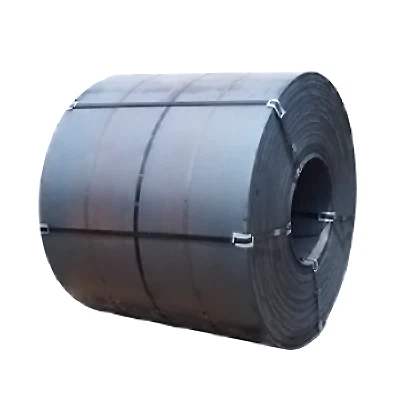
P275NL1
Product introduction
P275NL1 steel plate is a low-alloy high-strength structural steel specially used for manufacturing parts that need to withstand high pressure and high temperature, such as storage tanks, heat exchangers, and chemical equipment. The "P" in "P275" stands for Pressure Vessel Steel, which is suitable for high-pressure environments, while "275" stands for the minimum yield strength of 275MPa, which reflects the strength standard of the material when subjected to external forces. The "NL" in "NL1" means that the steel has excellent low-temperature toughness (Normalized Low-temperature toughness), which is suitable for use in low-temperature environments.
Product parameters
EN10028-3 P275NL1 Pressure Vessel And Boiler Steel Plate Chemical Composition
|
Al% |
N% |
Cr% |
Cu% |
Mo% |
Nb% |
Ni% |
Ti% |
V% |
Nb+Ti+V% |
|
0.02 |
0.012 |
0.3 |
0.3 |
0.08 |
0.05 |
0.5 |
0.03 |
0.05 |
0.05 |
EN10028-3 P275NL1 Pressure Vessel And Boiler Steel Plate Mechanical Property
|
Grade |
Tensile Strength(MPa) |
Yield Strength(MPa) |
% Elongation in 2 in.(50mm) min |
Impacting Test Temperature(°C) |
|
EN10028-3 P275NL1 |
450-630 |
215-275 |
21 |
+20/0/-20/-40/ |
Product features
High Strength
The minimum yield strength of P275NL1 steel plate is 275MPa, and the tensile strength range is 370-510MPa. This allows P275NL1 steel plates to significantly improve structural safety when manufacturing equipment such as petroleum storage tanks, chemical reactors and boiler shells.
Excellent Low Temperature Toughness
The average impact energy of the P275NL1 steel plate at -50°C is 27 J, which means that the average energy required for the material to resist impact damage is 27 Joules. This performance makes it widely used in liquefied natural gas storage tanks (LNG) and pressure vessels in cold areas to ensure that the equipment does not undergo brittle fracture under low temperature conditions.
Good Welding Performance
The carbon equivalent (CE) of P275NL1 steel plate is ≤0.22%, which is lower than that of common structural steel (such as 0.30% of Q235), making it less prone to cracks in actual welding. Moreover, the strength of the welding zone can reach more than 95% of the base metal. This welding performance greatly reduces the welding rework rate and is especially suitable for on-site splicing construction of large pressure vessels and complex pipelines.
Smooth And Flat Surface
The surface roughness of P275NL1 steel plate is usually controlled at Ra≤6.3μm, and the flatness error is ≤2mm/m. This high-quality surface facilitates subsequent coating processing, and its coating adhesion is ≥10N/mm², which is suitable for anti-corrosion coating needs of storage tanks and pipelines.
Product applications
Pressure Vessels
P275NL1 steel plates are commonly used in the manufacture of storage tanks and pressure vessels in the chemical, oil and gas industries, such as liquefied gas tanks, steam boilers, chemical reactors, etc.
Cryogenic Tanks
In the manufacture of liquefied natural gas (LNG) tanks and liquefied petroleum gas (LPG) tanks, P275NL1 steel plates are widely used because of their good impact toughness at low temperatures of -50°C, ensuring the durability of tanks in cold areas.
Heat Exchangers
This steel plate is commonly used in the manufacture of tube sheets and shells of heat exchangers, which can effectively resist frequent temperature and pressure fluctuations during operation and extend the service life of equipment.
Marine Engineering
Steel plates are widely used in offshore oil platforms and ship pressure systems, such as ballast tanks and high-pressure tanks, and can cope with the corrosive conditions of high humidity and high salt in the marine environment.
FAQs
Q: What are the mechanical properties of P275NL1?
A: Its yield strength is ≥275MPa, tensile strength is 370-510MPa, and elongation after fracture is 22%-25%, with good strength and ductility.
Q: Can P275NL1 steel plate be cut and processed?
A: Yes, P275NL1 steel plate is suitable for a variety of processing techniques, such as cutting, bending and drilling, and its good ductility makes it not easy to crack or deform during processing.
Q: In which extreme environments is P275NL1 steel plate suitable?
A: P275NL1 steel plate is particularly suitable for low temperature (-50°C) and high pressure environments, and can be used in extremely cold areas or equipment that requires high pressure resistance, such as storage tanks in Arctic climates or deep-sea oil pipelines.
Q: What is the corrosion resistance of P275NL1 steel plate?
A: P275NL1 has moderate corrosion resistance, and surface protection treatment, such as spraying anti-corrosion coating or hot-dip galvanizing, is usually required when used in corrosive environments to extend its service life.
Q: Does P275NL1 steel plate need regular inspection during use?
A: Yes, in high-risk applications such as pressure vessels, non-destructive testing (such as ultrasonic testing) and mechanical property testing are required to ensure that it always meets safety standards.
Q: Does the transportation of P275NL1 steel plate require special attention?
A: Yes, due to its high surface quality requirements, scratches and collisions should be avoided during transportation, and moisture-proof measures should be taken to prevent rust.
Q: Can P275NL1 steel plate be used in food or pharmaceutical industry equipment?
A: P275NL1 has limited corrosion resistance, and it usually needs to be lined or coated when used in the food or pharmaceutical industry to meet hygiene and anti-corrosion requirements.
Hot Tags: p275nl1, China p275nl1 manufacturers, suppliers, factory, pressure vessel plate market standards, pressure vessel plate delivery standards, pressure vessel plate inspection standards, pressure vessel plate price standards, pressure vessel plate testing standards, pressure vessel plate packaging standards


