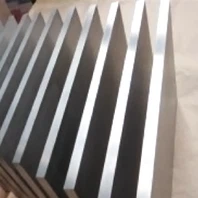
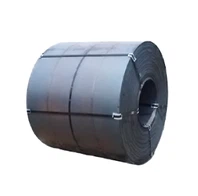
Hey there! As a high strength plate supplier, I often get asked about how to measure the yield strength of high strength plates. It's a crucial aspect, especially when you're dealing with materials that need to withstand heavy loads and extreme conditions. So, let's dive right into it!
First off, what exactly is yield strength? Well, it's the stress at which a material begins to deform plastically. In simpler terms, it's the point where the material stops behaving like a spring (returning to its original shape when the load is removed) and starts to change shape permanently. For high strength plates, knowing the yield strength is super important as it helps engineers and designers ensure that the plates can handle the intended loads without failing.
Why Measuring Yield Strength Matters
Before we get into the how, let's talk about why it's so important to measure the yield strength of high strength plates. When you're using these plates in construction, manufacturing, or any other industry, you need to be confident that they can perform under pressure. Whether it's for building bridges, making heavy machinery, or constructing high - rise buildings, the yield strength determines the safety and reliability of the end product.
If the yield strength is too low, the plate might deform or break under normal operating conditions, leading to costly repairs or even dangerous situations. On the other hand, if you over - engineer by using plates with a much higher yield strength than necessary, you're wasting money and resources. So, accurate measurement is key to getting the best balance between performance and cost.
Methods of Measuring Yield Strength
There are a few different methods to measure the yield strength of high strength plates. Let's take a look at the most common ones.
Tensile Testing
Tensile testing is the go - to method for measuring yield strength. In this test, a sample of the high strength plate is cut into a specific shape, usually a dog - bone shape, and then placed in a testing machine. The machine slowly pulls the sample apart, and as it does, it measures the force applied and the amount of deformation.

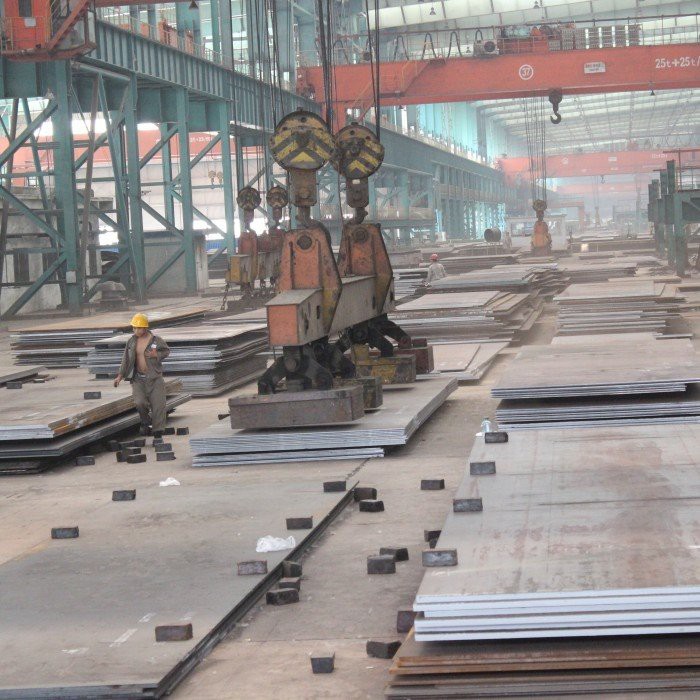
The test starts with a small load, and as the load increases, the sample begins to stretch. At first, the deformation is elastic, meaning the sample will return to its original shape when the load is removed. But once the yield point is reached, the deformation becomes plastic.
There are two ways to determine the yield strength from a tensile test: the offset method and the yield point method.
- Offset Method: This is the most commonly used method, especially for materials that don't have a clear yield point. In the offset method, a line is drawn parallel to the elastic part of the stress - strain curve, starting at a specified offset (usually 0.2% strain). The point where this line intersects the stress - strain curve is considered the yield strength.
- Yield Point Method: For some materials, there is a distinct point on the stress - strain curve where the stress suddenly drops and the material starts to deform rapidly. This point is called the yield point, and the corresponding stress is the yield strength.
Non - Destructive Testing (NDT)
Non - destructive testing methods can also be used to estimate the yield strength of high strength plates. These methods are useful when you don't want to damage the plate or when you need to test a large number of plates quickly.
- Ultrasonic Testing: Ultrasonic waves are sent through the plate, and the way the waves are reflected or transmitted can provide information about the material's properties. By analyzing the ultrasonic signals, it's possible to estimate the yield strength, although this method is less accurate than tensile testing.
- Hardness Testing: There is a correlation between the hardness of a material and its yield strength. By measuring the hardness of the high strength plate using methods like the Brinell, Rockwell, or Vickers hardness tests, you can get an estimate of the yield strength. However, this method also has some limitations and is more of an approximation.
Factors Affecting Yield Strength Measurement
When measuring the yield strength of high strength plates, there are several factors that can affect the results.
- Sample Preparation: The way the sample is prepared for testing can have a big impact on the yield strength measurement. If the sample is not cut correctly or if there are surface defects, it can lead to inaccurate results. For example, a rough cut or a crack on the surface of the sample can cause stress concentrations, which can make the measured yield strength lower than the actual value.
- Testing Conditions: The temperature, strain rate, and humidity during the test can also affect the yield strength. High strength plates may have different yield strengths at different temperatures. For instance, the yield strength usually decreases as the temperature increases. The strain rate, which is the rate at which the sample is deformed during the test, can also influence the results. A higher strain rate may result in a higher measured yield strength.
- Material Inhomogeneity: High strength plates may not be completely homogeneous throughout. There could be variations in the composition, grain size, or microstructure of the material. These inhomogeneities can cause local differences in the yield strength, and the measured value may not represent the overall properties of the plate.
Our High Strength Plate Offerings
As a high strength plate supplier, we offer a wide range of high - quality plates. For example, we have the A514GRE Astm A514, which is known for its excellent strength and toughness. It's commonly used in applications where high strength is required, such as in the construction of heavy - duty equipment.
We also supply the S460QL1 690ql Plate. This plate has a high yield strength and good weldability, making it suitable for a variety of structural applications.
Another great option is the S890QL. With its extremely high yield strength, it's ideal for applications that need to withstand very high loads, such as in the mining and offshore industries.
Conclusion
Measuring the yield strength of high strength plates is a complex but essential process. By using the right methods, taking into account the factors that can affect the results, and choosing the appropriate high strength plates for your application, you can ensure the safety and performance of your projects.
If you're in the market for high strength plates or have any questions about yield strength measurement, don't hesitate to reach out. We're here to help you find the best solutions for your needs. Whether you're an engineer, a contractor, or a manufacturer, we can provide you with the high - quality high strength plates you need and offer expert advice on their use.
References
- Callister, W. D., & Rethwisch, D. G. (2017). Materials Science and Engineering: An Introduction. Wiley.
- ASTM International. (2019). ASTM E8/E8M - 19a Standard Test Methods for Tension Testing of Metallic Materials.
- ISO 6892 - 1:2019 Metallic materials — Tensile testing — Part 1: Method of test at room temperature.