What is the Coefficient of Thermal Expansion of ASTM A537CL2?
As a reliable supplier of ASTM A537CL2, I often receive inquiries from customers regarding the various properties of this material, especially the coefficient of thermal expansion. In this blog post, I'll delve into the coefficient of thermal expansion of ASTM A537CL2, its significance, and how it compares to other related materials.
Understanding ASTM A537CL2
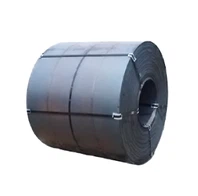
ASTM A537CL2 is a quenched and tempered carbon - manganese - silicon steel plate, which is commonly used in welded pressure vessels and storage tanks. It offers excellent strength, toughness, and weldability, making it a popular choice in industries such as petrochemical, power generation, and food processing.
The Coefficient of Thermal Expansion
The coefficient of thermal expansion (CTE) is a measure of how much a material expands or contracts when its temperature changes. It is defined as the fractional change in length or volume per degree change in temperature. For ASTM A537CL2, the average coefficient of linear thermal expansion over a temperature range from 20°C to 100°C is approximately (11.7\times10^{-6}/^{\circ}C).
This value indicates that for every degree Celsius increase in temperature, a 1 - meter long piece of ASTM A537CL2 will expand by about (11.7\times10^{-6}) meters. The coefficient of thermal expansion is crucial in engineering applications because it helps in predicting how a material will behave under different temperature conditions.
Significance in Engineering Applications
In pressure vessel and storage tank design, understanding the CTE of ASTM A537CL2 is of utmost importance. When these vessels are in operation, they may be exposed to a wide range of temperatures. For example, in a petrochemical plant, a storage tank may store hot fluids, causing the tank material to expand. If the expansion is not properly accounted for, it can lead to excessive stress, deformation, and even failure of the vessel.
Engineers use the CTE value to calculate the dimensional changes of the vessel during temperature variations. This allows them to design appropriate expansion joints or provide sufficient clearance to accommodate the expansion and contraction of the material. By doing so, they can ensure the safety and reliability of the pressure vessels and storage tanks.
Comparison with Other Related Materials
It's interesting to compare the CTE of ASTM A537CL2 with other similar materials used in pressure vessel applications. For instance, P295GH has an average coefficient of linear thermal expansion of about (12.2\times10^{-6}/^{\circ}C) in the temperature range from 20°C to 100°C. P335GH has a CTE of around (12.0\times10^{-6}/^{\circ}C) in the same temperature range. And SA516GR70 has a CTE of approximately (11.8\times10^{-6}/^{\circ}C).
These values show that ASTM A537CL2 has a relatively lower coefficient of thermal expansion compared to P295GH and P335GH, which means it will expand less for the same temperature increase. This property can be advantageous in applications where dimensional stability is critical.
Factors Affecting the Coefficient of Thermal Expansion
The CTE of ASTM A537CL2 can be influenced by several factors. One of the main factors is the chemical composition of the material. Small variations in the amounts of carbon, manganese, silicon, and other alloying elements can affect the atomic structure of the steel, which in turn influences its expansion behavior.
The heat treatment process also plays a significant role. Quenching and tempering, which are used to produce ASTM A537CL2, can alter the microstructure of the steel, leading to changes in the CTE. Additionally, the temperature range over which the CTE is measured can affect the value. Generally, the CTE may increase with increasing temperature.
Quality Assurance in Our Supply
As a supplier of ASTM A537CL2, we are committed to providing high - quality materials with consistent properties. We work closely with our mills to ensure that the chemical composition and heat treatment processes are strictly controlled. This helps in maintaining a stable coefficient of thermal expansion within the specified range.
We also conduct comprehensive quality inspections on all our products. Our in - house testing facilities are equipped with advanced instruments to measure the CTE and other mechanical properties of ASTM A537CL2. By doing so, we can guarantee that our customers receive materials that meet or exceed the relevant industry standards.
Contact for Procurement
If you are in the market for ASTM A537CL2 or have any questions regarding its properties, including the coefficient of thermal expansion, we would be more than happy to assist you. Our team of experts has extensive knowledge and experience in the field of pressure vessel materials. We can provide you with detailed technical information, offer competitive pricing, and ensure timely delivery.


Whether you are an engineer involved in the design of pressure vessels or a procurement manager looking for a reliable supplier, we invite you to contact us for a procurement discussion. We look forward to building a long - term partnership with you.
References
- ASTM International. ASTM A537/A537M - 19, Standard Specification for Pressure Vessel Plates, Heat - Treated, Carbon - Manganese - Silicon Steel.
- ASME Boiler and Pressure Vessel Code, Section II, Part A, Ferrous Material Specifications.
- "Metals Handbook: Properties and Selection: Irons, Steels, and High - Performance Alloys", ASM International.