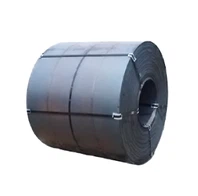
In the world of steel products, plates play a crucial role in a wide range of industries, from construction and manufacturing to automotive and aerospace. When it comes to plates, there are two main categories that often come up in discussions: high strength plates and ordinary plates. As a high strength plate supplier, I've had the opportunity to work closely with these materials and understand their unique characteristics. In this blog post, I'll delve into the key differences between high strength plates and ordinary plates, highlighting their properties, applications, and advantages.
1. Definition and Composition
Ordinary plates, also known as mild steel plates, are made primarily of iron with a small amount of carbon (usually less than 0.3%). This simple composition gives them relatively low strength and hardness but high ductility and weldability. They are commonly used in applications where high strength is not the primary requirement, such as general construction, machinery parts, and automotive body panels.
On the other hand, high strength plates are specifically engineered to have superior strength and toughness compared to ordinary plates. They are made by adding alloying elements such as manganese, chromium, nickel, and molybdenum to the steel. These alloying elements enhance the mechanical properties of the steel, allowing it to withstand higher stresses and loads. High strength plates typically have a carbon content between 0.1% and 0.5%, and their yield strength can range from 350 MPa to over 1000 MPa.
2. Mechanical Properties
One of the most significant differences between high strength plates and ordinary plates lies in their mechanical properties. High strength plates have a much higher yield strength and tensile strength than ordinary plates. Yield strength is the stress at which a material begins to deform plastically, while tensile strength is the maximum stress a material can withstand before breaking.
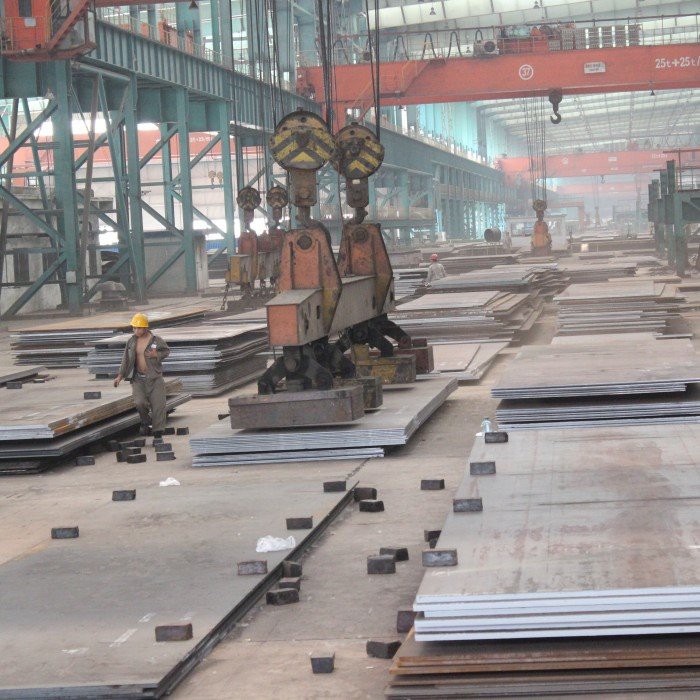

For example, an ordinary mild steel plate may have a yield strength of around 250 MPa and a tensile strength of 400 - 500 MPa. In contrast, high strength plates like S460QL have a minimum yield strength of 460 MPa and a tensile strength of 530 - 720 MPa. Even higher strength grades such as S690QL1 and S890QL can have yield strengths of 690 MPa and 890 MPa respectively, with corresponding high tensile strengths.
In addition to high strength, high strength plates also have excellent toughness, which is the ability of a material to absorb energy and resist fracture. This makes them suitable for applications in harsh environments or under dynamic loading conditions, where the risk of sudden failure is high.
3. Applications
The differences in mechanical properties between high strength plates and ordinary plates lead to distinct applications for each type.
Ordinary plates are widely used in general construction projects, such as building frames, bridges, and storage tanks. Their good weldability and formability make them easy to work with, and their relatively low cost makes them a cost - effective choice for large - scale projects where high strength is not a critical factor. They are also commonly used in the manufacturing of machinery parts, agricultural equipment, and automotive components.
High strength plates, on the other hand, are used in applications where high strength and light weight are required. In the construction industry, they are used in high - rise buildings, offshore platforms, and heavy - duty bridges. The high strength of these plates allows for the use of thinner sections, reducing the overall weight of the structure and saving on material costs. In the automotive and aerospace industries, high strength plates are used to manufacture components such as chassis, engine parts, and aircraft frames, where weight reduction is crucial for improving fuel efficiency and performance.
4. Manufacturing Process
The manufacturing process of high strength plates is more complex than that of ordinary plates. Ordinary plates are usually produced through a simple hot - rolling process, where the steel is heated above its recrystallization temperature and then rolled into the desired thickness. This process is relatively straightforward and can be carried out on a large scale, resulting in lower production costs.
High strength plates, however, require more precise control of the manufacturing process. In addition to hot - rolling, they often undergo heat treatment processes such as quenching and tempering. Quenching involves rapidly cooling the steel from a high temperature to a low temperature, which increases its hardness and strength. Tempering is then carried out to reduce the brittleness introduced by quenching and improve the toughness of the steel. These additional heat treatment steps require specialized equipment and careful control of process parameters, which adds to the production cost of high strength plates.
5. Cost
As mentioned earlier, the cost of high strength plates is generally higher than that of ordinary plates. The reasons for this are two - fold. Firstly, the alloying elements used in high strength plates are more expensive than the basic iron and carbon used in ordinary plates. Secondly, the more complex manufacturing process, including heat treatment, requires more energy, time, and specialized equipment, which also contributes to the higher cost.
However, it's important to note that the higher cost of high strength plates can be offset by their advantages in certain applications. For example, in a large - scale construction project, the use of high strength plates can reduce the amount of steel required, resulting in savings on material costs and transportation costs. In addition, the lighter weight of structures made from high strength plates can also lead to savings in foundation costs.
6. Corrosion Resistance
In terms of corrosion resistance, both high strength plates and ordinary plates are susceptible to rusting if not properly protected. However, high strength plates can be designed with better corrosion - resistant properties by adding alloying elements such as copper, nickel, and chromium. These elements form a passive oxide layer on the surface of the steel, which protects it from further corrosion.
Some high strength plates are also available with special coatings or treatments to enhance their corrosion resistance. For example, galvanized high strength plates are coated with a layer of zinc, which provides sacrificial protection against corrosion. In contrast, ordinary plates usually rely on simple paint coatings for corrosion protection, which may not be as effective in harsh environments.
Conclusion
In summary, high strength plates and ordinary plates have significant differences in terms of composition, mechanical properties, applications, manufacturing process, cost, and corrosion resistance. As a high strength plate supplier, I understand the unique requirements of different industries and can provide the right type of plate for each application.
If you are involved in a project that requires high strength, light weight, and excellent performance, high strength plates may be the ideal choice for you. Whether it's a high - rise building, an offshore platform, or a high - performance vehicle, our high strength plates, including S460QL, S690QL1, and S890QL, can meet your needs.
If you are interested in learning more about our high strength plates or have a specific project in mind, please feel free to contact us for further discussion. We are committed to providing high - quality products and professional services to our customers.
References
- ASM Handbook Committee. ASM Handbook Volume 1: Properties and Selection: Irons, Steels, and High - Performance Alloys. ASM International, 2007.
- Steel Construction Institute. Structural Steel Design: A Practical Guide. Wiley - Blackwell, 2015.
- Kutz, Myer. Mechanical Engineers' Handbook: Materials and Mechanical Design. John Wiley & Sons, 2016.