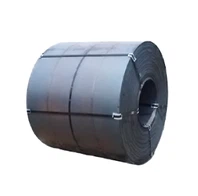
As a supplier of A387 steel plates, I often receive inquiries about various technical aspects of these plates. One question that has been coming up more frequently lately is: What is the carbon equivalent of A387 steel plate? In this blog post, I'll delve into this topic, explaining what carbon equivalent means, its significance for A387 steel plates, and how it impacts the performance and application of these plates.
Understanding Carbon Equivalent
Carbon equivalent is a concept used in metallurgy to estimate the hardenability of steel. It is a way to combine the effects of different alloying elements in steel into a single value that can be used to predict how the steel will behave during welding and heat treatment. The basic idea is that different elements in steel can affect its hardenability in a way similar to carbon. For example, elements like manganese, chromium, and molybdenum can increase the hardenability of steel, just as carbon does.
The carbon equivalent (CE) is calculated using a formula that takes into account the percentages of various elements in the steel. One of the most commonly used formulas for calculating carbon equivalent is the International Institute of Welding (IIW) formula:
[ CE = C+\frac{Mn}{6}+\frac{Cr + Mo+V}{5}+\frac{Ni + Cu}{15} ]
Where C, Mn, Cr, Mo, V, Ni, and Cu are the percentages of carbon, manganese, chromium, molybdenum, vanadium, nickel, and copper in the steel, respectively.
Carbon Equivalent of A387 Steel Plate
A387 steel is a chromium - molybdenum alloy steel plate used primarily for pressure vessels in high - temperature service. It comes in different grades, such as Grade 2, Grade 11, Grade 22, etc., each with its own specific chemical composition and mechanical properties.
Let's take a look at the typical chemical composition of A387 Grade 11 steel as an example. The chemical composition of A387 Grade 11 steel usually contains approximately:
- Carbon (C): 0.05 - 0.17%
- Manganese (Mn): 0.30 - 0.60%
- Phosphorus (P): ≤ 0.035%
- Sulfur (S): ≤ 0.035%
- Silicon (Si): 0.50 - 0.80%
- Chromium (Cr): 1.00 - 1.50%
- Molybdenum (Mo): 0.44 - 0.65%
Using the IIW formula to calculate the carbon equivalent of A387 Grade 11 steel, we substitute the values into the formula. Assuming C = 0.12%, Mn = 0.45%, Cr = 1.25%, Mo = 0.55%, and neglecting the small amounts of other elements for simplicity:


[ CE=0.12+\frac{0.45}{6}+\frac{1.25 + 0.55}{5}]
[ CE = 0.12+0.075+\frac{1.8}{5}]
[ CE = 0.12 + 0.075+0.36]
[ CE=0.555]
Significance of Carbon Equivalent for A387 Steel Plates
The carbon equivalent of A387 steel plates is of great significance in several aspects:
Weldability
Weldability is one of the most important considerations when using A387 steel plates in pressure vessel construction. A high carbon equivalent generally indicates a higher risk of cracking during welding. When the carbon equivalent is too high, the steel is more likely to form hard and brittle microstructures in the heat - affected zone (HAZ) during welding, which can lead to cold cracking. Therefore, understanding the carbon equivalent helps in determining the appropriate welding procedures, such as pre - heating and post - weld heat treatment, to ensure good weld quality.
Mechanical Properties
The carbon equivalent also affects the mechanical properties of the steel. A higher carbon equivalent can increase the strength and hardness of the steel but may reduce its ductility and toughness. For pressure vessels, a balance between strength and toughness is crucial to ensure safe operation under high - temperature and high - pressure conditions.
Heat Treatment
Heat treatment is often used to improve the mechanical properties of A387 steel plates. The carbon equivalent can influence the response of the steel to heat treatment processes. For example, a steel with a higher carbon equivalent may require more precise control of the heat treatment parameters to achieve the desired microstructure and properties.
Comparison with Other Pressure Vessel Steels
When comparing A387 steel plates with other pressure vessel steels such as P335GH, P295GH, and P275NL1, the carbon equivalent can vary significantly.
P335GH is a fine - grained steel for pressure purposes. Its carbon equivalent is relatively lower compared to some grades of A387 steel, which generally gives it better weldability without the need for excessive pre - heating. P295GH is another pressure vessel steel with a different chemical composition and carbon equivalent. It is designed for use in lower - temperature applications and has its own set of mechanical properties based on its carbon equivalent and other alloying elements. P275NL1 is a normalized steel for pressure vessels, and its carbon equivalent also plays a role in determining its suitability for specific applications.
How We Ensure Quality in Relation to Carbon Equivalent
As a supplier of A387 steel plates, we understand the importance of controlling the carbon equivalent to meet the requirements of our customers. We work closely with our steel mills to ensure that the chemical composition of the A387 steel plates we supply is within the specified range.
We conduct strict quality control measures, including chemical analysis of each batch of steel plates. Our in - house laboratories are equipped with advanced testing equipment to accurately measure the percentages of different elements in the steel. Based on the test results, we can calculate the carbon equivalent and ensure that it meets the relevant standards and customer requirements.
In addition, we provide technical support to our customers. If a customer has specific requirements regarding the carbon equivalent for a particular application, our technical team can offer advice on welding procedures, heat treatment, and other aspects to ensure the successful use of our A387 steel plates.
Conclusion
In conclusion, the carbon equivalent of A387 steel plates is a crucial parameter that affects their weldability, mechanical properties, and heat treatment response. By understanding the carbon equivalent and its significance, customers can make more informed decisions when selecting A387 steel plates for their pressure vessel applications.
If you are in the market for high - quality A387 steel plates and have questions about carbon equivalent or other technical aspects, please feel free to contact us for further discussion and procurement negotiation. We are committed to providing you with the best products and services to meet your specific needs.
References
- ASME Boiler and Pressure Vessel Code, Section II, Part A - Iron and Steel Specifications
- International Institute of Welding (IIW) standards on steel welding
- Technical literature on chromium - molybdenum alloy steels