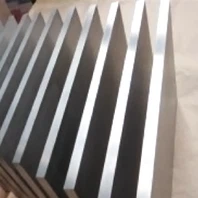
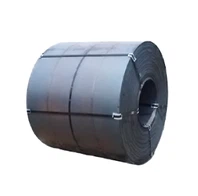
Hey there! As a supplier of clad plates, I'm super excited to share with you all the amazing applications of clad plates in the nuclear industry. Clad plates are composite materials made by bonding two or more different metals together. This unique combination offers a wide range of benefits, making them ideal for use in the demanding environment of the nuclear industry.
First off, let's talk about the properties of clad plates that make them so well - suited for nuclear applications. One of the key advantages is their corrosion resistance. Nuclear power plants operate in harsh environments where components are exposed to corrosive substances such as high - temperature water, radiation, and various chemicals. Stainless steel is often used as the cladding material in clad plates because it has excellent corrosion - resistant properties. For example, the S355JR+304L clad plate combines the strength of S355JR steel with the corrosion resistance of 304L stainless steel. This means that the inner part of the component can handle the mechanical loads, while the outer stainless - steel layer protects it from corrosion.
Another important property is strength. Nuclear facilities require materials that can withstand high pressures and mechanical stresses. The base metal in a clad plate provides the necessary strength, while the cladding can enhance other properties. Take the A516GR70 +304L Clad Plate as an example. A516GR70 is a high - strength carbon steel that is commonly used for pressure vessels. When it's clad with 304L stainless steel, it not only maintains its high - strength characteristics but also gains corrosion resistance. This makes it perfect for use in pressure vessels within nuclear power plants.
Now, let's dive into the specific applications of clad plates in the nuclear industry.
Reactor Pressure Vessels
Reactor pressure vessels are the heart of a nuclear power plant. They contain the nuclear reactor core and the coolant. These vessels need to be extremely reliable and safe. Clad plates are used to construct reactor pressure vessels because they can meet the strict requirements of strength and corrosion resistance. The base metal provides the structural integrity to withstand the high pressure and temperature inside the vessel, while the stainless - steel cladding prevents corrosion from the coolant and other reactive substances. The A537CL2+304L - Stainless Steel Clad Plate is a great choice for this application. A537CL2 steel has good toughness and strength, and when combined with 304L stainless steel, it forms a durable and corrosion - resistant material for the pressure vessel.
Steam Generators
Steam generators are essential components in a nuclear power plant. They transfer heat from the primary coolant (which is in contact with the nuclear reactor core) to the secondary coolant, which then turns into steam to drive the turbines. The tubes and shells of steam generators are often made from clad plates. The cladding helps to prevent corrosion from the high - temperature and high - pressure steam, as well as from the chemical additives in the coolant. This ensures the long - term reliability and efficiency of the steam generators.
Containment Structures
Containment structures are designed to prevent the release of radioactive materials in case of an accident. They need to be strong and durable. Clad plates can be used in the construction of these structures. The base metal provides the necessary strength to resist external forces such as earthquakes and impacts, while the cladding protects against corrosion and radiation - induced degradation. This helps to maintain the integrity of the containment structure over its long service life.
Piping Systems
Piping systems in nuclear power plants carry various fluids, including coolant, steam, and radioactive materials. Clad plates are used to make pipes because they can resist corrosion and erosion. The inner cladding layer protects the pipe from the corrosive fluids, while the outer base metal provides the mechanical strength to withstand the pressure and flow of the fluids. This reduces the risk of leaks and failures in the piping systems, which is crucial for the safe operation of the nuclear power plant.
Heat Exchangers
Heat exchangers are used to transfer heat between different fluids in a nuclear power plant. Clad plates are used in the construction of heat exchangers because they can provide both good heat transfer properties and corrosion resistance. The base metal can conduct heat efficiently, while the cladding protects the heat exchanger from corrosion, ensuring its performance and longevity.
In addition to these major applications, clad plates are also used in many other smaller components and structures in the nuclear industry. Their versatility and the combination of different properties make them an indispensable material in this field.
If you're in the nuclear industry and are looking for high - quality clad plates, you've come to the right place. As a supplier, we're committed to providing the best - quality clad plates that meet the strict standards of the nuclear industry. We have a wide range of products, including the ones I've mentioned above. Whether you need S355JR+304L, A516GR70 +304L Clad Plate, or A537CL2+304L - Stainless Steel Clad Plate, we can offer you the right solution.
Don't hesitate to reach out to us for more information or to start a procurement discussion. We're here to help you find the perfect clad plates for your nuclear - related projects.
References
- ASME Boiler and Pressure Vessel Code, which provides standards for the design, fabrication, and inspection of components in nuclear power plants.
- Nuclear Regulatory Commission (NRC) regulations in the United States, which govern the safety and quality requirements for materials used in nuclear facilities.
- Technical literature from steel and stainless - steel manufacturers on the properties and applications of different grades of metals used in clad plates.