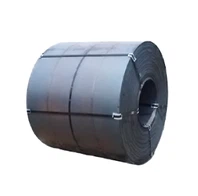
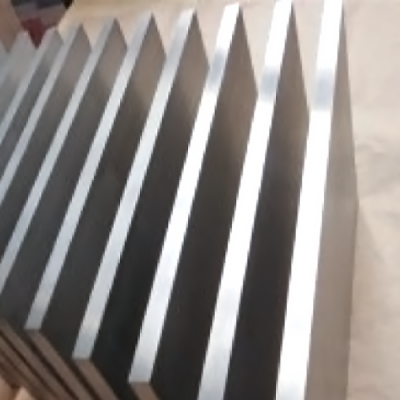
As a supplier of Pipe Line Plate X46, I've witnessed firsthand the critical role this material plays in the pipeline industry. Pipe Line Plate X46 is renowned for its excellent strength, toughness, and weldability, making it a popular choice for various pipeline projects. In this blog, I'll delve into the welding requirements for Pipe Line Plate X46, sharing insights based on my experience in the field.
Understanding Pipe Line Plate X46
Before we discuss the welding requirements, it's essential to understand the characteristics of Pipe Line Plate X46. This grade of pipeline plate is designed to meet the demanding specifications of the oil and gas industry. It has a minimum yield strength of 46,000 psi (317 MPa), which provides the necessary structural integrity for pipelines that transport various fluids, including oil, gas, and water.
Pipe Line Plate X46 also exhibits good impact toughness, which is crucial for withstanding the dynamic loads and stresses encountered during pipeline operation. Additionally, its weldability is a key factor in its widespread use, as it allows for efficient and reliable joining of pipeline sections.
Welding Process Selection
The choice of welding process is a critical decision when working with Pipe Line Plate X46. Several welding processes can be used, each with its own advantages and limitations. The most commonly used welding processes for Pipe Line Plate X46 include:

- Shielded Metal Arc Welding (SMAW): Also known as stick welding, SMAW is a versatile and widely used welding process. It is suitable for both on-site and shop welding applications. SMAW offers good control over the welding process and can be used in various positions. However, it has a relatively low deposition rate and requires frequent electrode changes.
- Gas Metal Arc Welding (GMAW): GMAW, also called MIG (Metal Inert Gas) or MAG (Metal Active Gas) welding, is a high-productivity welding process. It uses a continuous wire electrode and a shielding gas to protect the weld pool from atmospheric contamination. GMAW offers a high deposition rate and is suitable for both thin and thick sections of Pipe Line Plate X46. However, it requires a more complex setup and is more sensitive to wind and draft.
- Flux-Cored Arc Welding (FCAW): FCAW is a variation of GMAW that uses a tubular wire electrode filled with flux. The flux provides shielding gas and additional alloying elements to the weld pool. FCAW offers a high deposition rate and is suitable for both on-site and shop welding applications. It is also more forgiving of surface contaminants compared to GMAW. However, it produces more smoke and fumes and requires proper ventilation.
- Submerged Arc Welding (SAW): SAW is a high-productivity welding process that uses a granular flux to cover the weld pool. The arc is submerged beneath the flux, which provides excellent protection against atmospheric contamination and produces high-quality welds. SAW is suitable for welding thick sections of Pipe Line Plate X46 and is commonly used in pipeline manufacturing plants. However, it requires a more complex setup and is not suitable for on-site welding.
When selecting a welding process, it's important to consider factors such as the thickness of the Pipe Line Plate X46, the welding position, the productivity requirements, and the available equipment and resources.
Welding Procedure Specification (WPS)
A Welding Procedure Specification (WPS) is a document that provides detailed instructions for performing a specific welding operation. It includes information such as the welding process, welding parameters, preheat and post-weld heat treatment requirements, and the type of filler metal to be used. A WPS is essential for ensuring the quality and consistency of the welds.
When developing a WPS for Pipe Line Plate X46, it's important to follow the relevant industry standards and codes, such as the American Petroleum Institute (API) standards and the American Welding Society (AWS) codes. The WPS should be qualified through a welding procedure qualification record (WPQR), which involves conducting test welds and performing non-destructive testing (NDT) to verify the weld quality.
Preheat and Post-Weld Heat Treatment
Preheat and post-weld heat treatment are important steps in the welding process for Pipe Line Plate X46. Preheating helps to reduce the cooling rate of the weld metal and the heat-affected zone (HAZ), which can prevent the formation of hard and brittle microstructures. Post-weld heat treatment, on the other hand, helps to relieve residual stresses and improve the mechanical properties of the weld.
The preheat temperature and the post-weld heat treatment requirements for Pipe Line Plate X46 depend on several factors, such as the thickness of the plate, the welding process, and the ambient temperature. In general, a preheat temperature of 100°F to 200°F (38°C to 93°C) is recommended for Pipe Line Plate X46. The post-weld heat treatment may involve stress relieving, normalizing, or annealing, depending on the specific requirements of the project.
Filler Metal Selection
The selection of filler metal is another important consideration when welding Pipe Line Plate X46. The filler metal should have similar chemical composition and mechanical properties to the base metal to ensure good weld quality and compatibility.
For Pipe Line Plate X46, filler metals such as E7018 (for SMAW), ER70S-6 (for GMAW), and E71T-1 (for FCAW) are commonly used. These filler metals provide good strength, toughness, and weldability. It's important to select the filler metal based on the welding process, the thickness of the Pipe Line Plate X46, and the specific requirements of the project.
Welding Quality Control
Welding quality control is essential to ensure the integrity and reliability of the pipeline. It involves a series of inspections and tests to verify the quality of the welds. The most common non-destructive testing methods used for Pipe Line Plate X46 include:
- Visual Inspection: Visual inspection is the most basic form of non-destructive testing. It involves examining the weld surface for defects such as cracks, porosity, and lack of fusion.
- Radiographic Testing (RT): RT uses X-rays or gamma rays to detect internal defects in the weld, such as cracks, porosity, and lack of fusion.
- Ultrasonic Testing (UT): UT uses high-frequency sound waves to detect internal defects in the weld, such as cracks, lack of fusion, and porosity.
- Magnetic Particle Testing (MT): MT is used to detect surface and near-surface defects in ferromagnetic materials, such as Pipe Line Plate X46. It involves applying a magnetic field to the weld and then applying iron particles to the surface. The particles will accumulate at the locations of defects, making them visible.
- Liquid Penetrant Testing (PT): PT is used to detect surface defects in non-porous materials, such as Pipe Line Plate X46. It involves applying a liquid penetrant to the weld surface, allowing it to penetrate into the defects, and then removing the excess penetrant. A developer is then applied to the surface, which will draw the penetrant out of the defects, making them visible.
In addition to non-destructive testing, destructive testing methods such as tensile testing, bend testing, and impact testing may also be performed to verify the mechanical properties of the welds.
Conclusion
Welding Pipe Line Plate X46 requires careful consideration of several factors, including the welding process, welding procedure specification, preheat and post-weld heat treatment, filler metal selection, and welding quality control. By following the appropriate welding requirements and industry standards, it's possible to produce high-quality welds that meet the demanding specifications of the pipeline industry.
As a supplier of Pipe Line Plate X46, we are committed to providing our customers with high-quality products and technical support. If you have any questions or need further information about the welding requirements for Pipe Line Plate X46, please don't hesitate to contact us. We look forward to working with you on your next pipeline project.
If you are interested in learning more about our Pipe Line Plate X46 products, you can visit our Pipe Line Plate Factory page. We also offer other grades of pipeline plates, such as LX52 Pipe Line Plate X52 and LX56 Pipe Line Plate X60.
We welcome potential customers to contact us for procurement discussions. Our team of experts is ready to assist you in finding the right pipeline plate solutions for your project.
References
- American Petroleum Institute (API) Standards
- American Welding Society (AWS) Codes
- Welding Handbook, Volume 1: Welding Science and Technology, American Welding Society