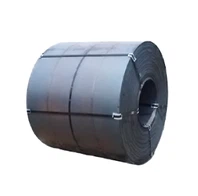
Hey there! As a supplier of A387 steel plates, I've gotten a bunch of questions about the role of titanium in these plates. So, I thought I'd take a moment to break it down for you all.
First off, let's talk a bit about A387 steel plates. These plates are widely used in the construction of pressure vessels and boilers that operate at elevated temperatures. They're known for their good strength, toughness, and resistance to corrosion and oxidation. But what does titanium have to do with all this?
Titanium is an alloying element that's added to A387 steel plates in small amounts, usually less than 0.1%. Even though it's used in such small quantities, its impact is pretty significant.
One of the main roles of titanium in A387 steel plates is to act as a grain refiner. During the solidification process of the steel, titanium forms titanium nitride (TiN) particles. These particles act as nuclei for the formation of new grains, which helps to refine the grain structure of the steel. A finer grain structure means better mechanical properties, such as increased strength and toughness. When the grains are smaller, there are more grain boundaries, and these boundaries act as barriers to the movement of dislocations (defects in the crystal structure of the steel). This makes it harder for the steel to deform under stress, resulting in higher strength. And in terms of toughness, a finer grain structure can prevent the propagation of cracks, which is crucial for applications where the steel may be subjected to sudden impacts or dynamic loads.
Another important function of titanium is its ability to improve the weldability of A387 steel plates. Welding is a common process in the fabrication of pressure vessels and boilers. However, welding can sometimes cause problems in the heat - affected zone (HAZ) of the steel, such as grain growth and the formation of brittle phases. Titanium helps to mitigate these issues. The TiN particles formed in the steel can pin the grain boundaries in the HAZ during welding, preventing excessive grain growth. This helps to maintain the mechanical properties of the steel in the welded area. Additionally, titanium can react with some of the impurities in the steel, such as sulfur and oxygen, to form stable compounds. This reduces the likelihood of the formation of brittle phases in the HAZ, which can improve the overall quality of the weld.
Titanium also plays a role in enhancing the corrosion resistance of A387 steel plates. It can form a protective oxide layer on the surface of the steel. This oxide layer acts as a barrier between the steel and the corrosive environment, preventing the steel from coming into direct contact with corrosive agents such as water, oxygen, and certain chemicals. This is especially important for applications where the pressure vessels or boilers may be exposed to harsh environments, like in the chemical or petrochemical industries.
Now, let's compare A387 steel plates with some other types of pressure vessel plates. For example, P295GH is another popular pressure vessel plate. While P295GH has its own set of advantages, A387 with titanium alloying offers better performance at elevated temperatures due to its refined grain structure and improved mechanical properties. Similarly, ASTM A537CL2 SA285GrB is commonly used, but A387 with titanium can provide enhanced weldability and corrosion resistance, which are crucial factors in many industrial applications. And when it comes to P335GH Pressure Plate SA516GR70, A387 with titanium's grain - refining effect gives it an edge in terms of strength and toughness.
As a supplier, I've seen firsthand how the addition of titanium in A387 steel plates can make a huge difference in the performance of the final products. Whether it's a small - scale pressure vessel for a local factory or a large - scale boiler for a power plant, the quality and reliability of the A387 steel plates with titanium are highly valued by our customers.
If you're in the market for high - quality A387 steel plates, I'd highly recommend considering the ones with titanium alloying. They offer a great combination of strength, toughness, weldability, and corrosion resistance, which are essential for any pressure vessel or boiler application. Whether you're involved in the manufacturing, construction, or maintenance of these types of equipment, having the right steel plates can save you a lot of time and money in the long run.
So, if you're interested in learning more about our A387 steel plates or want to discuss a potential purchase, don't hesitate to reach out. We're here to answer all your questions and help you find the best solution for your specific needs. Let's have a chat and see how we can work together to get you the top - notch A387 steel plates you deserve.
References
- "The Physical Metallurgy of Steels" by Robert W. Cahn and Peter Haasen
- "Steel: Processing, Structure, and Performance" by George Krauss
- "Welding Metallurgy and Weldability of Stainless Steels" by John C. Lippold and David J. Kotecki