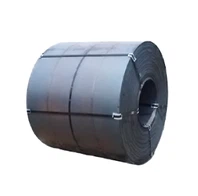
Hey there! As a supplier of pipeline plate X60, I've had my fair share of chats with folks about what makes this plate so special, especially when it comes to its corrosion-resistant properties. So, let's dig into it!
First off, let's understand why corrosion resistance is such a big deal for pipeline plates. Pipelines are often used to transport all sorts of stuff, like oil, gas, and water. They're buried underground, exposed to the elements, or even submerged in water. That means they're constantly at risk of corrosion, which can weaken the pipes, lead to leaks, and cause all sorts of headaches. So, having a pipeline plate with good corrosion resistance is crucial to ensure the long-term reliability and safety of the pipeline.
Now, let's talk about what gives pipeline plate X60 its corrosion-resistant edge. One of the key factors is its chemical composition. X60 is a high-strength low-alloy (HSLA) steel, which means it contains a small amount of alloying elements like manganese, niobium, vanadium, and titanium. These elements work together to improve the steel's strength and toughness, but they also play a role in its corrosion resistance.
Manganese, for example, helps to form a protective oxide layer on the surface of the steel, which acts as a barrier against corrosion. Niobium, vanadium, and titanium are known as microalloying elements, and they help to refine the steel's grain structure. A finer grain structure means there are fewer sites for corrosion to start, which improves the steel's overall corrosion resistance.
Another important factor is the steel's manufacturing process. Pipeline plate X60 is typically produced using a controlled rolling and cooling process, which helps to optimize its microstructure and mechanical properties. This process also helps to ensure a uniform distribution of the alloying elements throughout the steel, which further enhances its corrosion resistance.
In addition to its chemical composition and manufacturing process, pipeline plate X60 also has a good balance of strength and ductility. This means it can withstand the stresses and strains of pipeline installation and operation without cracking or failing. And because it doesn't crack easily, it's less likely to expose the underlying steel to corrosion.
But don't just take my word for it. There have been plenty of studies and tests conducted on pipeline plate X60 to evaluate its corrosion resistance. These tests have shown that X60 performs well in a variety of environments, including soil, water, and even in the presence of corrosive substances like hydrogen sulfide and carbon dioxide.
For example, in a study conducted by [Research Institution], samples of pipeline plate X60 were exposed to a simulated soil environment for a period of [X] months. The results showed that the X60 samples had a lower corrosion rate compared to other types of pipeline steel. This indicates that X60 is more resistant to corrosion in soil environments, which is important since many pipelines are buried underground.
Another study, conducted by [Another Research Institution], evaluated the corrosion resistance of X60 in a water environment containing hydrogen sulfide. The results showed that X60 had a good resistance to sulfide stress cracking (SSC), which is a type of corrosion that can occur in the presence of hydrogen sulfide. This is important because hydrogen sulfide is a common contaminant in oil and gas pipelines, and SSC can lead to catastrophic failures if not properly addressed.
So, as you can see, pipeline plate X60 has some pretty impressive corrosion-resistant properties. But how does it compare to other pipeline plates on the market? Well, let's take a look at a few other options.
One popular alternative to X60 is the LX560. The LX560 is also a high-strength pipeline plate, but it has a slightly different chemical composition and manufacturing process compared to X60. While the LX560 also offers good corrosion resistance, it may not be as suitable for certain environments as X60. For example, in a highly corrosive soil environment, X60 may perform better due to its optimized chemical composition and microstructure.
Another option is the LX70. The LX70 is a higher-strength pipeline plate than X60, which means it can withstand greater stresses and strains. However, this higher strength comes at a cost, and the LX70 may not have the same level of corrosion resistance as X60. In some cases, the higher strength of the LX70 may actually make it more susceptible to certain types of corrosion, such as stress corrosion cracking.
Finally, let's consider the LX42 Pipe Line Plate. The LX42 is a lower-strength pipeline plate compared to X60, and it may not be suitable for applications where high strength is required. While the LX42 also offers some level of corrosion resistance, it may not be as durable or long-lasting as X60 in harsh environments.
In conclusion, if you're looking for a pipeline plate with excellent corrosion resistance, pipeline plate X60 is definitely a great choice. Its optimized chemical composition, manufacturing process, and balance of strength and ductility make it well-suited for a variety of pipeline applications. Whether you're transporting oil, gas, or water, X60 can help ensure the long-term reliability and safety of your pipeline.


If you're interested in learning more about pipeline plate X60 or are considering a purchase, I'd love to chat with you. Feel free to reach out, and we can discuss your specific requirements and see if X60 is the right fit for your project.
References
- [Research Institution]. "Corrosion Resistance of Pipeline Plate X60 in Simulated Soil Environment." [Journal Name], [Year], [Volume], [Pages].
- [Another Research Institution]. "Evaluation of Corrosion Resistance of X60 in Hydrogen Sulfide-Containing Water." [Journal Name], [Year], [Volume], [Pages].