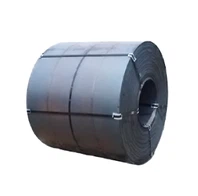
Hey there! I'm a supplier of 1045 steel plate, and today I wanna talk about whether 1045 steel plate can be cold-formed. It's a question I get a lot from my customers, so let's dig into it.
First off, let's understand what 1045 steel is. 1045 steel is a medium-carbon steel. It's known for its good strength, toughness, and wear resistance. It's commonly used in various applications like shafts, gears, and machinery parts. But when it comes to cold-forming, things get a bit more complicated.
Cold-forming is a process where you shape metal at room temperature. It's different from hot-forming, which involves heating the metal to high temperatures to make it more malleable. Cold-forming has its advantages. It's cost-effective since you don't have to spend money on heating the metal. It also gives you better dimensional accuracy and a good surface finish.
Now, can 1045 steel plate be cold-formed? The answer is yes, but with some limitations. 1045 steel has a relatively high carbon content compared to low-carbon steels. This higher carbon content makes it less ductile. Ductility is the ability of a material to deform without breaking. So, when you try to cold-form 1045 steel, it's more likely to crack or fracture compared to a low-carbon steel.
However, if the cold-forming process is well-planned and executed properly, it can be done. The key is to control the amount of deformation. You can't just bend or shape the 1045 steel plate too much all at once. You need to do it in small, incremental steps. This allows the steel to gradually adapt to the new shape without reaching its breaking point.
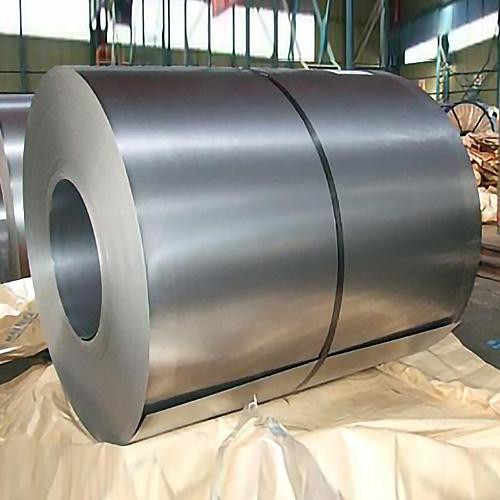

Another important factor is the quality of the 1045 steel plate. A high-quality plate with a uniform microstructure will be more suitable for cold-forming. Any impurities or inhomogeneities in the steel can act as stress concentrators, increasing the risk of cracking. As a supplier, I always make sure to provide high-quality 1045 steel plates to my customers. I work with reliable mills that follow strict quality control measures.
Let's compare 1045 steel with some other types of steel commonly used in similar applications. For example, SA285GrA SA285GrA is a low-carbon steel. It's much more ductile than 1045 steel, which means it's easier to cold-form. It's often used in pressure vessels and boilers. P335GH P335GH is another steel grade that is relatively easy to cold-form. It's used in power plants and other high-temperature applications. SA516GR70 SA516GR70 is also a popular choice for pressure vessels. It has good weldability and is more ductile than 1045 steel, making it a better option for cold-forming in some cases.
When you're planning to cold-form 1045 steel plate, you also need to consider the tooling. The tools used for cold-forming should be properly designed and maintained. They should have a smooth surface finish to reduce friction and prevent damage to the steel plate. The die radius is also an important factor. A larger die radius will reduce the stress on the steel during cold-forming, decreasing the risk of cracking.
In addition, lubrication is crucial. Using a good lubricant can significantly reduce friction between the steel plate and the tools. This not only makes the cold-forming process smoother but also helps to prevent surface damage and cracking. There are different types of lubricants available, and the choice depends on the specific cold-forming process and the requirements of the application.
If you're thinking about using 1045 steel plate for cold-forming, I'd recommend doing some small-scale tests first. Take a sample of the steel plate and try to cold-form it using the same process and tools you plan to use for the actual project. This will give you an idea of how the steel will behave and whether any adjustments need to be made.
As a supplier, I'm always here to help my customers. If you have any questions about cold-forming 1045 steel plate or need advice on choosing the right steel grade for your project, don't hesitate to reach out. I can provide you with detailed technical information and guidance based on my experience in the industry.
If you're interested in purchasing 1045 steel plate for your cold-forming project or any other application, feel free to contact me for a quote. I offer competitive prices and high-quality products. Let's work together to make your project a success.
In conclusion, 1045 steel plate can be cold-formed, but it requires careful planning, proper execution, and the right tools and lubrication. By understanding its limitations and taking the necessary precautions, you can achieve good results. Whether you're a small business or a large industrial company, I'm here to support you with your steel needs.
References:
- Metals Handbook: Properties and Selection: Irons and Steels, ASM International
- Steel Design Manual, American Institute of Steel Construction