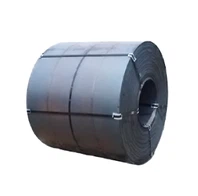
Hey there! As a supplier of Pipe Line Plate, I often get asked about how to measure the quality of this essential product. In this blog post, I'll share some key aspects and methods that can help you assess the quality of Pipe Line Plate.
Physical Appearance
The first thing you can do is to take a good look at the Pipe Line Plate. Check for any visible defects on the surface. Things like cracks, scratches, or dents can have a significant impact on the performance of the plate. Cracks, for instance, can weaken the structure and may lead to failures under pressure. Scratches can also act as stress - concentration points, which might cause the plate to break more easily over time.

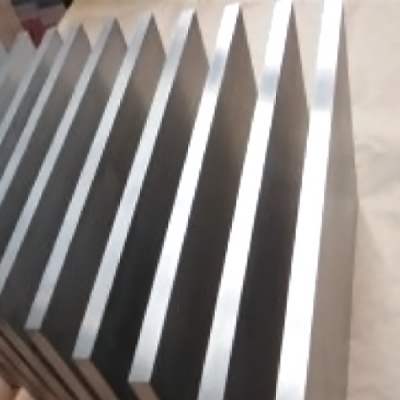
A smooth and uniform surface is generally a good sign. You can run your hand over the plate to feel for any irregularities. If the plate has a rough or uneven surface, it could indicate problems during the manufacturing process, such as poor rolling or improper heat treatment.
Dimensions and Tolerances
Accurate dimensions are crucial for Pipe Line Plate. The thickness, width, and length of the plate should meet the specified requirements. You can use measuring tools like calipers to check the thickness. Make sure the thickness is consistent across the entire plate. Any significant variations in thickness can lead to uneven stress distribution when the plate is used in a pipeline.
Width and length also need to be within the acceptable tolerance range. If the plate is too narrow or too short, it may not fit properly in the pipeline construction. On the other hand, if it's larger than the specified dimensions, it can cause problems during installation and may require additional cutting and fitting, which can be time - consuming and costly.
Chemical Composition
The chemical composition of the Pipe Line Plate plays a vital role in determining its quality. Different grades of Pipe Line Plate, such as LX42 Pipe Line Plate, LX70, and LX65, have specific chemical requirements.
Elements like carbon, manganese, sulfur, and phosphorus can have a big impact on the properties of the plate. Carbon, for example, can increase the strength of the steel, but too much carbon can make the plate brittle. Manganese helps to improve the hardenability and strength of the steel. Sulfur and phosphorus are usually considered impurities, and their content should be kept as low as possible because they can reduce the ductility and weldability of the plate.
To check the chemical composition, you can use methods like spectroscopy. This technique can accurately measure the amount of different elements in the plate. By comparing the measured values with the standard requirements for the specific grade of Pipe Line Plate, you can determine if the plate meets the quality standards.
Mechanical Properties
Mechanical properties are another important aspect of assessing the quality of Pipe Line Plate. Tensile strength is one of the key mechanical properties. It measures the maximum amount of stress the plate can withstand before it breaks. A higher tensile strength generally means the plate can handle more pressure in a pipeline.
Yield strength is also crucial. It indicates the stress at which the plate begins to deform plastically. When the stress in a pipeline exceeds the yield strength of the Pipe Line Plate, the plate will start to change shape permanently, which can lead to pipeline failures.
Elongation is a measure of how much the plate can stretch before it breaks. Good elongation properties are important because they allow the plate to deform slightly under stress without breaking. This is especially important in pipelines that may experience some movement or vibration.
Hardness is another mechanical property that can be measured. A proper hardness ensures that the plate is resistant to wear and abrasion. You can use hardness testing machines, such as a Rockwell or Brinell hardness tester, to measure the hardness of the Pipe Line Plate.
Weldability
Since Pipe Line Plate is often welded together to form pipelines, weldability is a critical quality factor. A plate with good weldability will form strong and reliable welds. Poor weldability can lead to weld defects, such as cracks, porosity, or lack of fusion.
To assess weldability, you can perform welding tests. For example, you can make test welds on the Pipe Line Plate and then examine the welds for defects. Non - destructive testing methods, such as ultrasonic testing or radiographic testing, can be used to detect internal defects in the welds.
Corrosion Resistance
Pipelines are often exposed to various corrosive environments, so the corrosion resistance of the Pipe Line Plate is very important. The chemical composition of the plate has a big influence on its corrosion resistance. For example, adding elements like chromium, nickel, or molybdenum can improve the corrosion resistance of the steel.
You can also use corrosion testing methods to evaluate the corrosion resistance of the plate. One common method is to immerse a sample of the plate in a corrosive solution for a certain period of time and then measure the amount of corrosion that has occurred. Another method is to use electrochemical techniques to measure the corrosion rate of the plate.
Impact Resistance
Pipelines may experience impacts during installation, operation, or due to external factors. So, the Pipe Line Plate needs to have good impact resistance. Impact testing, such as the Charpy V - notch test, can be used to measure the impact resistance of the plate.
In this test, a notched sample of the plate is struck with a pendulum, and the energy absorbed during the fracture is measured. A higher energy absorption indicates better impact resistance.
Conclusion
Measuring the quality of Pipe Line Plate involves a comprehensive assessment of its physical appearance, dimensions, chemical composition, mechanical properties, weldability, corrosion resistance, and impact resistance. By using the methods and techniques mentioned above, you can ensure that the Pipe Line Plate you are using or purchasing meets the required quality standards.
If you're in the market for high - quality Pipe Line Plate, I'm here to help. Whether you need LX42 Pipe Line Plate, LX70, LX65, or other grades, I can provide you with products that meet strict quality requirements. Feel free to reach out for more information and to start a procurement discussion.
References
- ASME Boiler and Pressure Vessel Code
- ASTM Standards for Steel Plates
- API Standards for Pipeline Materials