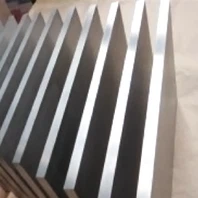
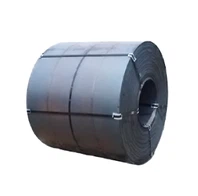
The work - hardening behavior of pipeline plate X60 is a crucial aspect that affects its performance in various applications, especially in the construction of pipelines. As a supplier of pipeline plate X60, I have witnessed firsthand the significance of understanding this behavior for both manufacturers and end - users.
1. Introduction to Pipeline Plate X60
Pipeline plate X60 is a high - strength, low - alloy steel widely used in the oil and gas industry for pipeline construction. Its excellent combination of strength, toughness, and weldability makes it a popular choice for transporting oil and gas over long distances. The chemical composition of X60 typically includes elements such as carbon, manganese, silicon, and small amounts of alloying elements like niobium, vanadium, and titanium. These elements contribute to its mechanical properties, including work - hardening behavior.
2. Understanding Work - Hardening
Work - hardening, also known as strain hardening, is the phenomenon where a metal becomes stronger and harder as it is deformed. When a pipeline plate X60 is subjected to external forces during manufacturing processes such as rolling, bending, or welding, or during its service life under internal pressure and external loads, the crystal structure of the steel is altered. Dislocations, which are line defects in the crystal lattice, start to move and interact with each other. As more dislocations are generated and their movement is restricted, the material becomes more resistant to further deformation.
Mathematically, the relationship between stress (σ) and strain (ε) during work - hardening can be described by the power - law equation: σ = Kεⁿ, where K is the strength coefficient and n is the work - hardening exponent. The value of n is an important parameter that characterizes the work - hardening ability of the material. For pipeline plate X60, the work - hardening exponent is typically in the range that allows it to withstand significant deformation without failure.
3. Factors Affecting Work - Hardening Behavior of Pipeline Plate X60
3.1 Chemical Composition
The chemical composition of pipeline plate X60 plays a vital role in its work - hardening behavior. Carbon is one of the most important elements. A higher carbon content generally increases the strength of the steel but can also reduce its ductility. Manganese helps in improving the hardenability and strength of the steel. Alloying elements like niobium, vanadium, and titanium form fine precipitates in the steel matrix. These precipitates act as obstacles to dislocation movement, enhancing the work - hardening effect.


3.2 Grain Size
The grain size of the steel also has a significant impact on work - hardening. A finer grain size provides more grain boundaries. Since dislocations are blocked at grain boundaries, a material with a finer grain size has more resistance to dislocation movement, resulting in a higher work - hardening rate. For pipeline plate X60, controlled rolling and heat treatment processes are often used to achieve a fine - grained microstructure, which improves both its strength and work - hardening behavior.
3.3 Deformation Temperature
The temperature at which deformation occurs affects the work - hardening behavior of pipeline plate X60. At low temperatures, the mobility of dislocations is restricted, and the work - hardening rate is relatively high. As the temperature increases, the dislocations can move more freely, and the work - hardening rate decreases. Additionally, at high temperatures, dynamic recovery and recrystallization processes may occur, which can reduce the work - hardening effect.
4. Importance of Work - Hardening in Pipeline Applications
4.1 Manufacturing Processes
During the manufacturing of pipelines from pipeline plate X60, processes such as pipe bending, forming, and welding involve significant deformation. The work - hardening behavior ensures that the material can withstand these deformations without cracking or losing its integrity. For example, when a pipeline is bent to follow the terrain, the outer surface of the bend is in tension and the inner surface is in compression. The work - hardening of the material helps it to adapt to these stress states and maintain its strength.
4.2 Service Life
In service, pipelines made of X60 are subjected to internal pressure from the transported fluids and external loads such as soil pressure and seismic forces. The work - hardening behavior of the pipeline plate contributes to its ability to resist deformation and failure over time. It helps the pipeline to maintain its shape and integrity, reducing the risk of leaks and ruptures.
5. Comparison with Other Pipeline Plates
When comparing pipeline plate X60 with other pipeline plates such as LX52 Pipe Line Plate X52 and LX70, the work - hardening behavior shows some differences. LX52 has a lower strength level compared to X60. Its work - hardening exponent is generally lower, which means it has a relatively lower ability to harden under deformation. On the other hand, LX70 has a higher strength and a different work - hardening characteristic. It may have a higher work - hardening rate in the initial stages of deformation, but due to its higher strength, it may also be more brittle in some cases.
6. Our Role as a Supplier
As a supplier of pipeline plate X60, we ensure that the material we provide meets the required standards for work - hardening behavior. We work closely with our manufacturing partners at the Pipe Line Plate Factory to control the chemical composition, grain size, and manufacturing processes. Through strict quality control measures, we test the work - hardening properties of the pipeline plate using methods such as tensile testing.
We also provide technical support to our customers. We can offer advice on the appropriate manufacturing processes and applications based on the work - hardening behavior of the X60 pipeline plate. For example, if a customer plans to use the plate for a pipeline project in a seismic - prone area, we can recommend specific heat treatment and forming processes to enhance the work - hardening and overall performance of the pipeline.
7. Conclusion and Call to Action
Understanding the work - hardening behavior of pipeline plate X60 is essential for ensuring the quality and performance of pipelines in the oil and gas industry. The chemical composition, grain size, and deformation temperature all influence this behavior, which in turn affects the manufacturing processes and service life of the pipelines.
If you are in the market for high - quality pipeline plate X60, we are here to serve you. Our expertise in providing materials with excellent work - hardening properties can help you achieve a reliable and long - lasting pipeline solution. Contact us for more information and to start a procurement discussion.
References
- ASM Handbook Volume 8: Mechanical Testing and Evaluation. ASM International.
- Metals Handbook Desk Edition, 3rd Edition. ASM International.
- "Work - Hardening Behavior of High - Strength Low - Alloy Steels" by various authors in Journal of Materials Science and Engineering.