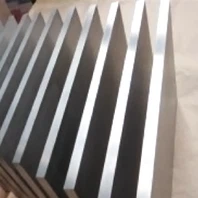
What are the testing standards for cladding steel plate?
As a leading supplier of cladding steel plates, I understand the critical importance of adhering to strict testing standards. Cladding steel plates are composite materials that combine the advantages of different metals, typically a base metal and a cladding layer. These plates are widely used in various industries such as oil and gas, chemical processing, and construction due to their excellent corrosion resistance, mechanical properties, and cost - effectiveness. In this blog, I will delve into the key testing standards for cladding steel plates.
1. Visual Inspection
Visual inspection is the most basic yet essential testing method. It is carried out to detect obvious surface defects such as cracks, porosity, inclusions, and unevenness on the cladding steel plate. The inspection is usually done under normal lighting conditions, and the inspector uses their eyes to examine the entire surface of the plate. Any visible defects may indicate problems during the manufacturing process, such as improper welding or bonding between the base metal and the cladding layer. For example, cracks on the surface can significantly reduce the mechanical strength and corrosion resistance of the plate, making it unfit for use in high - stress or corrosive environments.
2. Dimensional Inspection
Accurate dimensions are crucial for the proper installation and performance of cladding steel plates. Dimensional inspection involves measuring the thickness, width, length, and flatness of the plate. The thickness of the cladding layer and the base metal should be within the specified tolerance range. For instance, if the thickness of the cladding layer is too thin, it may not provide sufficient corrosion protection. The width and length of the plate should also meet the design requirements to ensure seamless integration into the final product. Flatness is another important factor, as an uneven plate can cause difficulties during installation and may lead to stress concentration points.
3. Chemical Composition Analysis
The chemical composition of both the base metal and the cladding layer plays a vital role in determining the properties of the cladding steel plate. Chemical composition analysis is used to verify that the elements in the plate are within the specified ranges. This is typically done using methods such as spectroscopy or wet chemical analysis. For example, in stainless steel cladding layers, the content of elements like chromium, nickel, and molybdenum is critical for corrosion resistance. If the chromium content is too low, the plate may be more susceptible to rust and corrosion. In the base metal, elements such as carbon, manganese, and sulfur can affect the mechanical properties such as strength and ductility.
4. Mechanical Property Testing
Mechanical property testing is essential to evaluate the strength, ductility, and toughness of the cladding steel plate. Common mechanical tests include tensile testing, hardness testing, and impact testing.
- Tensile Testing: Tensile testing measures the maximum stress a plate can withstand before breaking. Samples are cut from the plate and pulled in a testing machine until failure. The results of tensile testing provide information about the yield strength, ultimate tensile strength, and elongation of the plate. For example, in applications where the plate is subjected to high - load conditions, such as in pressure vessels, high yield and ultimate tensile strengths are required.
- Hardness Testing: Hardness testing determines the resistance of the plate to indentation or scratching. There are several hardness testing methods, such as Brinell, Rockwell, and Vickers. Hardness is an important property as it is related to wear resistance and the ability of the plate to withstand deformation. For instance, in industrial equipment where the plate may be in contact with abrasive materials, a higher hardness is desirable.
- Impact Testing: Impact testing assesses the toughness of the plate by measuring its ability to absorb energy under impact loading. A Charpy or Izod impact test is commonly used. This is particularly important in applications where the plate may be subjected to sudden shocks or impacts, such as in transportation or construction equipment.
5. Bonding Strength Testing
The bonding strength between the base metal and the cladding layer is a critical factor in the performance of cladding steel plates. If the bonding is weak, the cladding layer may delaminate from the base metal, leading to a loss of corrosion resistance and mechanical integrity. Bonding strength testing can be done using methods such as shear testing or peel testing. In shear testing, a force is applied parallel to the interface between the base metal and the cladding layer to measure the shear strength. Peel testing, on the other hand, involves peeling the cladding layer from the base metal to determine the bonding force.
6. Corrosion Resistance Testing
Since one of the main advantages of cladding steel plates is their corrosion resistance, corrosion resistance testing is of utmost importance. There are several methods for corrosion resistance testing, including salt spray testing, immersion testing, and electrochemical testing.
- Salt Spray Testing: Salt spray testing involves exposing the plate to a salt - water mist in a controlled environment for a specified period. This simulates the corrosive conditions in coastal or marine environments. After the test, the plate is examined for signs of corrosion, such as rust or pitting.
- Immersion Testing: Immersion testing immerses the plate in a corrosive solution for a certain time. This can be used to evaluate the long - term corrosion resistance of the plate in specific chemical environments.
- Electrochemical Testing: Electrochemical testing measures the electrochemical behavior of the plate in a corrosive environment. This method can provide information about the corrosion rate and the passive film formation on the surface of the plate.
Our Product Range and Compliance
At our company, we offer a wide range of cladding steel plates, including S355JR+304L, A537CL2+304L - Stainless Steel Clad Plate, and A516GR70 +304L Clad Plate. All our products are manufactured in strict accordance with international testing standards such as ASTM, ASME, and ISO. We conduct comprehensive testing on each batch of products to ensure that they meet or exceed the requirements of our customers.
Contact Us for Procurement
If you are in need of high - quality cladding steel plates, we invite you to contact us for procurement and further discussions. Our experienced team is ready to provide you with detailed product information, technical support, and competitive pricing. Whether you are working on a small - scale project or a large - scale industrial application, we can offer the right cladding steel plate solutions for you.
References
- ASTM International. (Year). ASTM standards related to steel plates and cladding materials.
- ASME Boiler and Pressure Vessel Code. (Year). Relevant sections on material testing for pressure vessel components.
- ISO standards for metal materials testing. (Year).