What is the Thermal Conductivity of ASTM A537CL2?
As a supplier of ASTM A537CL2, I often encounter inquiries from customers about various properties of this material, and one question that frequently comes up is about its thermal conductivity. In this blog post, I'll delve into what thermal conductivity is, the factors affecting it, and specifically, the thermal conductivity of ASTM A537CL2.

Understanding Thermal Conductivity
Thermal conductivity is a fundamental property of materials that describes the ability of a material to conduct heat. It is defined as the quantity of heat (in watts) that passes through a unit area (in square meters) of a material in a direction normal to that surface per unit time (in seconds) when a temperature gradient of one kelvin per unit length (in meters) exists across the material. The SI unit for thermal conductivity is watts per meter-kelvin (W/(m·K)).
A high thermal conductivity means that the material can transfer heat quickly, while a low thermal conductivity indicates that the material is a poor conductor of heat and can act as an insulator. For engineering applications, understanding the thermal conductivity of a material is crucial as it affects the efficiency of heat transfer systems, the thermal management of structures, and the overall performance of components operating under thermal loads.
ASTM A537CL2: An Overview
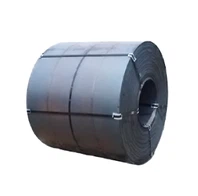
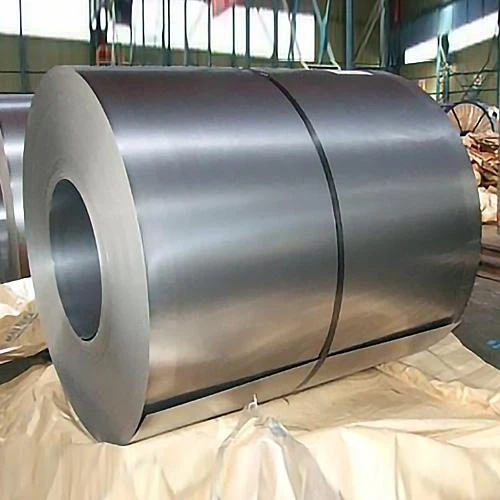
ASTM A537CL2 is a specification for pressure vessel plates, heat-treated, carbon-manganese-silicon steel. These plates are used in applications where high strength and good notch toughness are required, such as in the construction of pressure vessels, storage tanks, and other critical structures. The chemical composition of ASTM A537CL2 typically includes elements like carbon, manganese, silicon, sulfur, phosphorus, and trace amounts of other alloying elements. The heat treatment process, which usually involves quenching and tempering, imparts the desired mechanical properties to the material.
Factors Affecting the Thermal Conductivity of ASTM A537CL2
Several factors can influence the thermal conductivity of ASTM A537CL2:
- Chemical Composition: The presence of different elements in the steel can affect its thermal conductivity. For example, alloying elements can disrupt the regular lattice structure of the iron, which can scatter the heat-carrying electrons and phonons (quantized lattice vibrations), reducing the thermal conductivity. In ASTM A537CL2, the carbon, manganese, and silicon content can have a significant impact on its thermal properties.
- Microstructure: The heat treatment process used to produce ASTM A537CL2 results in a specific microstructure. Different microstructures, such as ferrite, pearlite, bainite, or martensite, have different thermal conductivities. For instance, ferrite, which is a relatively pure form of iron, has a higher thermal conductivity compared to more complex microstructures like martensite.
- Temperature: Thermal conductivity is generally temperature-dependent. As the temperature increases, the thermal conductivity of most metals, including ASTM A537CL2, tends to decrease. This is because at higher temperatures, the lattice vibrations become more intense, which leads to more scattering of the heat carriers.
Thermal Conductivity of ASTM A537CL2
The thermal conductivity of ASTM A537CL2 is typically in the range of approximately 40 - 50 W/(m·K) at room temperature (around 20 - 25°C). However, this value can vary depending on the specific manufacturing process, chemical composition, and heat treatment conditions of the material.
To obtain more accurate and detailed data on the thermal conductivity of ASTM A537CL2, it is advisable to refer to the material specifications provided by the manufacturer or conduct specialized thermal conductivity tests. These tests can be performed using methods such as the guarded hot plate method or the laser flash method, which are commonly used in materials science and engineering to measure thermal conductivity.
Comparison with Other Pressure Vessel Steels
When considering the thermal conductivity of ASTM A537CL2, it can be useful to compare it with other commonly used pressure vessel steels. For example, SA516GR70 and P295GH are also popular choices for pressure vessel applications.
SA516GR70 is a carbon steel plate used primarily for moderate and lower temperature service in welded pressure vessels. Its thermal conductivity is also in the range similar to ASTM A537CL2, typically around 40 - 50 W/(m·K) at room temperature. P295GH, on the other hand, is a European standard pressure vessel steel. It has a comparable thermal conductivity, but the exact value can vary depending on its specific chemical composition and manufacturing process. Another steel, P335GH Pressure Plate SA516GR70, is also used in pressure vessel construction and has thermal properties that are in the same ballpark as ASTM A537CL2.
Importance of Thermal Conductivity in Pressure Vessel Applications
In pressure vessel applications, the thermal conductivity of the material plays a vital role. For example, in heat exchanger applications, where the pressure vessel is used to transfer heat between two fluids, a high thermal conductivity is desirable to ensure efficient heat transfer. On the other hand, in applications where thermal insulation is required, such as in cryogenic storage tanks, a lower thermal conductivity may be preferred to minimize heat transfer and maintain the low temperature inside the tank.
Understanding the thermal conductivity of ASTM A537CL2 allows engineers and designers to make informed decisions about the material selection, design of the pressure vessel, and the overall thermal management of the system. It also helps in predicting the performance of the pressure vessel under different operating conditions and ensuring its safety and reliability.
Contact for Procurement
If you are interested in purchasing ASTM A537CL2 or have any questions regarding its thermal conductivity or other properties, feel free to contact us for further discussions and procurement opportunities. We are committed to providing high-quality ASTM A537CL2 products that meet your specific requirements.
References
- ASTM International. ASTM A537/A537M - 18 Standard Specification for Pressure Vessel Plates, Heat - Treated, Carbon - Manganese - Silicon Steel.
- Incropera, F. P., & DeWitt, D. P. (2002). Fundamentals of Heat and Mass Transfer. John Wiley & Sons.
- Callister, W. D., & Rethwisch, D. G. (2011). Materials Science and Engineering: An Introduction. Wiley.