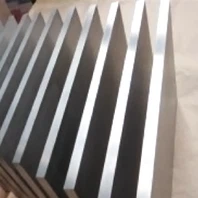
Hey there! I'm a supplier of vessel plate A516GR70. Today, I wanna share with you how to test the chemical composition of this awesome vessel plate.
First off, why do we even need to test the chemical composition of A516GR70? Well, the chemical makeup of this plate directly affects its mechanical properties, like strength, toughness, and corrosion resistance. If the chemical composition isn't right, the plate might not perform as expected in industrial applications, which can lead to all sorts of problems, from equipment failure to safety hazards. So, getting an accurate test is super important.
There are several methods to test the chemical composition of vessel plate A516GR70, and I'll go through some of the most common ones.
Spectroscopic Analysis
One of the most popular methods is spectroscopic analysis. This technique uses the interaction between light and matter to determine the elements present in the sample. There are different types of spectroscopic analysis, but the two most commonly used for metal testing are optical emission spectroscopy (OES) and X-ray fluorescence (XRF).
Optical Emission Spectroscopy (OES)
OES works by exciting the atoms in the sample with a high-energy source, like an electric arc or a spark. When the atoms return to their ground state, they emit light at specific wavelengths that are characteristic of each element. By analyzing the wavelengths and intensities of the emitted light, we can identify and quantify the elements in the sample.
The advantage of OES is its high accuracy and precision. It can detect a wide range of elements, including carbon, silicon, manganese, sulfur, phosphorus, and many others. However, it does require a relatively large sample size, and the sample needs to be prepared properly, usually by grinding or polishing the surface to ensure a clean and smooth area for analysis.
X-ray Fluorescence (XRF)
XRF, on the other hand, uses X-rays to excite the atoms in the sample. When the atoms are excited, they emit secondary X-rays, or fluorescence, at specific energies that are unique to each element. By measuring the energies and intensities of the fluorescence, we can determine the elemental composition of the sample.
XRF is a non-destructive testing method, which means it doesn't damage the sample. It's also relatively fast and easy to use, making it a popular choice for on-site testing. However, it may not be as accurate as OES for some elements, especially those with low concentrations.
Wet Chemical Analysis
Wet chemical analysis is another traditional method for testing the chemical composition of metals. This method involves dissolving the sample in a suitable acid or solvent and then analyzing the resulting solution using various chemical reactions and techniques.
For example, to determine the carbon content in A516GR70, we can use the combustion method. In this method, the sample is heated in a high-temperature furnace in the presence of oxygen. The carbon in the sample reacts with the oxygen to form carbon dioxide, which is then measured using a gas analyzer.
Wet chemical analysis is very accurate, especially for elements like carbon, sulfur, and phosphorus. However, it's a time-consuming process and requires skilled technicians to perform the tests. It also generates chemical waste, which needs to be disposed of properly.
Sampling Considerations
No matter which testing method you choose, proper sampling is crucial for accurate results. When sampling vessel plate A516GR70, you need to make sure that the sample is representative of the entire plate. This means taking samples from different locations on the plate, especially if the plate is large or has been processed in a non-uniform way.
The sample size also matters. For spectroscopic analysis, the sample size should be large enough to provide a sufficient amount of material for testing. For wet chemical analysis, the sample size may need to be adjusted depending on the specific test method and the expected concentration of the elements.

Quality Control and Standards
When testing the chemical composition of vessel plate A516GR70, it's important to follow the relevant quality control procedures and standards. The American Society for Testing and Materials (ASTM) has established specific standards for the chemical composition of A516GR70, which you can find in ASTM A516/A516M.
These standards specify the maximum and minimum limits for various elements, such as carbon, silicon, manganese, sulfur, and phosphorus. By comparing your test results with these standards, you can ensure that the plate meets the required specifications.
Comparison with Other Steel Plates
If you're considering vessel plate A516GR70, you might also be interested in other similar steel plates, such as S355JO, A573GR70, and A572GR55 Heavy Plate. Each of these plates has its own unique chemical composition and mechanical properties, so it's important to choose the one that best suits your specific application.
Conclusion
Testing the chemical composition of vessel plate A516GR70 is an important step in ensuring its quality and performance. By using the right testing methods, proper sampling techniques, and following the relevant standards, you can get accurate and reliable results.
If you're in the market for vessel plate A516GR70 or have any questions about its chemical composition testing, don't hesitate to reach out. I'm here to help you make the right choice for your project.
References
- ASTM A516/A516M - Standard Specification for Pressure Vessel Plates, Carbon Steel, for Moderate- and Lower-Temperature Service
- Various technical documents on metal testing methods and equipment.