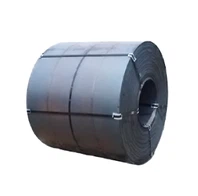
As a supplier of A387GR11CL2 steel, I've witnessed firsthand the crucial role that heat input plays in determining the welding quality of this material. A387GR11CL2 is a chromium - molybdenum alloy steel plate commonly used in pressure vessels and boilers due to its excellent strength, corrosion resistance, and high - temperature performance. In this blog, I'll explore how heat input affects the welding quality of A387GR11CL2 and why it's essential for manufacturers and fabricators to understand this relationship.
Understanding Heat Input in Welding
Heat input in welding refers to the amount of energy transferred from the welding arc to the base metal. It is typically measured in kilojoules per millimeter (kJ/mm) and is calculated using the formula:
[
\text{Heat Input} (kJ/mm)=\frac{60\times\text{Voltage}\times\text{Current}}{\text{Welding Speed}\times1000}
]
This formula shows that heat input is directly proportional to the voltage and current and inversely proportional to the welding speed. Controlling these parameters is vital because different heat input levels can lead to significant changes in the microstructure and mechanical properties of the welded joint.
Effects of Heat Input on Microstructure
The microstructure of a welded joint is a key factor that determines its mechanical properties. When welding A387GR11CL2, the heat input can have a profound impact on the formation of different microstructural phases.
Low Heat Input
Low heat input welding typically results in a faster cooling rate. This rapid cooling can lead to the formation of a fine - grained microstructure, which is generally associated with higher strength and hardness. However, it can also increase the risk of cracking, especially in the heat - affected zone (HAZ). The high cooling rate may cause the formation of martensite, a hard and brittle phase that can reduce the ductility and toughness of the welded joint.
High Heat Input
On the other hand, high heat input welding leads to a slower cooling rate. This allows more time for the diffusion of atoms, resulting in a coarser - grained microstructure. A coarse - grained structure often has lower strength and hardness compared to a fine - grained one. Additionally, high heat input can cause excessive grain growth in the HAZ, which can weaken the joint and make it more susceptible to corrosion and fatigue.
Impact on Mechanical Properties
The mechanical properties of a welded joint, such as tensile strength, yield strength, toughness, and ductility, are directly influenced by the heat input during welding.
Tensile and Yield Strength
As mentioned earlier, low heat input can produce a fine - grained microstructure, which generally leads to higher tensile and yield strength. However, if the cooling rate is too high, the formation of martensite can cause the joint to become brittle and may lead to premature failure under load. High heat input, on the other hand, can result in a decrease in strength due to the coarser grain structure.
Toughness and Ductility
Toughness and ductility are important properties, especially in applications where the welded structure may be subjected to impact or dynamic loading. Low heat input can reduce the toughness and ductility of the welded joint due to the formation of martensite. High heat input can also have a negative impact on these properties because of the coarse - grained microstructure and potential for grain boundary embrittlement.
Effects on Weld Defects
Heat input can also influence the occurrence of various weld defects in A387GR11CL2.
Cracking
As discussed, low heat input can increase the risk of cracking due to the formation of martensite and the high residual stresses generated during rapid cooling. High heat input can also cause cracking, particularly in the form of hot cracking, which occurs during the solidification process. Hot cracking is more likely to happen when the heat input is too high, leading to a large molten pool and slow solidification.
Porosity
Porosity is another common weld defect that can be affected by heat input. Low heat input may not provide enough energy to properly melt the base metal and filler material, resulting in incomplete fusion and the entrapment of gas bubbles. High heat input, on the other hand, can cause excessive evaporation of alloying elements, which can also lead to the formation of porosity.
Controlling Heat Input for Optimal Welding Quality
To achieve the best welding quality for A387GR11CL2, it's essential to carefully control the heat input. This can be done by adjusting the welding parameters, such as voltage, current, and welding speed.
Welding Procedure Specification (WPS)
A well - defined WPS is crucial for controlling heat input. The WPS should specify the appropriate welding parameters based on the thickness of the A387GR11CL2 plates, the type of welding process, and the desired mechanical properties of the welded joint. By following the WPS, welders can ensure that the heat input remains within the optimal range.
Pre - heating and Post - weld Heat Treatment (PWHT)
Pre - heating the A387GR11CL2 plates before welding can help reduce the cooling rate and minimize the risk of cracking. PWHT can also be used to relieve residual stresses and improve the mechanical properties of the welded joint. Both pre - heating and PWHT should be carried out according to the relevant standards and specifications.
Conclusion
In conclusion, heat input has a significant effect on the welding quality of A387GR11CL2. It influences the microstructure, mechanical properties, and the occurrence of weld defects. As a supplier of SA387GR11 A387 steel plate, I understand the importance of providing high - quality materials and ensuring that our customers have the knowledge and resources to weld them successfully.
If you're involved in the fabrication of pressure vessels or boilers using A387GR11CL2, it's essential to pay close attention to heat input during the welding process. By controlling the heat input and following proper welding procedures, you can achieve high - quality welded joints that meet the required standards and performance criteria.
We also supply other related materials such as SA516GR70 and ASTM A537CL2 SA285GrB. If you have any questions or are interested in purchasing our products, please feel free to contact us for procurement discussions. We're committed to providing you with the best solutions for your welding and fabrication needs.
References
- AWS D1.1/D1.1M:2020, Structural Welding Code - Steel.
- ASME Boiler and Pressure Vessel Code, Section IX, Welding and Brazing Qualifications.
- "Welding Metallurgy and Weldability of Stainless Steels" by John C. Lippold and David J. Kotecki.