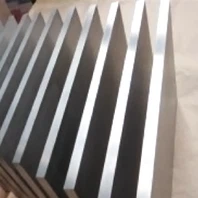
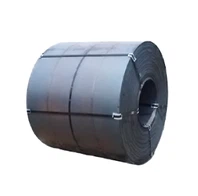
Hey there! As a heavy plate supplier, I often get asked about various properties of heavy plates, and one question that pops up quite frequently is, "What is the creep resistance of heavy plates?" Well, let's dive right into it and break it down in a way that's easy to understand.
First off, what's creep? Creep is the slow, continuous deformation of a material under a constant load and at a high temperature over a long period. You can think of it like a candy bar left in a hot car. Over time, it'll start to sag and lose its shape. In the world of heavy plates, creep can be a real problem, especially in industries where plates are exposed to high temperatures and stress for extended periods, like power generation, petrochemical, and aerospace.
Now, the creep resistance of heavy plates refers to their ability to resist this slow deformation. A plate with good creep resistance will maintain its shape and integrity even when it's under a constant load at high temperatures. This is super important because if a plate starts to deform due to creep, it can compromise the safety and efficiency of the entire structure it's part of.
So, what factors affect the creep resistance of heavy plates? Well, there are a few key ones.
Material Composition
The type of material used to make the heavy plate plays a huge role. For example, alloy steels often have better creep resistance than plain carbon steels. Alloying elements like chromium, molybdenum, and vanadium can form stable carbides within the steel matrix. These carbides act as barriers to the movement of dislocations (which are like tiny defects in the crystal structure of the metal), making it harder for the material to deform.
We offer some great options in terms of alloy steel heavy plates. Take our A633GRD Low Alloy Steel Plate for example. It's specifically designed to have good creep resistance, making it suitable for applications in high-temperature environments. Another one is A572GR60, which also has enhanced properties due to its alloy composition, providing reliable performance under high-stress and high-temperature conditions.
Heat Treatment
Heat treatment processes can significantly improve the creep resistance of heavy plates. Processes like annealing, normalizing, and quenching and tempering can change the microstructure of the steel. For instance, quenching and tempering can create a fine-grained structure with a uniform distribution of carbides. This fine-grained structure is more resistant to creep because it restricts the movement of dislocations.


Grain Size
The size of the grains in the metal also matters. Generally, a finer grain size leads to better creep resistance. Smaller grains mean there are more grain boundaries, and these boundaries act as obstacles to the movement of dislocations. So, during the manufacturing process, we can control the grain size through proper heat treatment and rolling techniques to enhance the creep resistance of our heavy plates.
Temperature and Stress Level
The temperature and the amount of stress the plate is subjected to are obvious factors. The higher the temperature and the greater the stress, the more likely the plate is to creep. That's why it's crucial to select the right heavy plate for a specific application based on the expected temperature and stress conditions.
Let's talk about some real - world applications where creep resistance is crucial. In power plants, heavy plates are used in boilers and steam pipes. These components are exposed to extremely high temperatures and pressures for long periods. If the plates don't have good creep resistance, they can start to deform, leading to leaks or even catastrophic failures.
In the petrochemical industry, heavy plates are used in reactors and storage tanks. These vessels often handle high - temperature and high - pressure chemicals. Creep can cause the walls of these vessels to thin over time, increasing the risk of corrosion and rupture.
We also have NM450 Abrasion Resistant Wear Plates which, in addition to their excellent abrasion resistance, also have decent creep resistance in certain applications. They are great for industries like mining and construction where the plates are not only exposed to wear but also to some degree of high - stress and high - temperature conditions.
When it comes to testing the creep resistance of heavy plates, there are specific methods. One common way is the creep test. In this test, a sample of the plate is subjected to a constant load at a specific high temperature for a set period. The deformation of the sample is measured over time, and based on these measurements, the creep rate and other relevant parameters can be calculated. This helps us determine if the plate meets the required standards for creep resistance.
As a heavy plate supplier, we take the creep resistance of our products very seriously. We work closely with our customers to understand their specific needs and recommend the most suitable heavy plates. Whether it's for a small - scale project or a large industrial application, we have the expertise and the product range to provide the right solution.
If you're in the market for heavy plates and need plates with good creep resistance, don't hesitate to get in touch. We can discuss your project requirements in detail and offer you the best - fitting heavy plates. Whether it's for a high - temperature power plant application or a petrochemical reactor, we've got you covered.
In conclusion, creep resistance is a vital property of heavy plates, especially in industries where high - temperature and high - stress conditions are the norm. By understanding the factors that affect creep resistance and choosing the right material and manufacturing processes, we can ensure that our heavy plates perform reliably and safely. So, if you have any questions or are ready to start a project, reach out to us. We're here to help you find the perfect heavy plates for your needs.
References
- ASM Handbook Volume 1: Properties and Selection: Irons, Steels, and High - Performance Alloys
- Callister, W. D., & Rethwisch, D. G. (2017). Materials Science and Engineering: An Introduction. Wiley.
- "Creep of Metals and Alloys" by K. L. Murty and S. V. Sastry.