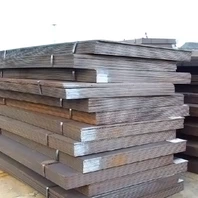
Hey there! I'm a supplier of 1045 steel plates, and today I wanna chat about how low temperature affects the properties of these bad boys.
First off, let's talk a bit about 1045 steel. It's a medium-carbon steel that's widely used in various industries because of its good combination of strength, toughness, and machinability. You can find it in things like shafts, gears, bolts, and other mechanical parts.
Now, when the temperature drops, a whole bunch of changes start happening to the properties of 1045 steel plates. One of the most noticeable effects is on its mechanical properties.
Impact on Strength
At low temperatures, the strength of 1045 steel generally increases. This is because the movement of dislocations (defects in the crystal structure of the steel) becomes more restricted as the temperature goes down. Dislocations are what allow the steel to deform plastically, and when they can't move as easily, the steel becomes harder and stronger.
But here's the catch. While the strength goes up, the ductility and toughness of the steel take a nosedive. Ductility is the ability of the steel to stretch and deform without breaking, and toughness is its ability to absorb energy before fracturing. At low temperatures, the steel becomes more brittle, which means it's more likely to crack or break under stress rather than bend or deform.
Effect on Fracture Behavior
The change in ductility and toughness leads to a significant change in the fracture behavior of 1045 steel at low temperatures. At normal temperatures, the steel usually fails in a ductile manner. This means that before it breaks, it will deform plastically, forming a necking region and showing signs of deformation.
However, at low temperatures, the fracture mode can shift to brittle fracture. Brittle fracture occurs suddenly and without much warning. There's very little plastic deformation before the crack propagates rapidly through the steel, causing it to break into pieces. This can be extremely dangerous in applications where the steel is under load, as it can lead to catastrophic failures.
Impact on Fatigue Resistance
Low temperatures also have an impact on the fatigue resistance of 1045 steel plates. Fatigue is the process by which a material fails under repeated loading. In normal conditions, the steel can withstand a certain number of loading cycles before it fails.
But at low temperatures, the fatigue life of the steel can be significantly reduced. The increased brittleness makes the steel more susceptible to crack initiation and propagation under cyclic loading. Even small cracks that might not cause a problem at normal temperatures can grow rapidly at low temperatures, leading to premature fatigue failure.
Considerations for Applications
If you're using 1045 steel plates in low-temperature environments, there are a few things you need to keep in mind.
First, you need to carefully assess the design of your components. You might need to modify the design to reduce stress concentrations, as these can act as initiation points for cracks. For example, using rounded corners instead of sharp edges can help distribute the stress more evenly and reduce the likelihood of crack formation.
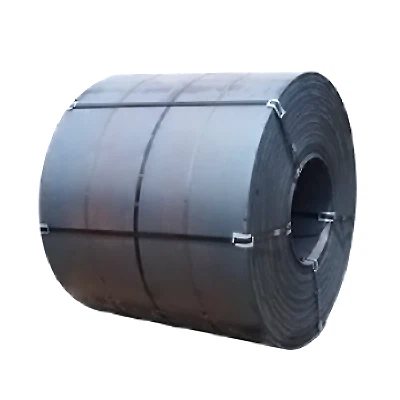

Second, you might want to consider heat treatment. Heat treatment can help improve the toughness of the steel at low temperatures. Processes like quenching and tempering can change the microstructure of the steel, making it more resistant to brittle fracture.
Finally, it's important to choose the right quality of steel. Some grades of steel are more resistant to low-temperature brittleness than others. For example, SA285GrA, SA516GR70, and P335GH are known for their good performance in low-temperature applications.
Our Services as a Supplier
As a 1045 steel plate supplier, we understand the challenges that come with using steel in low-temperature environments. That's why we offer high-quality 1045 steel plates that are carefully tested to ensure they meet the required standards.
We can also provide you with technical support and advice on how to use our steel plates in low-temperature applications. Whether you need help with design modifications, heat treatment, or choosing the right grade of steel, our team of experts is here to assist you.
If you're in the market for 1045 steel plates for low-temperature applications, don't hesitate to reach out to us. We're committed to providing you with the best products and services to meet your needs. We can work with you to find the perfect solution for your project, and ensure that your components perform reliably even in the harshest of conditions.
In conclusion, low temperature has a profound impact on the properties of 1045 steel plates. It changes the strength, ductility, toughness, fracture behavior, and fatigue resistance of the steel, which can have significant implications for its performance in various applications. But with the right knowledge and precautions, you can still use 1045 steel effectively in low-temperature environments. So, if you have any questions or need to purchase 1045 steel plates, just give us a shout, and we'll be happy to help you out.
References
- ASM Handbook Volume 1: Properties and Selection: Irons, Steels, and High-Performance Alloys
- Metals Handbook Desk Edition, Third Edition