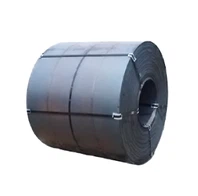
As a supplier of low alloy steel plates, I've witnessed firsthand the significant impact that impurities can have on the properties of these essential materials. Low alloy steel plates are widely used in various industries due to their excellent combination of strength, toughness, and weldability. However, the presence of impurities can alter these properties, sometimes in unexpected and detrimental ways.
1. Understanding Low Alloy Steel Plates
Low alloy steel plates are composed of a base of iron with small amounts (usually less than 5%) of alloying elements such as manganese, chromium, nickel, and molybdenum. These alloying elements are carefully added to enhance specific properties like strength, hardness, and corrosion resistance. For example, manganese can improve the hardenability and strength of the steel, while chromium enhances its corrosion resistance. Our company offers a range of high - quality low alloy steel plates, including NM450 Abrasion Resistant Wear Plates and High Strength Plate, which are designed to meet the diverse needs of our customers.
2. Common Impurities in Low Alloy Steel Plates
There are several common impurities that can find their way into low alloy steel plates during the manufacturing process. These include sulfur, phosphorus, oxygen, nitrogen, and hydrogen.
- Sulfur: Sulfur is often present as an impurity in steel. It forms iron sulfide (FeS) in the steel matrix. FeS has a low melting point and tends to segregate at the grain boundaries. This can lead to a phenomenon known as hot shortness, where the steel becomes brittle and prone to cracking during hot working processes such as rolling or forging. In extreme cases, hot shortness can cause the steel to break apart during manufacturing, resulting in significant production losses.
- Phosphorus: Phosphorus is another common impurity. It can increase the strength and hardness of the steel, but it also has a negative impact on its ductility and toughness. Phosphorus tends to segregate at the grain boundaries, which can lead to cold brittleness. Cold brittleness means that the steel becomes more prone to cracking at low temperatures, which is a major concern in applications where the steel will be exposed to cold environments, such as in Arctic oil and gas platforms or cold - storage facilities.
- Oxygen: Oxygen can react with other elements in the steel to form oxides. These oxides can act as stress raisers, reducing the fatigue life of the steel. For example, aluminum oxide (Al₂O₃) inclusions can initiate cracks under cyclic loading, leading to premature failure of the steel component. In addition, oxygen can also reduce the weldability of the steel by causing porosity and other defects in the weld.
- Nitrogen: Nitrogen can dissolve in the steel matrix and form nitrides. These nitrides can strengthen the steel, but they can also reduce its ductility and toughness. Similar to phosphorus, nitrogen can cause embrittlement, especially at low temperatures. In some cases, nitrogen can also lead to the formation of surface defects during heat treatment processes.
- Hydrogen: Hydrogen is a particularly troublesome impurity. It can diffuse into the steel lattice and cause hydrogen embrittlement. Hydrogen embrittlement is a phenomenon where the steel becomes brittle and can fail suddenly under stress, even at relatively low stress levels. This is a major concern in high - strength steels, where the risk of hydrogen embrittlement is higher. Hydrogen can enter the steel during the manufacturing process, such as during pickling or electroplating, or it can be absorbed from the environment during service.
3. Effects on Mechanical Properties
The presence of impurities can have a profound impact on the mechanical properties of low alloy steel plates.
- Strength: While some impurities like phosphorus and nitrogen can increase the strength of the steel to a certain extent, excessive amounts can lead to a decrease in strength due to the formation of brittle phases and the degradation of the steel's microstructure. For example, the presence of large amounts of FeS due to high sulfur content can weaken the steel by causing hot shortness, which ultimately reduces its overall strength.
- Ductility and Toughness: Impurities such as sulfur, phosphorus, and nitrogen generally have a negative effect on the ductility and toughness of the steel. As mentioned earlier, sulfur can cause hot shortness, and phosphorus can cause cold brittleness, both of which reduce the ability of the steel to deform plastically before fracture. This is a critical issue in applications where the steel needs to withstand impact or dynamic loading, such as in construction machinery or automotive components.
- Fatigue Resistance: Oxygen and nitrogen impurities can significantly reduce the fatigue resistance of low alloy steel plates. The oxides and nitrides formed by these impurities can act as crack initiation sites under cyclic loading. Once a crack initiates, it can propagate rapidly through the steel, leading to fatigue failure. This is a major concern in applications such as bridges and aircraft components, where the steel is subjected to repeated loading over its service life.
4. Effects on Corrosion Resistance
Impurities can also affect the corrosion resistance of low alloy steel plates. Sulfur, for example, can promote the formation of corrosion products on the surface of the steel. The FeS formed by sulfur can react with moisture and oxygen in the environment to form iron oxides and sulfuric acid. Sulfuric acid is a strong corrosive agent that can accelerate the corrosion process. In addition, the presence of impurities can disrupt the protective oxide layer that forms on the surface of the steel, making it more vulnerable to corrosion.
5. Effects on Weldability
Weldability is an important property of low alloy steel plates, especially in applications where the steel needs to be joined by welding. Impurities can have a significant impact on the weldability of the steel. Sulfur and oxygen can cause porosity, cracking, and other defects in the weld. For example, sulfur can react with the molten metal during welding to form gas bubbles, which can lead to porosity in the weld. Oxygen can react with the alloying elements in the steel to form oxides, which can also cause defects in the weld. Phosphorus can increase the hardness of the heat - affected zone, making it more prone to cracking.
6. Controlling Impurities in Low Alloy Steel Plates
To minimize the negative effects of impurities, steel manufacturers use various techniques to control their content in low alloy steel plates. These include:
- Refining Processes: Advanced refining processes such as ladle refining and vacuum degassing can be used to remove impurities from the molten steel. Ladle refining involves adding fluxes to the molten steel in a ladle to react with the impurities and remove them as slag. Vacuum degassing is used to remove dissolved gases such as hydrogen and nitrogen from the steel by subjecting it to a vacuum environment.
- Alloying Additions: Some alloying elements can be added to the steel to counteract the negative effects of impurities. For example, manganese can be added to combine with sulfur to form manganese sulfide (MnS), which is less harmful than FeS. Calcium can also be added to modify the shape and distribution of non - metallic inclusions, improving the mechanical properties of the steel.
7. Importance of Quality Control
As a supplier of low alloy steel plates, we understand the importance of quality control in ensuring that our products meet the highest standards. We have strict quality control measures in place to monitor the content of impurities in our steel plates. Our quality control team uses advanced analytical techniques such as spectroscopy and microscopy to analyze the chemical composition and microstructure of the steel. This allows us to detect and control the presence of impurities, ensuring that our customers receive high - quality products that meet their specific requirements.
8. Conclusion and Call to Action
In conclusion, impurities can have a significant impact on the properties of low alloy steel plates. They can affect the mechanical properties, corrosion resistance, and weldability of the steel, which can ultimately lead to performance issues and premature failure in applications. As a leading supplier of low alloy steel plates, we are committed to providing our customers with high - quality products that are free from harmful impurities. Our High Strength Plate is manufactured using state - of - the - art technology and strict quality control measures to ensure its superior performance.


If you are in need of high - quality low alloy steel plates for your project, we invite you to contact us for a detailed discussion. Our team of experts is ready to assist you in selecting the right product for your specific needs and to provide you with the best possible service. We look forward to working with you to meet your steel plate requirements.
References
- ASM Handbook Volume 1: Properties and Selection: Irons, Steels, and High - Performance Alloys. ASM International.
- Fundamentals of Steelmaking. Open - Courseware from MIT.
- Welding Metallurgy and Weldability of Stainless Steels. John C. Lippold and David J. Kotecki.