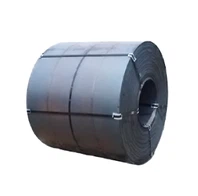
Hey there! As a supplier of ASTM A537, I've got a ton of knowledge about this material, especially when it comes to its aging treatment. So, let's dive right in and explore what the aging treatment for ASTM A537 is all about.
First off, ASTM A537 is a specification for pressure vessel plates, carbon - manganese - silicon steel, heat - treated. This steel is commonly used in the construction of pressure vessels, storage tanks, and other industrial equipment that need to withstand high pressures and harsh environments. Aging treatment is an important process for ASTM A537 as it can significantly improve the mechanical properties of the steel.
What is Aging Treatment?
Aging treatment, also known as precipitation hardening or age hardening, is a heat - treatment process used to increase the strength and hardness of certain metal alloys. For ASTM A537, the aging treatment involves heating the steel to a specific temperature and then holding it at that temperature for a certain period of time, followed by a controlled cooling process.
The main idea behind aging treatment is to allow the formation of fine precipitates within the steel's microstructure. These precipitates act as obstacles to the movement of dislocations, which are defects in the crystal lattice of the metal. When dislocations are hindered from moving, it becomes more difficult for the metal to deform, resulting in increased strength and hardness.
The Process of Aging Treatment for ASTM A537
The aging treatment process for ASTM A537 typically consists of three main steps: solution treatment, quenching, and aging.
Solution Treatment
The first step is solution treatment. In this step, the ASTM A537 steel is heated to a high temperature, usually in the range of 900 - 950°C (1652 - 1742°F). At this temperature, the alloying elements in the steel, such as carbon, manganese, and silicon, are dissolved into the iron matrix to form a homogeneous solid solution. This step is crucial because it prepares the steel for the subsequent precipitation process.
Quenching
After the solution treatment, the steel is rapidly cooled, or quenched. Quenching is usually done by immersing the steel in water or oil. The rapid cooling rate prevents the alloying elements from precipitating out of the solid solution during cooling, leaving the steel in a supersaturated state. This supersaturated solid solution is unstable and provides the driving force for the precipitation of fine particles during the aging step.
Aging
The final step is aging. The quenched ASTM A537 steel is heated to a lower temperature, typically between 500 - 650°C (932 - 1202°F), and held at this temperature for a specific period, which can range from a few hours to several hours depending on the desired properties. During aging, the supersaturated solid solution decomposes, and fine precipitates of alloying elements form within the steel's microstructure. These precipitates strengthen the steel by impeding the movement of dislocations.
Benefits of Aging Treatment for ASTM A537
There are several benefits of applying aging treatment to ASTM A537 steel:
Increased Strength and Hardness
As mentioned earlier, the formation of fine precipitates during aging treatment significantly increases the strength and hardness of the steel. This makes ASTM A537 more suitable for applications where high strength and wear resistance are required, such as in pressure vessels and storage tanks.


Improved Ductility and Toughness
In addition to increased strength, aging treatment can also improve the ductility and toughness of ASTM A537. The fine precipitates help to refine the grain structure of the steel, which in turn enhances its ability to deform plastically before fracture. This is important for ensuring the safety and reliability of the components made from ASTM A537.
Enhanced Corrosion Resistance
Aging treatment can also have a positive effect on the corrosion resistance of ASTM A537. The fine precipitates can act as barriers to the diffusion of corrosive agents, reducing the rate of corrosion and extending the service life of the steel in corrosive environments.
Considerations in Aging Treatment
While aging treatment offers many benefits, there are also some considerations that need to be taken into account:
Temperature and Time Control
The temperature and time during the aging treatment process are critical. If the temperature is too high or the time is too long, over - aging may occur, which can lead to a decrease in strength and toughness. On the other hand, if the temperature is too low or the time is too short, the precipitation process may not be complete, resulting in insufficient strengthening.
Residual Stress
Quenching during the aging treatment process can introduce residual stresses in the steel. These residual stresses can affect the dimensional stability and performance of the components. Therefore, it may be necessary to perform stress - relieving treatments after aging to reduce the residual stresses.
Related Products
If you're also interested in other pressure vessel plates, we have some great options. Check out our P335GH Pressure Plate SA516GR70 and P295GH. And for those looking for ASTM A537CL2 SA285GrB, we've got you covered too.
Conclusion
In conclusion, aging treatment is a vital process for ASTM A537 steel. It can significantly improve the mechanical properties, such as strength, hardness, ductility, and corrosion resistance, making the steel more suitable for a wide range of applications in the pressure vessel and industrial equipment industries. However, careful control of the aging treatment process is necessary to ensure the desired properties are achieved.
If you're in the market for ASTM A537 or any of our other pressure vessel plates, don't hesitate to reach out for a purchase negotiation. We're here to provide you with high - quality products and excellent service.
References
- ASM Handbook Volume 4: Heat Treating. ASM International.
- ASTM A537/A537M - 18 Standard Specification for Pressure Vessel Plates, Carbon - Manganese - Silicon Steel, Heat - Treated. ASTM International.