Hey there! As a supplier of Pressure Vessel Plates, I've seen firsthand how crucial it is to conduct thorough testing before installation. In this blog, I'll walk you through the key testing items for Pressure Vessel Plates to ensure they meet the required standards and perform safely in their intended applications.
1. Visual Inspection
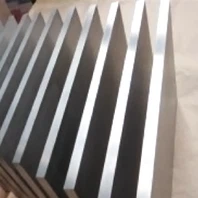
Let's start with the most basic yet important test - visual inspection. This is the first step in the testing process. When the plates arrive at the site, we need to take a good look at them. Check for any obvious surface defects like cracks, scratches, or dents. Cracks can be a real problem as they can propagate under pressure, leading to catastrophic failures. Scratches and dents might not seem like a big deal at first, but they can also weaken the plate over time. We also look at the overall flatness of the plate. Any significant warping or unevenness could cause issues during installation and affect the performance of the pressure vessel.
2. Dimensional Check
Next up is the dimensional check. The plates need to be the right size and shape for the pressure vessel they're going into. We measure the thickness, width, and length of the plate using precision measuring tools. Even a small deviation from the specified dimensions can lead to problems. For example, if the plate is too thick, it might not fit properly into the vessel's structure, and if it's too thin, it might not be able to withstand the pressure. We also check the straightness of the edges. Any irregularities in the edges can make it difficult to weld the plates together, which is a critical part of the installation process.
3. Chemical Composition Analysis
The chemical composition of the Pressure Vessel Plate is super important. It determines the plate's mechanical properties and its resistance to corrosion. We use various methods to analyze the chemical composition, such as spectrometry. We're looking for specific elements like carbon, manganese, silicon, sulfur, and phosphorus. Each element plays a different role in the plate's performance. For example, carbon can increase the strength of the plate, but too much carbon can make it brittle. Sulfur and phosphorus are usually considered impurities, and their levels need to be kept low to ensure good weldability and ductility.
4. Mechanical Property Testing
Mechanical property testing is one of the most critical steps in the testing process. There are several tests we perform to evaluate the plate's mechanical properties.
Tensile Test
The tensile test is used to measure the plate's strength and ductility. We take a sample from the plate and pull it until it breaks. During the test, we measure the maximum load the sample can withstand and the amount of elongation it undergoes before breaking. This gives us important information about the plate's ultimate tensile strength, yield strength, and elongation percentage. These properties are crucial for ensuring that the plate can handle the pressure and stress it will be subjected to in the pressure vessel.
Impact Test
The impact test is used to evaluate the plate's toughness, especially at low temperatures. We strike a notched sample of the plate with a pendulum and measure the energy absorbed during the impact. This test is important because pressure vessels often operate in different temperature conditions, and the plate needs to be able to withstand sudden impacts without fracturing. A plate with good impact toughness is less likely to fail under dynamic loading.
Hardness Test
The hardness test is used to measure the plate's resistance to indentation. We use a hardness testing machine to apply a specific load to the surface of the plate and measure the size of the indentation. The hardness of the plate can affect its machinability, wear resistance, and weldability. If the plate is too hard, it might be difficult to machine or weld, and if it's too soft, it might not be able to withstand the pressure and wear in the pressure vessel.
5. Non - Destructive Testing (NDT)
Non - destructive testing is used to detect internal defects in the plate without damaging it. There are several NDT methods we use for Pressure Vessel Plates.
Ultrasonic Testing (UT)
Ultrasonic testing uses high - frequency sound waves to detect internal flaws in the plate. We send ultrasonic waves into the plate and analyze the echoes that come back. Any internal defects like cracks or voids will cause a change in the echo pattern, which allows us to detect and locate the defect. UT is a very effective method for detecting subsurface defects that might not be visible during visual inspection.
Radiographic Testing (RT)
Radiographic testing uses X - rays or gamma rays to create an image of the internal structure of the plate. We place a film or a detector on one side of the plate and a radiation source on the other side. The radiation passes through the plate, and the internal defects show up as dark spots on the film or detector. RT is very good at detecting internal defects, especially those that are parallel to the surface of the plate.
Magnetic Particle Testing (MT)
Magnetic particle testing is used to detect surface and near - surface defects in ferromagnetic materials. We magnetize the plate and then apply magnetic particles to the surface. The particles will accumulate at the edges of any defects, making them visible. MT is a quick and easy method for detecting surface cracks in ferromagnetic Pressure Vessel Plates.
6. Weldability Test
Since welding is an important part of installing Pressure Vessel Plates, we also need to perform weldability tests. We weld samples of the plate using the same welding process and parameters that will be used in the actual installation. Then we inspect the welds for defects like cracks, porosity, and lack of fusion. We also test the mechanical properties of the welds, such as their strength and toughness. A good weldability test ensures that the plates can be welded together effectively and that the welds will be able to withstand the pressure and stress in the pressure vessel.

7. Corrosion Resistance Testing
Pressure vessels often operate in corrosive environments, so it's important to test the plate's corrosion resistance. There are several methods we use for corrosion resistance testing, such as immersion tests and electrochemical tests. In an immersion test, we immerse a sample of the plate in a corrosive solution for a certain period of time and then measure the amount of corrosion that has occurred. Electrochemical tests use electrical currents to measure the corrosion rate of the plate. By testing the corrosion resistance, we can ensure that the plate will have a long service life in the pressure vessel.
If you're in the market for high - quality Pressure Vessel Plates like SA285GrC A387GR11CL2, SA516GR70, or astm a537 16Mo3, and want to learn more about our testing procedures or discuss your specific requirements, feel free to reach out. We're always happy to have a chat and help you find the right plates for your project.
References
- ASME Boiler and Pressure Vessel Code
- ASTM International Standards for Pressure Vessel Plates
- API Standards for Pressure Equipment