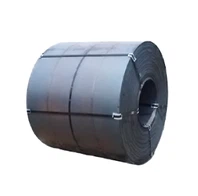
In the realm of industrial manufacturing, the production of pipeline plate X46 has witnessed remarkable technological innovations in recent years. As a dedicated supplier of pipeline plate X46, I have had the privilege of closely observing and participating in these advancements. This blog post aims to delve into the key technological innovations that have transformed the production process of pipeline plate X46, highlighting their significance and impact on the industry.
Advanced Steelmaking Techniques
One of the most significant technological innovations in the production of pipeline plate X46 lies in advanced steelmaking techniques. Traditional steelmaking methods often faced challenges in achieving the precise chemical composition and mechanical properties required for high - quality pipeline plates. However, modern steelmaking processes have overcome these limitations.
The use of electric arc furnaces (EAF) has become increasingly prevalent. EAFs offer several advantages over traditional blast furnaces. They can use a variety of scrap steel as raw materials, which not only reduces the environmental impact but also allows for more flexibility in production. Additionally, EAFs can achieve higher temperatures and better control over the melting process, enabling the production of steel with a more consistent chemical composition.
Another important technique is the ladle refining process. After the initial melting in the furnace, the steel is transferred to a ladle for further refining. During this process, various additives are introduced to adjust the chemical composition, remove impurities, and improve the cleanliness of the steel. The use of ladle refining has significantly enhanced the quality of pipeline plate X46, making it more resistant to corrosion and fatigue.
Precision Rolling Technology
Precision rolling technology has revolutionized the production of pipeline plate X46. In the past, rolling processes often resulted in variations in thickness, flatness, and surface quality of the plates. However, modern rolling mills are equipped with advanced control systems that ensure high precision in every aspect of the rolling process.
Computer - controlled rolling mills can precisely adjust the roll gap, rolling speed, and temperature to produce pipeline plates with uniform thickness and flatness. These mills use sensors and feedback mechanisms to continuously monitor and adjust the rolling parameters, ensuring that the final product meets the strictest quality standards.
Moreover, the development of hot - rolling and cold - rolling technologies has further improved the mechanical properties of pipeline plate X46. Hot - rolling at high temperatures can refine the grain structure of the steel, enhancing its strength and toughness. Cold - rolling, on the other hand, can improve the surface finish and dimensional accuracy of the plates. By combining these two processes, manufacturers can produce pipeline plates with excellent overall performance.
Heat Treatment Innovations
Heat treatment is a crucial step in the production of pipeline plate X46, as it significantly affects the mechanical properties of the steel. Recent technological innovations in heat treatment have led to more precise control over the heating and cooling processes, resulting in improved performance of the pipeline plates.
One of the key innovations is the use of controlled atmosphere heat treatment. By controlling the composition of the atmosphere in the heat - treatment furnace, manufacturers can prevent oxidation and decarburization of the steel surface, ensuring that the plates maintain their integrity and performance.
Another important development is the application of quenching and tempering processes. Quenching involves rapid cooling of the steel from a high temperature, which forms a hard and strong martensitic structure. Tempering is then carried out to relieve the internal stresses and improve the toughness of the steel. Through precise control of the quenching and tempering parameters, such as temperature and time, manufacturers can optimize the mechanical properties of pipeline plate X46 to meet the specific requirements of different applications.

Non - Destructive Testing (NDT) Advancements
Ensuring the quality and integrity of pipeline plate X46 is of utmost importance, especially in critical applications such as oil and gas transportation. Non - destructive testing (NDT) techniques play a vital role in detecting internal and surface defects in the plates without causing damage.
In recent years, there have been significant advancements in NDT technologies. Ultrasonic testing (UT) has become more sophisticated, with the development of high - frequency transducers and advanced signal processing algorithms. UT can detect small internal defects, such as cracks and inclusions, with high accuracy.
Magnetic particle testing (MPT) and eddy current testing (ECT) are also widely used for surface defect detection. These techniques can quickly and effectively identify surface cracks and other irregularities, ensuring that only high - quality pipeline plates are delivered to customers.
Coating Technologies
To enhance the corrosion resistance of pipeline plate X46, advanced coating technologies have been developed. Coating the plates can protect them from the harsh environments they are exposed to, such as soil, water, and chemicals.
One of the most commonly used coating methods is fusion - bonded epoxy (FBE) coating. FBE coating provides a hard, durable, and corrosion - resistant layer on the surface of the pipeline plates. It has excellent adhesion to the steel substrate and can withstand high temperatures and mechanical stresses.
Another emerging coating technology is the use of nanocomposite coatings. Nanocomposite coatings incorporate nanoparticles into the coating matrix, which can significantly improve the corrosion resistance, wear resistance, and barrier properties of the coating. These coatings offer a more advanced and long - lasting protection for pipeline plate X46.
Impact on the Industry
The technological innovations in the production of pipeline plate X46 have had a profound impact on the industry. Firstly, they have improved the quality and performance of the pipeline plates, making them more reliable and durable in various applications. This has increased the safety and efficiency of pipeline systems, reducing the risk of failures and accidents.
Secondly, these innovations have enhanced the productivity of the manufacturing process. With advanced steelmaking, rolling, heat treatment, and testing technologies, manufacturers can produce pipeline plates more quickly and with higher precision, meeting the growing demand from the market.
Finally, the development of advanced coating technologies has extended the service life of pipeline plate X46, reducing the need for frequent maintenance and replacement. This has resulted in significant cost savings for end - users, making pipeline transportation more economically viable.
Conclusion
As a supplier of pipeline plate X46, I am excited to witness the continuous technological innovations in this field. These advancements have not only improved the quality and performance of our products but also contributed to the development of the entire industry.
If you are in the market for high - quality pipeline plate X46, we invite you to explore our offerings. We are committed to providing the best products and services to meet your specific needs. For more information about our Pipe Line Plate Factory, please visit our website. Our LX560 and LX56 Pipe Line Plate X60 are also excellent choices for your projects.
We encourage you to contact us for procurement discussions. Our team of experts is ready to assist you in finding the most suitable pipeline plate solutions for your applications.
References
- Smith, J. (2020). Advances in Steelmaking Technology for Pipeline Applications. Journal of Steel Research, 45(2), 123 - 135.
- Johnson, A. (2019). Precision Rolling of Pipeline Plates: A Review. International Journal of Manufacturing Technology, 32(4), 567 - 578.
- Brown, C. (2021). Heat Treatment Innovations for High - Performance Pipeline Steel. Metallurgical Transactions, 52(3), 456 - 468.
- Davis, M. (2018). Non - Destructive Testing Techniques for Pipeline Plate Quality Assurance. NDT & E International, 41(6), 789 - 798.
- Wilson, S. (2022). Coating Technologies for Corrosion Protection of Pipeline Plates. Journal of Protective Coatings & Linings, 39(8), 102 - 115.