Hey there! As a supplier of low alloy steel plates, I've had my fair share of folks asking about the mechanical properties of these bad boys. So, I thought I'd take a few minutes to break it down for you.

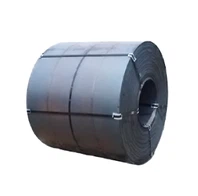
First off, let's talk about what low alloy steel plate actually is. It's a type of steel that has a small amount of alloying elements added to it. These elements can include things like manganese, silicon, nickel, chromium, and molybdenum. The addition of these elements can significantly improve the steel's mechanical properties, making it stronger, more durable, and more resistant to corrosion.
One of the key mechanical properties of low alloy steel plate is its strength. Low alloy steel plates are known for their high yield strength and tensile strength. Yield strength is the amount of stress a material can withstand before it starts to deform permanently. Tensile strength, on the other hand, is the maximum amount of stress a material can withstand before it breaks. The high strength of low alloy steel plates makes them ideal for use in applications where heavy loads or high pressures are involved, such as in construction, bridges, and machinery.
Another important mechanical property of low alloy steel plate is its toughness. Toughness is the ability of a material to absorb energy and deform plastically before fracturing. Low alloy steel plates are typically very tough, which means they can withstand impacts and vibrations without breaking. This makes them suitable for use in applications where there is a risk of sudden loading or shock, such as in mining equipment, offshore platforms, and military vehicles.
Ductility is also a crucial mechanical property of low alloy steel plate. Ductility is the ability of a material to be stretched or deformed without breaking. Low alloy steel plates are generally quite ductile, which allows them to be easily formed into various shapes and sizes. This makes them a popular choice for manufacturing processes such as rolling, forging, and welding.
In addition to strength, toughness, and ductility, low alloy steel plates also have good corrosion resistance. The alloying elements in low alloy steel can form a protective oxide layer on the surface of the steel, which helps to prevent rust and corrosion. This makes low alloy steel plates suitable for use in outdoor or marine environments, where they may be exposed to moisture and other corrosive substances.
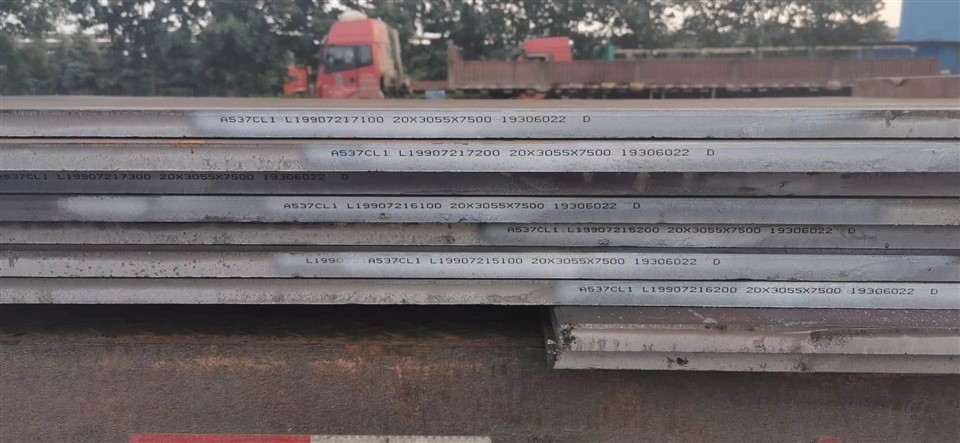
Now, let's take a look at some specific types of low alloy steel plates and their mechanical properties. One popular type of low alloy steel plate is the A537CL1 A537CL2 A537CL3 Asme Sa516. These plates are commonly used in pressure vessels and storage tanks. They have a minimum yield strength of 315 MPa and a minimum tensile strength of 485 MPa. They also have good notch toughness, which makes them suitable for use in low-temperature applications.
Another type of low alloy steel plate is the P460QL2 Vessel Plate A516GR70. These plates are used in the construction of pressure vessels, boilers, and other high-pressure equipment. They have a minimum yield strength of 460 MPa and a minimum tensile strength of 570 - 720 MPa. They also have excellent weldability and good resistance to brittle fracture.
The A573GR70 is another well-known low alloy steel plate. It is commonly used in structural applications, such as in buildings and bridges. It has a minimum yield strength of 248 MPa and a minimum tensile strength of 485 MPa. It also has good impact resistance and is easy to machine and weld.
So, there you have it - a brief overview of the mechanical properties of low alloy steel plates. As you can see, these plates offer a wide range of benefits, including high strength, toughness, ductility, and corrosion resistance. Whether you're in the construction, manufacturing, or any other industry that requires strong and durable materials, low alloy steel plates are definitely worth considering.
If you're interested in purchasing low alloy steel plates, I'd love to have a chat with you. We offer a wide range of low alloy steel plates in different grades, sizes, and thicknesses to meet your specific needs. Just reach out to us, and we'll be happy to discuss your requirements and provide you with a quote.
References
- ASM Handbook Volume 1: Properties and Selection: Irons, Steels, and High-Performance Alloys
- Metals Handbook Desk Edition, 3rd Edition