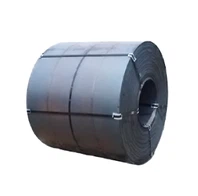
Hey there! As a supplier of low alloy steel plates, I've been getting a lot of questions lately about the main alloying elements in these plates. So, I thought I'd take a moment to break it down for you.
Low alloy steel plates are super popular because they offer a great balance of strength, toughness, and weldability. They're used in all sorts of industries, from construction to automotive, and even in some high - tech applications. The key to their performance lies in the alloying elements that are added to the base steel.
Manganese (Mn)
First up, we've got manganese. Manganese is like the workhorse of low alloy steel plates. It's usually present in amounts ranging from 0.5% to 1.5%. One of the main jobs of manganese is to improve the hardenability of the steel. That means it helps the steel form a harder structure when it's cooled after being heated. This is really important because it gives the steel plate better strength and wear resistance.
Manganese also helps to remove sulfur from the steel during the manufacturing process. Sulfur can cause some issues in steel, like making it brittle. By getting rid of sulfur, manganese improves the overall quality and ductility of the low alloy steel plate.
Silicon (Si)
Silicon is another common alloying element. It's typically added in small amounts, usually less than 0.5%. Silicon acts as a deoxidizer during the steel - making process. When steel is being melted, oxygen can get into it, and this can lead to the formation of oxides that weaken the steel. Silicon helps to remove that oxygen, resulting in a cleaner and stronger steel.
In addition to its deoxidizing properties, silicon also contributes to the strength and hardness of the low alloy steel plate. It helps to form a fine - grained structure in the steel, which improves its mechanical properties.
Chromium (Cr)
Chromium is often added to low alloy steel plates in amounts between 0.2% and 1.0%. One of the main benefits of chromium is its ability to improve the corrosion resistance of the steel. This is especially important in applications where the steel plate will be exposed to harsh environments, like in marine or chemical industries.
Chromium also helps to increase the hardenability and strength of the steel. It forms carbides in the steel, which are hard particles that strengthen the material. This makes the low alloy steel plate more resistant to wear and deformation.
Nickel (Ni)
Nickel is a valuable alloying element, usually present in low alloy steel plates in amounts of 0.2% to 2.0%. Nickel has a big impact on the toughness and ductility of the steel. It helps the steel to withstand impact loads without cracking. This is crucial in applications where the steel plate may be subjected to sudden shocks, like in heavy machinery or transportation equipment.
Nickel also improves the corrosion resistance of the steel, similar to chromium. It forms a protective layer on the surface of the steel, which helps to prevent rust and other forms of corrosion.
Molybdenum (Mo)
Molybdenum is typically added in small amounts, around 0.1% to 0.5%. It plays a key role in improving the high - temperature strength and creep resistance of the low alloy steel plate. Creep is the slow deformation of a material under a constant load over time, and it can be a problem in applications where the steel is exposed to high temperatures, like in power plants or industrial furnaces.


Molybdenum also enhances the hardenability of the steel, similar to other alloying elements. It helps to form a more uniform and stronger structure in the steel, which improves its overall performance.
Vanadium (V)
Vanadium is added in very small amounts, usually less than 0.1%. Despite its low concentration, vanadium has a significant impact on the steel. It forms fine - grained carbides and nitrides in the steel, which help to strengthen the material and improve its toughness.
Vanadium also helps to control the grain size of the steel during the heat - treatment process. A fine - grained structure is generally more desirable because it gives the steel better mechanical properties, such as higher strength and better ductility.
Copper (Cu)
Copper is sometimes added to low alloy steel plates in amounts of 0.2% to 0.5%. Copper improves the corrosion resistance of the steel, especially in environments where there is moisture or a high concentration of salts. It forms a protective patina on the surface of the steel, which helps to prevent rust and other forms of corrosion.
In addition to its corrosion - resistant properties, copper can also improve the strength and hardness of the steel to some extent.
Now, let's talk a bit about some of the products we offer as a low alloy steel plate supplier. We have a great selection of High Strength Plate. These plates are made with the right combination of alloying elements to give them excellent strength and performance.
One of our popular products is the S355JO. This is a high - quality low alloy steel plate that is widely used in construction and engineering applications. It has a good balance of strength, toughness, and weldability, thanks to the carefully selected alloying elements.
We also offer NM450 Abrasion Resistant Wear Plates. These plates are designed to withstand high levels of wear and abrasion, making them ideal for use in mining, quarrying, and other industries where materials are constantly being moved and rubbed against the steel.
If you're in the market for low alloy steel plates, whether it's for a small project or a large - scale industrial application, we've got you covered. Our plates are made with the highest quality standards, and we use the right combination of alloying elements to ensure they meet your specific requirements.
Don't hesitate to reach out to us if you have any questions or if you're interested in purchasing our low alloy steel plates. We're always happy to help you find the right product for your needs.
References
- ASM Handbook Volume 1: Properties and Selection: Irons, Steels, and High - Performance Alloys. ASM International.
- Steel Metallurgy for the Non - Metallurgist. J. R. Davis. ASM International.