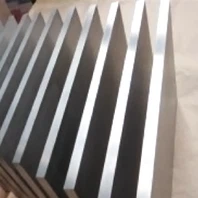
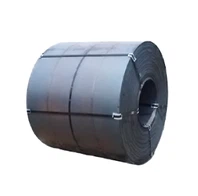
Hey there! As a supplier of clad plates, I'm super excited to chat about how these amazing materials are used in the aerospace industry. Clad plates are basically two or more different metals bonded together, which gives them a unique set of properties that are perfect for the demanding requirements of aerospace applications.
First off, let's talk about why clad plates are so great for aerospace. One of the main advantages is their ability to combine the best properties of different metals. For example, you can have a base metal that provides strength and durability, and a cladding metal that offers corrosion resistance or other special characteristics. This means that clad plates can be customized to meet the specific needs of different aerospace components.
One of the most common applications of clad plates in the aerospace industry is in the construction of aircraft structures. The fuselage, wings, and other parts of an aircraft need to be strong, lightweight, and resistant to corrosion. Clad plates can provide all of these properties in a single material. For instance, a clad plate made of a high-strength steel base with a stainless steel cladding can be used to make aircraft frames. The steel base gives the structure the necessary strength, while the stainless steel cladding protects it from corrosion, especially in harsh environments like saltwater or high humidity.
Another important application is in the manufacturing of aerospace engines. Engines are the heart of an aircraft, and they operate under extremely high temperatures, pressures, and stresses. Clad plates can be used to make engine components such as turbine blades, combustion chambers, and exhaust systems. For example, a clad plate with a nickel-based superalloy base and a ceramic cladding can be used for turbine blades. The nickel-based superalloy can withstand the high temperatures and stresses inside the engine, while the ceramic cladding can provide additional thermal insulation and protection against oxidation.
Clad plates are also used in the construction of aerospace fuel tanks. Fuel tanks need to be leak-proof, corrosion-resistant, and able to withstand the vibrations and stresses of flight. A clad plate made of an aluminum alloy base with a titanium cladding can be a great choice for fuel tanks. The aluminum alloy is lightweight, which helps to reduce the overall weight of the aircraft, while the titanium cladding provides excellent corrosion resistance and strength.
Now, let's take a look at some specific types of clad plates that are commonly used in the aerospace industry. One popular option is the A537CL2+304L - Stainless Steel Clad Plate. This clad plate combines the strength of A537CL2 steel with the corrosion resistance of 304L stainless steel. It's often used in the construction of aircraft frames and other structural components.
Another common type is the A516GR70 +304L Clad Plate. A516GR70 is a high-quality carbon steel that offers good strength and toughness, while 304L stainless steel provides excellent corrosion resistance. This clad plate is suitable for a wide range of aerospace applications, including fuel tanks and engine components.
The S355JR+304L clad plate is also widely used in the aerospace industry. S355JR is a structural steel with good mechanical properties, and 304L stainless steel adds corrosion resistance. It can be used for making various aerospace parts, such as landing gear components and brackets.
In addition to these applications, clad plates are also used in aerospace instrumentation and control systems. They can be used to make enclosures for electronic components, which need to be shielded from electromagnetic interference (EMI) and protected from the environment. A clad plate with a conductive metal base and a non-conductive cladding can provide both EMI shielding and environmental protection.
If you're in the aerospace industry and looking for high-quality clad plates, you've come to the right place. As a reliable supplier, we can offer you a wide range of clad plates with different base and cladding materials to meet your specific requirements. Whether you need a clad plate for an aircraft structure, engine component, fuel tank, or any other aerospace application, we can provide you with the right solution.
We understand the strict quality standards and regulations in the aerospace industry. That's why we ensure that all our clad plates are manufactured using the latest technology and processes, and they undergo rigorous quality control tests. We also offer customization services, so you can get the exact clad plate you need in terms of size, shape, and properties.
If you're interested in purchasing clad plates for your aerospace projects, don't hesitate to contact us. We'd be more than happy to discuss your needs, provide you with detailed product information, and offer you competitive prices. Just reach out to us, and we'll work with you to find the best clad plate solution for your aerospace applications.
In conclusion, clad plates play a crucial role in the aerospace industry. Their unique combination of properties makes them suitable for a wide range of applications, from aircraft structures and engines to fuel tanks and instrumentation. As a clad plate supplier, we're committed to providing high-quality products and excellent service to the aerospace industry. So, if you're in the market for clad plates, give us a chance, and let's work together to take your aerospace projects to the next level.
References
- Smith, J. (2020). Advanced Materials in Aerospace Engineering. Springer.
- Johnson, R. (2019). Aerospace Manufacturing Technology. McGraw - Hill.
- Williams, M. (2018). Corrosion Resistance in Aerospace Materials. Elsevier.