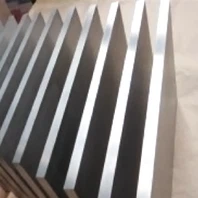
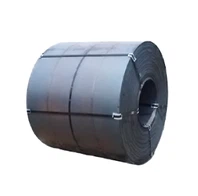
Hey there! As a supplier of ASTM A514, I've been getting a bunch of questions about the role of molybdenum in this high-strength steel. So, I thought I'd share what I've learned and experienced in this blog.
Let's start with the basics. ASTM A514 is a quenched and tempered alloy steel. It's well - known for its high yield strength, which makes it a go - to choice for applications where strength is crucial, like in construction of bridges, cranes, and heavy machinery.
Now, molybdenum is one of the key alloying elements in ASTM A514, and it brings several important effects to the table.
1. Increased Hardness and Strength
Molybdenum has a significant impact on the hardness and strength of ASTM A514. When added to the steel, it forms fine carbide particles. These carbides act as barriers to the movement of dislocations within the steel's crystal structure. Dislocations are like defects in the crystal lattice, and their movement is what causes the steel to deform under stress. By impeding the movement of dislocations, molybdenum helps the steel resist deformation, thereby increasing its hardness and strength.
For example, in heavy - duty construction equipment that needs to withstand high - stress conditions, the increased strength provided by molybdenum in ASTM A514 ensures that the components can handle the loads without failing. This is super important as it enhances the safety and reliability of the equipment.
2. Improved Toughness
Toughness is the ability of a material to absorb energy and deform plastically before fracturing. Molybdenum plays a vital role in improving the toughness of ASTM A514. It refines the grain structure of the steel. A finer grain structure means there are more grain boundaries. These grain boundaries can trap cracks and prevent them from propagating through the material.
In applications like bridge construction, where the steel needs to withstand dynamic loads and potential impacts, the improved toughness provided by molybdenum is essential. It helps the bridge to resist sudden shocks and vibrations, reducing the risk of catastrophic failure.
3. Enhanced Weldability
Weldability is another crucial aspect, especially when fabricating structures from ASTM A514. Molybdenum helps in reducing the tendency of the steel to form martensite during the welding process. Martensite is a hard and brittle phase that can form when the steel is rapidly cooled, such as during welding. If too much martensite forms, it can lead to cracking in the weld area.
By controlling the formation of martensite, molybdenum improves the weldability of ASTM A514. This allows for easier and more reliable welding, which is a big plus for manufacturers and fabricators. For instance, when building large - scale structures like offshore platforms, good weldability is essential for joining different components together effectively.
4. Resistance to Corrosion
Molybdenum also contributes to the corrosion resistance of ASTM A514. It forms a passive oxide layer on the surface of the steel, which acts as a barrier against corrosive agents. This is particularly important in environments where the steel is exposed to moisture, chemicals, or saltwater.
In marine applications, such as shipbuilding, the corrosion resistance provided by molybdenum helps to extend the lifespan of the steel components. It reduces the need for frequent maintenance and replacement, which can save a lot of time and money in the long run.


Comparison with Other High - Strength Steels
When comparing ASTM A514 with other high - strength steels like S690QL1, S460QL1 690ql Plate, and S890QL, the role of molybdenum becomes even more apparent. These steels also have their own unique properties, but the specific combination of properties in ASTM A514, enhanced by molybdenum, gives it an edge in certain applications.
For example, S690QL1 is known for its high strength, but ASTM A514 with its molybdenum - enhanced properties might offer better weldability and toughness in some cases. Similarly, S890QL has extremely high strength, but ASTM A514 could be a better choice when corrosion resistance and ease of fabrication are important factors.
Real - World Applications
In the real world, ASTM A514 with its molybdenum - enhanced properties is used in a wide range of industries. In the automotive industry, it's used for manufacturing parts like chassis components and suspension systems. The high strength and toughness provided by molybdenum ensure that these parts can withstand the rigors of daily use and various road conditions.
In the mining industry, ASTM A514 is used for equipment such as crushers and conveyors. The ability to resist wear, corrosion, and high - stress loads makes it an ideal choice for these demanding applications.
Conclusion
So, as you can see, molybdenum plays a crucial role in ASTM A514. It enhances the steel's hardness, strength, toughness, weldability, and corrosion resistance. These properties make ASTM A514 a versatile and reliable material for a wide range of applications.
If you're in the market for high - strength steel and think ASTM A514 might be the right choice for your project, I'd love to have a chat with you. Whether you need more information about the steel's properties, or you're ready to place an order, don't hesitate to reach out. Let's work together to find the best solution for your needs.
References
- ASM Handbook Volume 1: Properties and Selection: Irons, Steels, and High - Performance Alloys
- ASTM International standards for A514 steel
- Research papers on the effects of alloying elements in high - strength steels