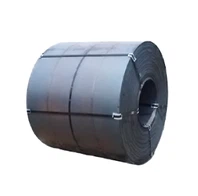
Hey there! As a supplier of ASTM A537CL2, I've seen firsthand how crucial welding quality is in various industries. One key factor that can significantly impact the welding quality of ASTM A537CL2 is the choice of shielding gas. In this blog, I'm gonna break down the effects of different shielding gases on the welding quality of ASTM A537CL2.
The Basics of ASTM A537CL2
Before we dive into the shielding gases, let's quickly go over what ASTM A537CL2 is. It's a high - strength, heat - treated carbon manganese silicon steel plate used in welded pressure vessels. This steel grade is known for its good notch toughness and excellent weldability, making it a popular choice in the construction of pressure vessels, storage tanks, and other critical applications.
Why Shielding Gases Matter
Shielding gases play a vital role in the welding process. They protect the molten weld pool from atmospheric contaminants like oxygen, nitrogen, and hydrogen. If these contaminants get into the weld pool, they can cause a bunch of problems, such as porosity, cracking, and reduced mechanical properties. So, choosing the right shielding gas is super important for achieving high - quality welds on ASTM A537CL2.
Different Shielding Gases and Their Effects
Argon (Ar)
Argon is a noble gas, which means it's chemically inert. When used as a shielding gas for welding ASTM A537CL2, it provides a stable arc and good weld bead appearance. The arc with argon is smooth and quiet, and it produces minimal spatter. This results in a clean and aesthetically pleasing weld.
However, argon has some limitations. It has a low thermal conductivity, which can lead to a narrow and deep weld penetration. In some cases, this might not be ideal, especially when you need a wider and shallower weld for better fusion with the base metal. Also, argon alone doesn't provide enough deoxidation, so there's a risk of oxidation in the weld pool if there are any surface contaminants.
Carbon Dioxide (CO₂)
Carbon dioxide is a commonly used shielding gas in welding, mainly because it's relatively inexpensive. When CO₂ is used for welding ASTM A537CL2, it has a high thermal conductivity. This leads to a wider and shallower weld penetration compared to argon. The arc with CO₂ is more forceful, which helps in better fusion with the base metal.
But, CO₂ also has its drawbacks. It's a reactive gas, and during the welding process, it can dissociate and release oxygen. This oxygen can react with the molten metal in the weld pool, causing oxidation and an increase in spatter. The welds made with CO₂ may have a rougher surface finish compared to those made with argon.
Argon - Carbon Dioxide Mixtures
Combining argon and carbon dioxide is a popular choice for welding ASTM A537CL2. The most common mixtures are 90% Ar + 10% CO₂ and 75% Ar + 25% CO₂. These mixtures offer the best of both worlds.
The argon in the mixture provides a stable arc and reduces spatter, while the carbon dioxide increases the arc energy and improves the weld penetration and fusion. The resulting welds have a good balance between a smooth appearance and proper penetration. They also have better mechanical properties compared to welds made with pure argon or pure CO₂.
Helium (He)
Helium is another noble gas that can be used as a shielding gas. It has a high thermal conductivity and a high ionization potential. When helium is used for welding ASTM A537CL2, it can increase the heat input to the weld pool. This results in a wider and deeper weld penetration compared to argon.
Helium also helps in reducing the surface tension of the molten metal, which improves the wetting action and the fusion with the base metal. However, helium is more expensive than argon and CO₂, and it can be difficult to control the arc when using high - helium mixtures.
Impact on Weld Quality
The choice of shielding gas can have a significant impact on the quality of the welds in ASTM A537CL2.
Mechanical Properties
The right shielding gas can improve the mechanical properties of the weld, such as tensile strength, yield strength, and impact toughness. For example, argon - carbon dioxide mixtures can help in achieving better fusion and less porosity, which leads to higher strength welds. On the other hand, improper shielding gas selection can result in welds with lower mechanical properties, making them more prone to failure under stress.
Weld Appearance
As mentioned earlier, different shielding gases can affect the appearance of the weld. Argon provides a smooth and clean weld bead, while CO₂ may result in a rougher surface with more spatter. The appearance of the weld is not just about aesthetics; it can also be an indicator of the internal quality of the weld.
Porosity and Cracking
Shielding gases can help prevent porosity and cracking in the welds. Argon - based mixtures are better at preventing porosity because they provide a more stable shielding environment. CO₂, if not used properly, can increase the risk of porosity due to its reactivity. Cracking can also occur if the weld pool is not properly protected from contaminants or if the cooling rate is too fast.
Other Related Steel Grades
If you're interested in other steel grades for pressure vessel applications, you might want to check out SA285GrC A387GR11CL2, P295GH, and SA387GR11 A387 steel plate. These grades also have their own unique properties and welding requirements.
Conclusion
In conclusion, the choice of shielding gas has a huge impact on the welding quality of ASTM A537CL2. Each shielding gas has its own advantages and disadvantages, and the best choice depends on the specific welding requirements, such as the desired weld appearance, penetration, and mechanical properties.


If you're in the market for ASTM A537CL2 or have any questions about welding it, feel free to reach out. We're here to help you make the right choices for your projects. Whether you need advice on shielding gas selection or want to discuss your specific requirements, we're just a message away. Let's work together to ensure high - quality welds and successful projects.
References
- AWS Welding Handbook, Volume 2: Welding Processes
- ASME Boiler and Pressure Vessel Code, Section IX: Welding and Brazing Qualifications
- Technical literature from steel manufacturers on ASTM A537CL2