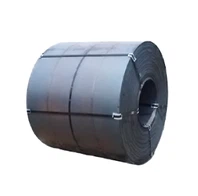
As a reliable supplier of ASTM A537CL2, I've witnessed firsthand the critical role that surface finish plays in the performance and quality of this material. ASTM A537CL2 is a high-strength, heat-treated carbon steel plate primarily used in welded pressure vessels operating at low temperatures. The surface finish of this material can significantly impact its corrosion resistance, fatigue life, and overall functionality. In this blog post, I'll delve into the effects of different grinding processes on the surface finish of ASTM A537CL2, providing insights that can help you make informed decisions for your projects.
Understanding ASTM A537CL2
Before we explore the effects of grinding processes, it's essential to understand the properties and applications of ASTM A537CL2. This steel grade is known for its excellent notch toughness, high yield strength, and good weldability. It is commonly used in industries such as oil and gas, chemical processing, and power generation, where pressure vessels and storage tanks are subjected to harsh operating conditions.
The surface finish of ASTM A537CL2 can affect its performance in several ways. A smooth surface finish can reduce the risk of corrosion by minimizing the surface area exposed to corrosive agents. It can also improve the fatigue life of the material by reducing stress concentrations at the surface. On the other hand, a rough surface finish can increase the likelihood of corrosion and fatigue failure, leading to costly repairs and downtime.
Different Grinding Processes and Their Effects
There are several grinding processes commonly used to finish the surface of ASTM A537CL2, each with its own advantages and disadvantages. Let's take a closer look at some of these processes and their effects on the surface finish.
1. Surface Grinding
Surface grinding is a widely used process for finishing flat surfaces. It involves using a rotating grinding wheel to remove material from the surface of the workpiece. The grinding wheel can be made of various materials, such as aluminum oxide, silicon carbide, or diamond, depending on the hardness of the material being ground.
The surface finish achieved through surface grinding can vary depending on several factors, including the type of grinding wheel, the grinding parameters (such as feed rate, depth of cut, and wheel speed), and the coolant used. Generally, surface grinding can produce a smooth surface finish with a surface roughness (Ra) ranging from 0.2 to 1.6 micrometers.
One of the advantages of surface grinding is its ability to produce a flat and parallel surface. This makes it suitable for applications where precise dimensional accuracy is required, such as in the manufacturing of pressure vessel components. However, surface grinding can also generate heat and residual stresses in the workpiece, which can affect its mechanical properties. To minimize these effects, it's important to use appropriate grinding parameters and coolant.
2. Cylindrical Grinding
Cylindrical grinding is used to finish cylindrical surfaces, such as shafts and pipes. It involves rotating the workpiece while a grinding wheel is fed against it to remove material. Similar to surface grinding, the surface finish achieved through cylindrical grinding can vary depending on the grinding wheel, grinding parameters, and coolant used.
Cylindrical grinding can produce a smooth and round surface finish with a surface roughness (Ra) ranging from 0.2 to 1.6 micrometers. It is commonly used in the manufacturing of mechanical components, such as bearings and gears, where a high degree of dimensional accuracy and surface finish is required.

One of the challenges of cylindrical grinding is maintaining the roundness and straightness of the workpiece. This requires careful control of the grinding parameters and the use of appropriate fixtures and supports. Additionally, cylindrical grinding can also generate heat and residual stresses in the workpiece, which can affect its mechanical properties.
3. Centerless Grinding
Centerless grinding is a specialized grinding process used to finish cylindrical workpieces without the need for a center hole. It involves passing the workpiece between a grinding wheel and a regulating wheel, which controls the speed and feed of the workpiece.
Centerless grinding can produce a high-quality surface finish with a surface roughness (Ra) ranging from 0.1 to 0.8 micrometers. It is commonly used in the manufacturing of precision components, such as automotive parts and aerospace components, where a high degree of dimensional accuracy and surface finish is required.
One of the advantages of centerless grinding is its ability to produce a consistent surface finish along the entire length of the workpiece. This makes it suitable for mass production applications. However, centerless grinding requires specialized equipment and expertise, and it can be more expensive than other grinding processes.
4. Honing
Honing is a finishing process used to improve the surface finish and dimensional accuracy of cylindrical bores. It involves using a honing tool with abrasive stones to remove a small amount of material from the surface of the bore.
Honing can produce a smooth and uniform surface finish with a surface roughness (Ra) ranging from 0.05 to 0.2 micrometers. It is commonly used in the manufacturing of engine cylinders, hydraulic cylinders, and other components where a high degree of surface finish and dimensional accuracy is required.
One of the advantages of honing is its ability to improve the roundness and straightness of the bore. It can also remove any surface irregularities or burrs left by previous machining operations. However, honing is a relatively slow process and can be more expensive than other grinding processes.
Factors Affecting the Surface Finish
In addition to the grinding process itself, several other factors can affect the surface finish of ASTM A537CL2. These factors include:
1. Material Hardness
The hardness of ASTM A537CL2 can affect the grinding process and the surface finish achieved. Harder materials require a harder grinding wheel and higher grinding forces, which can increase the risk of surface damage and heat generation. Softer materials, on the other hand, can be more easily ground but may require a finer grinding wheel to achieve a smooth surface finish.
2. Grinding Parameters
The grinding parameters, such as feed rate, depth of cut, and wheel speed, can have a significant impact on the surface finish. Higher feed rates and depths of cut can increase the material removal rate but may also result in a rougher surface finish. Lower feed rates and depths of cut can produce a smoother surface finish but may increase the grinding time and cost.
3. Coolant
The use of coolant during the grinding process can help to reduce heat generation, improve the surface finish, and extend the life of the grinding wheel. Coolants can also help to flush away the chips and debris generated during grinding, preventing them from scratching the surface of the workpiece.
4. Grinding Wheel Condition
The condition of the grinding wheel can also affect the surface finish. A worn or dull grinding wheel can produce a rougher surface finish and may require more grinding force to remove the same amount of material. It's important to regularly dress the grinding wheel to maintain its sharpness and cutting efficiency.
Importance of Surface Finish in ASTM A537CL2 Applications
The surface finish of ASTM A537CL2 is crucial in many applications, especially those involving pressure vessels and storage tanks. A smooth surface finish can improve the corrosion resistance of the material by reducing the surface area exposed to corrosive agents. It can also enhance the fatigue life of the material by reducing stress concentrations at the surface.
In the oil and gas industry, for example, pressure vessels and storage tanks are often exposed to harsh environments, including corrosive chemicals and high pressures. A smooth surface finish can help to prevent corrosion and extend the service life of these components, reducing the risk of leaks and failures.
In the chemical processing industry, where pressure vessels are used to store and process various chemicals, a smooth surface finish can also prevent the buildup of contaminants and improve the cleanliness of the vessels. This is important for maintaining the quality of the products being processed and ensuring compliance with regulatory requirements.
Conclusion
In conclusion, the surface finish of ASTM A537CL2 plays a critical role in its performance and quality. Different grinding processes can have a significant impact on the surface finish, and it's important to choose the right process based on the specific requirements of your application. Factors such as material hardness, grinding parameters, coolant, and grinding wheel condition can also affect the surface finish.
As a [Your Role] at [Your Company], I understand the importance of providing high-quality ASTM A537CL2 with the right surface finish for your projects. Whether you need surface grinding, cylindrical grinding, centerless grinding, or honing, we have the expertise and equipment to meet your needs.
If you're interested in learning more about our ASTM A537CL2 products or have any questions about the grinding processes and surface finish, please don't hesitate to [Contact Method]. We're here to help you make the best decisions for your projects and ensure the success of your business.
References
- ASME Boiler and Pressure Vessel Code, Section VIII, Division 1.
- ASTM International, ASTM A537/A537M - 19 Standard Specification for Pressure Vessel Plates, Heat - Treated, Carbon - Manganese - Silicon Steel.
- Kalpakjian, S., & Schmid, S. R. (2014). Manufacturing Engineering and Technology. Pearson.
- Trent, E. M., & Wright, P. K. (2000). Grinding Technology: Theory and Applications of Machining with Abrasives. Butterworth - Heinemann.
Remember to replace [Your Role], [Your Company], and [Contact Method] with appropriate real - world information as per your actual situation. Also, the hyperlinks can be inserted in the relevant places in the text. For example, you can mention: "Similar to other pressure vessel plates like astm a537 16Mo3, SA516GR70, and P295GH, ASTM A537CL2 requires careful consideration of surface finish."