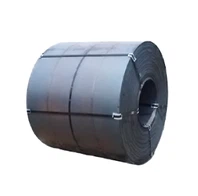
As a supplier of ASTM A537CL2, I understand the critical role that heat treatment plays in optimizing the mechanical properties of this material. ASTM A537CL2 is a pressure vessel steel plate known for its excellent toughness and strength, making it suitable for various industrial applications, especially in the construction of pressure vessels operating at low to moderate temperatures. Designing the optimal heat treatment sequence is essential to ensure that the material meets the required specifications and performs reliably in service. In this blog post, I will share some insights on how to design the optimal heat treatment sequence for ASTM A537CL2.
Understanding ASTM A537CL2
Before delving into the heat treatment sequence, it is crucial to understand the composition and properties of ASTM A537CL2. This steel is a carbon - manganese - silicon alloy that typically contains elements such as carbon (C), manganese (Mn), silicon (Si), phosphorus (P), sulfur (S), and trace amounts of other elements. The chemical composition directly influences the steel's hardenability, strength, and toughness.
The mechanical properties of ASTM A537CL2 are specified by ASTM standards, including minimum yield strength, tensile strength, and elongation. These properties can be significantly affected by the heat treatment process. Therefore, a well - designed heat treatment sequence is necessary to achieve the desired balance between strength and toughness.
Key Considerations in Heat Treatment Design
1. Phase Transformation
The first step in designing the heat treatment sequence is to understand the phase transformation behavior of ASTM A537CL2. When heated, the steel undergoes a series of phase changes. Austenite formation occurs at elevated temperatures, and the cooling rate determines the transformation products, such as ferrite, pearlite, bainite, or martensite.
For ASTM A537CL2, the goal is to obtain a microstructure that consists of a fine - grained ferrite - pearlite mixture with a small amount of bainite. This microstructure provides good toughness and strength. To achieve this, the heating and cooling rates need to be carefully controlled.
2. Heating Temperature and Time
The heating temperature and time are critical factors in heat treatment. For ASTM A537CL2, the austenitizing temperature is typically in the range of 850 - 900°C (1562 - 1652°F). Heating the steel to this temperature range ensures complete austenite formation.
The heating time depends on the thickness of the steel plate. Thicker plates require longer heating times to ensure uniform heating throughout the cross - section. However, excessive heating time can lead to grain growth, which may reduce the toughness of the material. Therefore, it is essential to find the optimal balance between heating temperature and time.
3. Cooling Rate
The cooling rate is one of the most important factors in determining the final microstructure and properties of the steel. A slow cooling rate, such as air cooling, promotes the formation of ferrite and pearlite, which results in relatively low strength but high toughness. On the other hand, a fast cooling rate, such as water quenching, can lead to the formation of martensite, which has high strength but low toughness.
For ASTM A537CL2, a controlled cooling rate is often used. This can be achieved through methods such as oil quenching or interrupted quenching. These methods allow for the formation of a desirable microstructure that combines good strength and toughness.

4. Tempering
Tempering is an essential step in the heat treatment of ASTM A537CL2. After quenching, the steel is often in a highly stressed and brittle state. Tempering involves reheating the quenched steel to a temperature below the lower critical temperature (usually in the range of 550 - 650°C or 1022 - 1202°F) and holding it for a certain period of time.
Tempering reduces the internal stresses in the steel, improves its toughness, and adjusts the strength to the desired level. The tempering temperature and time need to be carefully selected based on the specific requirements of the application.
A Typical Heat Treatment Sequence for ASTM A537CL2
A typical heat treatment sequence for ASTM A537CL2 may include the following steps:
1. Normalizing
Normalizing is often the first step in the heat treatment process. The steel plate is heated to a temperature above the upper critical temperature (e.g., 900 - 920°C or 1652 - 1688°F) and held for a sufficient time to ensure complete austenitization. Then, it is air - cooled. Normalizing refines the grain structure of the steel, improves its mechanical properties, and eliminates any residual stresses from the manufacturing process.
2. Quenching
After normalizing, the steel is heated again to the austenitizing temperature (850 - 900°C or 1562 - 1652°F) and held for an appropriate time. Then, it is quenched in oil or a suitable quenching medium. Quenching rapidly cools the steel, transforming the austenite into a harder phase, such as martensite or bainite.
3. Tempering
The quenched steel is then tempered at a temperature in the range of 550 - 650°C (1022 - 1202°F) for a specific time, usually 1 - 3 hours. Tempering reduces the brittleness of the quenched steel, improves its toughness, and adjusts the strength to the desired level.
Comparison with Other Pressure Vessel Steels
When designing the heat treatment sequence for ASTM A537CL2, it can be useful to compare it with other pressure vessel steels such as P275NL1, ASTM A537CL2 SA285GrB, and SA285GrC A387GR11CL2.
Each of these steels has its own unique chemical composition and phase transformation behavior. For example, P275NL1 is a European standard pressure vessel steel with different alloying elements compared to ASTM A537CL2. The heat treatment requirements for P275NL1 may be different, especially in terms of austenitizing temperature and cooling rate.
SA285GrB and SA285GrC are also pressure vessel steels, but they have lower strength requirements compared to ASTM A537CL2. Therefore, the heat treatment sequences for these steels may be less complex, with a focus on achieving good weldability and basic mechanical properties.
Quality Control in Heat Treatment
To ensure the effectiveness of the heat treatment sequence, strict quality control measures should be implemented. This includes monitoring the heating and cooling rates, temperature uniformity, and holding times. Non - destructive testing methods, such as ultrasonic testing and magnetic particle testing, can be used to detect any internal defects in the heat - treated steel.
Mechanical testing, including tensile testing, impact testing, and hardness testing, should also be performed on the heat - treated samples to verify that the material meets the required specifications.
Conclusion
Designing the optimal heat treatment sequence for ASTM A537CL2 is a complex process that requires a thorough understanding of the material's composition, phase transformation behavior, and the specific requirements of the application. By carefully controlling the heating temperature, time, cooling rate, and tempering process, it is possible to achieve the desired balance between strength and toughness.
As a supplier of ASTM A537CL2, I am committed to providing high - quality products that meet the strictest industry standards. If you are interested in purchasing ASTM A537CL2 or have any questions about the heat treatment process, please feel free to contact me for more information and to start a procurement negotiation.
References
- ASTM International. ASTM A537/A537M - 18 Standard Specification for Pressure Vessel Plates, Heat - Treated, Carbon - Manganese - Silicon Steel.
- ASM Handbook Volume 4: Heat Treating. ASM International.
- Steel Heat Treatment: Metallurgy and Technologies by L. S. Sigworth.