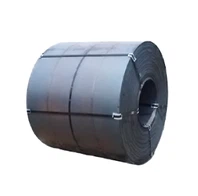
As a supplier of 690QL plates, I am often asked about the fatigue resistance of this remarkable material. Fatigue resistance is a critical property, especially in applications where the material is subjected to repeated loading and unloading cycles. In this blog, I will delve into the concept of fatigue resistance in 690QL plates, exploring its significance, the factors that influence it, and how it compares to other similar materials.
Understanding Fatigue Resistance
Fatigue resistance refers to a material's ability to withstand cyclic loading without failing. When a material is repeatedly loaded and unloaded, microscopic cracks can initiate and propagate over time. Eventually, these cracks can grow to a critical size, leading to sudden and catastrophic failure. The fatigue resistance of a material is determined by its ability to resist the initiation and growth of these cracks.
In the case of 690QL plates, fatigue resistance is of utmost importance in applications such as construction machinery, bridge building, and heavy - duty vehicles. These applications often involve dynamic loads, which means the plates are constantly under stress from vibrations, impacts, and changing forces. A high fatigue resistance ensures that the plates can maintain their structural integrity over long periods, reducing the risk of unexpected failures and costly downtime.
Factors Affecting the Fatigue Resistance of 690QL Plates
Chemical Composition
The chemical composition of 690QL plates plays a crucial role in determining their fatigue resistance. These plates typically contain elements such as carbon, manganese, silicon, and small amounts of alloying elements like chromium, nickel, and molybdenum. Carbon increases the strength of the steel but can also make it more brittle. Manganese helps to improve the hardenability and toughness of the steel. Alloying elements like chromium, nickel, and molybdenum enhance the corrosion resistance and strength of the material, which in turn can improve its fatigue resistance.
For example, nickel can increase the ductility of the steel, allowing it to absorb more energy during cyclic loading without cracking. Molybdenum can improve the high - temperature strength and creep resistance, which is beneficial in applications where the plates may be exposed to elevated temperatures.
Microstructure
The microstructure of 690QL plates also has a significant impact on their fatigue resistance. A fine - grained microstructure generally provides better fatigue properties compared to a coarse - grained one. Fine grains can impede the movement of dislocations, which are responsible for the initiation and propagation of cracks. Additionally, a homogeneous microstructure with a uniform distribution of phases can enhance the fatigue resistance by reducing stress concentrations.
Heat treatment processes such as quenching and tempering are commonly used to achieve the desired microstructure in 690QL plates. Quenching rapidly cools the steel from a high temperature, forming a hard martensitic structure. Tempering then reduces the brittleness of the martensite and improves the toughness and ductility of the material, resulting in better fatigue resistance.


Surface Finish
The surface finish of 690QL plates can affect their fatigue resistance. A smooth surface finish reduces the likelihood of crack initiation by minimizing stress concentrations. Rough surfaces, on the other hand, can act as stress raisers, where cracks are more likely to start. During the manufacturing process, proper machining and finishing operations are essential to ensure a smooth surface on the plates.
In some cases, surface treatments such as shot peening can be applied to further improve the fatigue resistance. Shot peening introduces compressive stresses on the surface of the plate, which counteract the tensile stresses generated during cyclic loading. This helps to prevent crack initiation and growth.
Comparison with Other Similar Materials
When comparing the fatigue resistance of 690QL plates with other similar high - strength steels, it is important to consider the specific application requirements. For instance, S690QL1 is another high - strength steel that is often used in similar applications. While both 690QL and S690QL1 have high strength, 690QL may offer better fatigue resistance in certain situations due to its specific chemical composition and microstructure.
S460QL1 690ql Plate is also a popular choice in the construction and engineering industries. S460QL1 has a lower strength compared to 690QL, but it may still have adequate fatigue resistance for less demanding applications. The choice between these materials depends on factors such as the magnitude and frequency of the cyclic loads, the operating environment, and the cost - effectiveness.
S550QL1 is another high - strength steel with good mechanical properties. Similar to 690QL, S550QL1 is designed to withstand high loads, but the fatigue resistance of 690QL may be superior in applications where the cyclic loads are more severe or where a longer service life is required.
Testing the Fatigue Resistance of 690QL Plates
To accurately assess the fatigue resistance of 690QL plates, various testing methods are employed. One of the most common methods is the rotating - beam fatigue test. In this test, a specimen of the 690QL plate is subjected to a cyclic bending stress by rotating it at a constant speed. The number of cycles until failure is recorded, and this data is used to determine the fatigue strength of the material.
Another method is the axial fatigue test, where the specimen is subjected to cyclic tensile or compressive stresses along its axis. This test is more representative of real - world applications where the plates are subjected to axial loads.
The results of these tests can provide valuable information about the fatigue resistance of 690QL plates under different loading conditions. They can also be used to compare the performance of different batches of plates or to evaluate the effectiveness of any modifications to the manufacturing process.
Importance in Real - World Applications
In the construction industry, 690QL plates are used in the fabrication of bridges and high - rise buildings. These structures are constantly exposed to dynamic loads from traffic, wind, and seismic activity. A high fatigue resistance ensures that the plates can withstand these loads over the long term, providing a safe and reliable infrastructure.
In the manufacturing of heavy - duty vehicles such as cranes and excavators, 690QL plates are used in critical components such as booms and frames. These components are subjected to repeated loading and unloading during operation, and a high fatigue resistance is essential to prevent failures that could lead to accidents and costly repairs.
Contact for Purchase and Discussion
If you are in need of high - quality 690QL plates with excellent fatigue resistance for your project, I encourage you to reach out. Our team of experts can provide you with detailed information about the properties of our 690QL plates, assist you in selecting the right grade for your specific application, and offer competitive pricing. Whether you are a small - scale contractor or a large - scale industrial manufacturer, we are committed to meeting your needs and ensuring the success of your project. Contact us today to start the discussion.
References
- ASM Handbook, Volume 19: Fatigue and Fracture. ASM International.
- BS EN 10025 - 6:2019, Hot - rolled products of structural steels - Part 6: Technical delivery conditions for thermomechanically rolled weldable fine grain structural steels.
- SAE Fatigue Design Handbook. Society of Automotive Engineers.