As a supplier of Plate ASTM A516 Gr 70, I've witnessed firsthand the importance of understanding how the welding process impacts the properties of this material. Plate ASTM A516 Gr 70 is widely used in pressure vessel applications due to its excellent notch toughness and high strength at moderate temperatures. In this blog, I'll delve into the various aspects of how welding can affect the properties of this plate, offering insights based on my experiences in the industry.
Understanding Plate ASTM A516 Gr 70
Before we explore the welding process, let's briefly understand what Plate ASTM A516 Gr 70 is. This steel plate is primarily used for welded pressure vessels where improved notch toughness is required. It has a minimum yield strength of 38,000 psi and a minimum tensile strength of 70,000 psi. The chemical composition includes elements such as carbon, manganese, phosphorus, sulfur, silicon, and sometimes small amounts of other alloying elements. These elements contribute to the overall mechanical properties of the plate, making it suitable for applications in industries like oil and gas, chemical processing, and power generation.
If you're interested in learning more about SA516GR70, you can visit this SA516GR70 link for detailed information.
The Welding Process and Its Impact on Plate ASTM A516 Gr 70
1. Heat Affected Zone (HAZ)
The heat affected zone is one of the most critical areas affected by the welding process. When welding Plate ASTM A516 Gr 70, the intense heat from the welding arc causes significant changes in the microstructure of the metal adjacent to the weld. The HAZ can be divided into several sub - zones, each with different microstructures and properties.
In the coarse - grained HAZ, the high temperature causes the grains to grow larger. This can lead to a decrease in toughness and an increase in the susceptibility to cracking. The fine - grained HAZ, on the other hand, has a more refined microstructure, which generally retains better mechanical properties. However, the overall impact on the HAZ depends on factors such as the welding heat input, welding speed, and pre - and post - weld heat treatments.

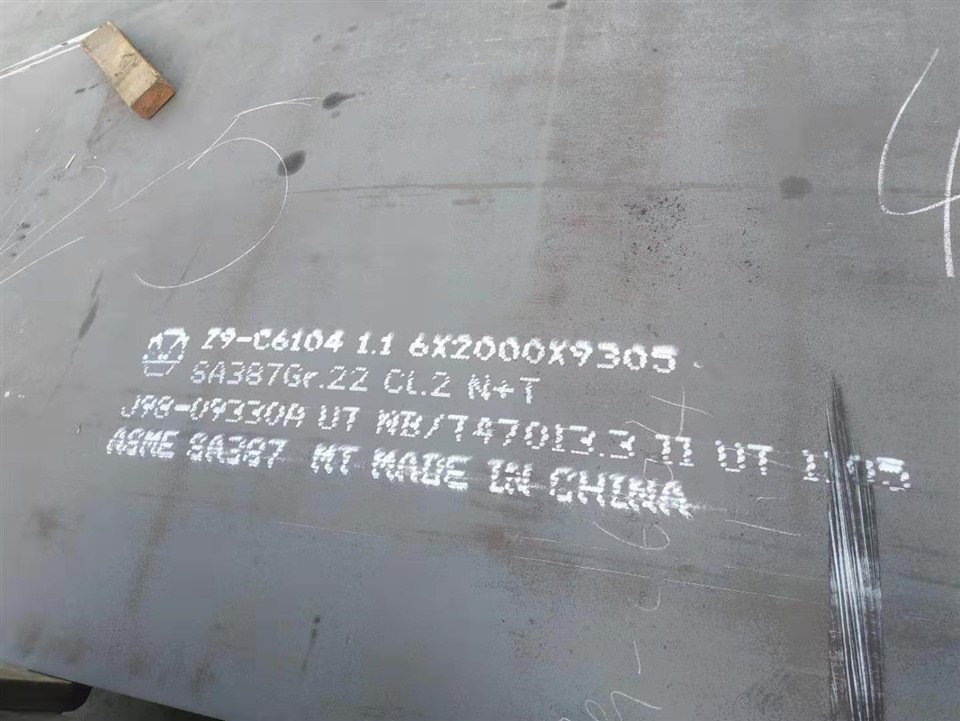
Higher heat input during welding will result in a wider HAZ. A wider HAZ means more of the base metal is affected by the heat, increasing the likelihood of property degradation. To minimize the size of the HAZ, a lower heat input with a higher welding speed can be used. However, this needs to be balanced with the need to ensure proper fusion and penetration of the weld.
2. Residual Stress
Welding also introduces residual stress in Plate ASTM A516 Gr 70. Residual stress is the stress that remains in the material after the welding process is complete. During welding, the rapid heating and cooling cycles cause uneven expansion and contraction of the metal. The areas near the weld cool faster than the surrounding areas, leading to the development of residual stress.
Residual stress can have a significant impact on the mechanical properties of the plate. Tensile residual stress can reduce the fatigue life of the welded structure and increase the susceptibility to stress - corrosion cracking. Compressive residual stress, on the other hand, can be beneficial as it can improve the fatigue resistance.
To reduce residual stress, post - weld heat treatment (PWHT) is often employed. PWHT involves heating the welded structure to a specific temperature and holding it for a certain period of time, followed by slow cooling. This process helps to relieve the residual stress and improve the overall mechanical properties of the welded joint.
3. Microstructure Changes
The welding process can cause significant changes in the microstructure of Plate ASTM A516 Gr 70. The base metal of ASTM A516 Gr 70 typically has a ferrite - pearlite microstructure. During welding, the high temperature can transform the microstructure in the HAZ and the weld metal itself.
In the weld metal, the rapid solidification from the molten state can result in a dendritic microstructure. This microstructure may have different mechanical properties compared to the base metal. The presence of alloying elements in the filler metal can also affect the microstructure of the weld. For example, adding nickel to the filler metal can improve the toughness of the weld.
In the HAZ, the microstructure changes are more complex. The transformation of austenite to different phases during cooling depends on the cooling rate. A fast cooling rate can result in the formation of martensite, which is a hard and brittle phase. This can significantly reduce the toughness of the HAZ. By controlling the cooling rate through proper welding parameters and heat treatments, the formation of undesirable phases can be minimized.
Comparison with Other Pressure Vessel Plates
It's also interesting to compare how the welding process affects Plate ASTM A516 Gr 70 with other similar pressure vessel plates. For example, P335GH is another commonly used pressure vessel plate. P335GH has different chemical composition and mechanical properties compared to ASTM A516 Gr 70.
The welding behavior of P335GH is also different. P335GH has a lower carbon equivalent, which generally means it has better weldability. However, the welding process still needs to be carefully controlled to avoid issues such as HAZ cracking and residual stress.
Another plate is SA387GR11 A387 steel plate. SA387GR11 is a chromium - molybdenum alloy steel plate, which is used in high - temperature applications. The welding of SA387GR11 requires careful pre - and post - weld heat treatments due to its high hardenability. Compared to ASTM A516 Gr 70, SA387GR11 is more sensitive to the welding process in terms of microstructure changes and the formation of hard and brittle phases.
Controlling the Welding Process to Maintain Plate Properties
To ensure that the properties of Plate ASTM A516 Gr 70 are maintained during the welding process, several measures can be taken:
1. Proper Welding Procedure Specification (WPS)
A well - defined WPS is essential. The WPS should specify the appropriate welding process, welding parameters (such as current, voltage, and welding speed), filler metal type, and pre - and post - weld heat treatments. By following the WPS, the welding process can be controlled to minimize the negative impact on the plate properties.
2. Pre - weld Preparation
Pre - weld preparation is crucial. This includes cleaning the surface of the plate to remove any contaminants such as oil, rust, and dirt. Proper edge preparation is also necessary to ensure good fusion and penetration during welding.
3. Welding Parameter Optimization
As mentioned earlier, optimizing the welding parameters is key to controlling the heat input and the size of the HAZ. The welding speed, current, and voltage should be adjusted based on the thickness of the plate and the welding position.
4. Post - weld Heat Treatment
Post - weld heat treatment can help to relieve residual stress, improve the microstructure, and enhance the overall mechanical properties of the welded joint. The specific PWHT parameters depend on the thickness of the plate and the welding process used.
Conclusion
In conclusion, the welding process has a profound impact on the properties of Plate ASTM A516 Gr 70. The heat affected zone, residual stress, and microstructure changes are the main factors that can affect the mechanical properties of the plate. By understanding these factors and taking appropriate measures to control the welding process, the integrity and performance of the welded structures can be ensured.
If you're in need of Plate ASTM A516 Gr 70 for your pressure vessel applications and want to discuss the best welding practices or have any other questions, I encourage you to reach out for a procurement discussion. We can work together to ensure that you get the best quality plate and the most suitable welding solutions for your projects.
References
- ASME Boiler and Pressure Vessel Code, Section IX - Welding and Brazing Qualifications
- AWS D1.1/D1.1M:2020 - Structural Welding Code - Steel
- Welding Metallurgy by John C. Lippold and David L. Kotecki