Hey there! As a supplier of low alloy steel plates, I often get asked about how these plates stack up against magnesium alloy plates, especially when it comes to specific strength. So, let's dive right into it and break down the comparison between low alloy steel plates and magnesium alloy plates in terms of specific strength.
First off, what's specific strength? It's basically the strength of a material divided by its density. In simpler terms, it tells you how strong a material is relative to its weight. This is a crucial factor in many industries, like automotive, aerospace, and construction, where you want materials that are both strong and lightweight.
Let's start with low alloy steel plates. Low alloy steel is a type of steel that contains small amounts of alloying elements, like manganese, chromium, or nickel, which enhance its mechanical properties. One of the great things about low alloy steel plates is their high strength. They can withstand a lot of stress and pressure without deforming or breaking.
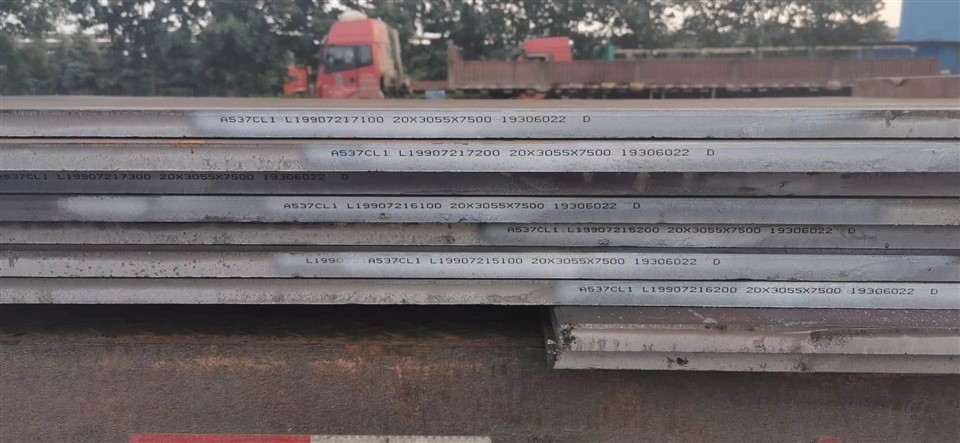
For example, the S355JR low alloy steel plate is widely used in structural applications. It has a minimum yield strength of 355 MPa, which means it can handle a fair amount of force before it starts to bend or stretch. Another popular option is the A573GR58 Carbon Steel Plate A283GRC, which is known for its good toughness and weldability. And the A537CL1 A537CL2 A537CL3 Asme Sa516 is commonly used in pressure vessel applications due to its high strength and resistance to brittle fracture.
However, low alloy steel plates do have a relatively high density. Steel generally has a density of around 7,850 kg/m³, which means it's pretty heavy. This can be a drawback in applications where weight is a major concern, like in the aerospace industry, where every extra kilogram can add to fuel costs.
On the other hand, magnesium alloy plates are known for their low density. Magnesium has a density of around 1,740 kg/m³, which is about one-fourth the density of steel. This makes magnesium alloy plates extremely lightweight. In terms of specific strength, magnesium alloys can be quite competitive in some cases.
Magnesium alloys also have good corrosion resistance, which is a plus in many environments. They're often used in the automotive industry to reduce the weight of vehicles, improving fuel efficiency and performance. For example, some high - end cars use magnesium alloy components in the engine block or the chassis to save weight.
But magnesium alloy plates also have their limitations. Their strength is generally lower compared to low alloy steel plates. They are more prone to deformation under high stress, and they can be more difficult to manufacture and process. Magnesium alloys also have a lower melting point, which can be a problem in high - temperature applications.
When it comes to specific strength, it really depends on the specific alloy and the application. In some cases, magnesium alloys can have a higher specific strength than low alloy steel plates, especially when the weight savings are critical. But for applications that require high strength and can tolerate the extra weight, low alloy steel plates are often the better choice.
Let's take a look at a real - world example. In the construction of a large building, low alloy steel plates are often used for the structural framework. The high strength of the steel ensures the building can withstand the weight of the structure and external forces like wind and earthquakes. The weight of the steel is less of a concern in this case because the building is stationary and doesn't need to be moved around.

On the other hand, in the manufacturing of a racing car, magnesium alloy plates might be used in some components. The lightweight nature of magnesium alloys helps to reduce the overall weight of the car, improving its acceleration and handling. But the parts made from magnesium alloys need to be carefully designed to ensure they can still withstand the stresses of high - speed racing.
In conclusion, both low alloy steel plates and magnesium alloy plates have their own unique advantages and disadvantages when it comes to specific strength. As a supplier of low alloy steel plates, I can attest to the reliability and performance of these materials in a wide range of applications. If you're looking for high - strength materials that can handle heavy loads and tough conditions, low alloy steel plates are a great option.
If you're interested in learning more about our low alloy steel plates or have a specific project in mind, I'd love to hear from you. Whether you're in the construction, automotive, or any other industry, we can work together to find the right low alloy steel plate solution for your needs. Just reach out, and we can start a conversation about your requirements and how our products can meet them.
References
- "Materials Science and Engineering: An Introduction" by William D. Callister, Jr. and David G. Rethwisch
- "ASM Handbook, Volume 1: Properties and Selection: Irons, Steels, and High - Performance Alloys" published by ASM International