Hey there! As a supplier of Pressure Vessel Plates, I've been in the thick of understanding all the nitty - gritty details that can affect the performance of these plates. One factor that often doesn't get as much attention as it should is the heat treatment time. In this blog, I'm gonna break down how heat treatment time impacts the performance of Pressure Vessel Plates.
First off, let's quickly go over what heat treatment is. Heat treatment is a process where we heat and cool the Pressure Vessel Plates under controlled conditions. This process can change the physical and sometimes the chemical properties of the plates. And the time we spend on this heating and cooling is super crucial.
When we talk about the mechanical properties of Pressure Vessel Plates, we're looking at things like strength, toughness, and ductility. Heat treatment time has a direct impact on these properties. For instance, if we heat - treat a plate for a short period, it might not fully transform its microstructure. The plate could end up being too brittle. Brittle plates are a big no - no in pressure vessels because they can crack easily under pressure, which is a huge safety risk.
On the other hand, if we overdo the heat treatment time, the plate can become too soft. A soft plate won't be able to withstand the high pressures that pressure vessels are designed to handle. So, finding that sweet spot in heat treatment time is essential.
Let's take a closer look at how different heat treatment times can affect specific mechanical properties.
Strength
Strength is a key property for Pressure Vessel Plates. We need these plates to be strong enough to hold up under high internal pressures. When we heat - treat a plate for a short time, the plate might not have enough time to form a proper grain structure. The grains in the metal can be large and uneven, which leads to lower strength.
As we increase the heat treatment time, the grains start to recrystallize. Smaller, more uniform grains form, and this generally leads to an increase in strength. But there's a limit. If we keep increasing the heat treatment time beyond a certain point, the grains start to grow again. This process is called grain coarsening, and it causes the strength of the plate to decrease.
Toughness
Toughness is the ability of a material to absorb energy and deform plastically before fracturing. A tough Pressure Vessel Plate is better able to handle sudden shocks and vibrations. Heat treatment time plays a huge role in determining the toughness of the plate.
A short heat treatment time can leave the plate with a microstructure that's not conducive to toughness. The plate might have a lot of internal stresses and a non - uniform grain structure, which makes it more likely to fracture under stress.
When we heat - treat the plate for an appropriate amount of time, we can relieve these internal stresses and create a more uniform microstructure. This results in a plate with higher toughness. But again, over - heat - treating can be a problem. Excessive heat treatment time can cause the formation of brittle phases in the metal, reducing the plate's toughness.
Ductility
Ductility is the ability of a material to be stretched or deformed without breaking. In pressure vessels, ductility is important because it allows the plate to deform slightly under pressure without cracking.

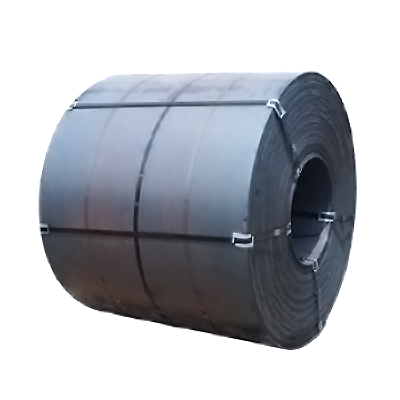
Short heat treatment times can lead to a lack of ductility in the plate. The metal might be too hard and brittle, and it won't be able to stretch much before fracturing.
By increasing the heat treatment time to an optimal level, we can improve the ductility of the plate. The metal becomes more malleable, and it can withstand more deformation. However, if we heat - treat the plate for too long, the ductility can also decrease as the metal becomes too soft and loses its ability to hold its shape.
Now, let's talk about how different types of Pressure Vessel Plates respond to heat treatment time.
SA285GrC A387GR11CL2
SA285GrC A387GR11CL2 are popular types of Pressure Vessel Plates. These plates have specific alloy compositions, and their response to heat treatment time can vary.
For SA285GrC, a relatively short heat treatment time might be sufficient to achieve the desired strength and toughness. This is because it's a lower - alloy steel. If we heat - treat it for too long, it might lose its strength and become too soft.
A387GR11CL2, on the other hand, is a high - alloy steel. It generally requires a longer heat treatment time to fully transform its microstructure. A proper heat treatment time for A387GR11CL2 can result in excellent strength and toughness, making it suitable for high - pressure applications.
astm a537 16Mo3
astm a537 16Mo3 plates are known for their good weldability and high - temperature resistance. The heat treatment time for these plates needs to be carefully controlled.
A short heat treatment time might not be enough to fully develop the desired properties in astm a537 16Mo3. The plate might not have the right combination of strength and ductility. But if we heat - treat it for too long, the high - temperature properties of the plate can be affected. The plate might lose its ability to resist creep (slow deformation under high - temperature and high - pressure conditions).
P275NL1
P275NL1 is another type of Pressure Vessel Plate. It's a fine - grained steel with good toughness at low temperatures. The heat treatment time for P275NL1 is crucial to maintain its low - temperature toughness.
A short heat treatment time can lead to a non - uniform grain structure, which can reduce the plate's toughness at low temperatures. By heat - treating it for the right amount of time, we can ensure that the plate has a fine - grained microstructure that provides excellent low - temperature performance.
In conclusion, heat treatment time is a critical factor in determining the performance of Pressure Vessel Plates. Whether it's strength, toughness, or ductility, the right heat treatment time can make all the difference. As a supplier, I always make sure that our plates are heat - treated for the optimal amount of time to meet the highest quality standards.
If you're in the market for high - quality Pressure Vessel Plates, I'd love to have a chat with you. We can discuss your specific requirements and how our plates can meet them. Don't hesitate to reach out for a procurement discussion.
References
- ASM Handbook Volume 4: Heat Treating.
- Steelmaking and Refining Technologies: Principles and Processes.
- Pressure Vessel Design Handbook.