Hey there! I'm an ASME SA516 supplier, and today I wanna talk about how the carbon equivalent affects the weldability of ASME SA516.
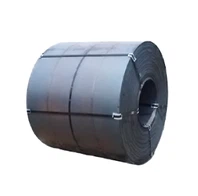
First off, let's get to know ASME SA516. It's a widely used carbon steel plate standard for welded pressure vessels, especially those working at moderate and lower temperatures. It comes in different grades like SA516 Gr. 55, SA516 Gr. 60, SA516 Gr. 65, and SA516 Gr. 70, with each grade having its own set of mechanical properties to suit various applications.
Now, what's carbon equivalent? Well, it's a way to estimate how different alloying elements in steel, mainly carbon, affect its hardenability and, in turn, its weldability. The formula for calculating carbon equivalent (CE) can vary, but a commonly used one is CE = C + Mn/6 + (Cr + Mo + V)/5 + (Ni + Cu)/15. The carbon content has the most significant impact on this value, but other elements also play their parts.
When it comes to the weldability of ASME SA516, the carbon equivalent is a crucial factor. A higher carbon equivalent generally means lower weldability. Why? Because when the carbon equivalent is high, the steel is more likely to form hard and brittle microstructures during the welding process.
During welding, the heat from the welding arc rapidly heats up the base metal and the filler metal. As the weld cools down, the rate of cooling can be quite fast, especially in thick sections of the ASME SA516 plate. If the carbon equivalent is high, the fast - cooling rate can cause the formation of martensite, a very hard and brittle phase in the steel. Martensite can lead to cracking in the weld zone, both during the welding process (hot cracking) and after the weld has cooled (cold cracking).
Let's take a closer look at how different levels of carbon equivalent affect the welding process.
For ASME SA516 with a relatively low carbon equivalent, say below 0.4%, the weldability is usually pretty good. The steel can tolerate the thermal stresses from welding without forming excessive amounts of martensite. This means that the weld can be made with fewer pre - heating requirements. In some cases, you might not even need to pre - heat the plate before welding. The resulting weld will have good mechanical properties, such as adequate strength and toughness.
On the other hand, when the carbon equivalent of ASME SA516 is above 0.4%, things get a bit trickier. You'll likely need to pre - heat the plate before welding. Pre - heating slows down the cooling rate of the weld, which helps prevent the formation of martensite. The pre - heating temperature depends on the exact carbon equivalent value and the thickness of the plate. For example, a thicker plate with a higher carbon equivalent will require a higher pre - heating temperature.
Post - weld heat treatment (PWHT) is also often necessary for ASME SA516 with a high carbon equivalent. PWHT helps to relieve the residual stresses in the weld and the heat - affected zone (HAZ). Residual stresses can cause cracking over time, especially in a pressure vessel application. By performing PWHT, we can improve the overall quality and reliability of the weld.
As an ASME SA516 supplier, I know that customers often have specific requirements for the carbon equivalent of the plates they purchase. Some applications, like those in the petrochemical industry, demand high - quality welds with excellent crack resistance. For these applications, we need to supply ASME SA516 plates with a lower carbon equivalent.


But it's not always possible to have a very low carbon equivalent. Sometimes, other mechanical properties of the steel, such as strength, need to be balanced with weldability. This is where the expertise of a good supplier comes in. We need to understand the customer's needs and provide the right grade of ASME SA516 with an appropriate carbon equivalent.
If you're in the market for other types of steel plates, we also offer A572GR50 Carbon Steel Plate, High Strength Plate, and NM450 Abrasion Resistant Wear Plates. These plates have their own unique properties and applications, and we can help you choose the right one for your project.
In conclusion, the carbon equivalent has a significant impact on the weldability of ASME SA516. As a supplier, we need to carefully control the carbon equivalent in the plates we produce to meet the diverse needs of our customers. Whether you need plates for a simple welding job or a complex pressure vessel application, we're here to provide you with the best - quality ASME SA516. If you're interested in purchasing ASME SA516 or any of our other steel plates, feel free to reach out and start a procurement discussion. We're ready to offer you the best solutions for your steel plate needs.
References:
- "Welding Metallurgy and Weldability of Stainless Steels" by John C. Lippold and David J. Kotecki
- "The Welding of Carbon Steels" by The Welding Institute