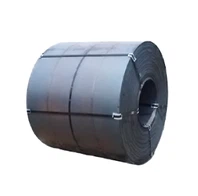
Hey there! I'm a supplier of high strength plates, and I often get asked about the best welding methods for these tough materials. High strength plates, like S960QL, S690QL, and S690QL1, are used in a wide range of industries, from construction to automotive. Choosing the right welding method is crucial to ensure a strong, reliable joint that can withstand the demands of the application.
Let's start by understanding what makes high strength plates different. These plates are made from special steels that have been alloyed with elements like manganese, nickel, and chromium to increase their strength and toughness. But this also means they can be more challenging to weld compared to regular carbon steels. The high alloy content can lead to issues like cracking, reduced ductility, and changes in the material's properties during the welding process.
So, what welding methods are suitable for high strength plates? Here are some of the top contenders:
Gas Metal Arc Welding (GMAW)
Also known as MIG (Metal Inert Gas) welding, GMAW is a popular choice for welding high strength plates. It's a semi-automatic process that uses a continuously fed wire electrode and a shielding gas to protect the weld pool from atmospheric contamination.
One of the main advantages of GMAW is its high deposition rate, which means you can weld quickly and efficiently. It also produces a clean, smooth weld bead with minimal spatter. However, it's important to choose the right shielding gas and welding wire for the specific high strength plate you're working with. For example, a mixture of argon and carbon dioxide is often used for welding high strength low alloy steels.
Gas Tungsten Arc Welding (GTAW)
GTAW, or TIG (Tungsten Inert Gas) welding, is another option for welding high strength plates. This process uses a non-consumable tungsten electrode to create the arc and a separate filler metal if needed. A shielding gas, usually argon, is used to protect the weld area.
GTAW is known for its precision and high-quality welds. It's great for thin materials and situations where you need to control the heat input carefully. However, it's a slower process compared to GMAW and requires more skill to operate. It's also more expensive due to the cost of the equipment and the slower welding speed.
Shielded Metal Arc Welding (SMAW)
SMAW, or stick welding, is a traditional welding method that's still widely used for welding high strength plates. It uses a consumable electrode coated in a flux that provides the shielding gas and forms a slag to protect the weld pool.
One of the advantages of SMAW is its portability and simplicity. It can be used in outdoor and remote locations where other welding methods may not be practical. It's also relatively inexpensive compared to some of the other methods. However, it has a lower deposition rate and can produce more spatter and slag compared to GMAW and GTAW.
Flux-Cored Arc Welding (FCAW)
FCAW is similar to GMAW, but instead of a solid wire electrode, it uses a tubular wire filled with flux. The flux provides the shielding gas and can also add alloying elements to the weld.
FCAW is a versatile welding method that can be used for both indoor and outdoor applications. It has a high deposition rate and can produce good-quality welds in a variety of positions. However, it can produce more fumes compared to GMAW, so proper ventilation is required.
Submerged Arc Welding (SAW)
SAW is a high-productivity welding method that's often used for welding thick high strength plates. It uses a continuously fed wire electrode and a granular flux that covers the weld area. The arc is submerged under the flux, which protects the weld pool from atmospheric contamination and also helps to control the heat input.
SAW is known for its high deposition rate and excellent weld quality. It can produce deep, narrow welds with good penetration. However, it's a more complex process compared to some of the other methods and requires specialized equipment.
When choosing a welding method for high strength plates, there are several factors to consider:
Material Thickness
Thicker plates generally require a welding method with a higher deposition rate, such as SAW or FCAW. Thinner plates may be better suited for GTAW or GMAW, which allow for more precise control of the heat input.
Joint Design
The design of the joint, including the type of joint (butt, lap, etc.) and the joint preparation, can also affect the choice of welding method. Some methods are better suited for certain joint designs than others.
Welding Position
The position in which the welding will be done (flat, horizontal, vertical, overhead) can also influence the choice of welding method. Some methods are more suitable for certain positions than others.
Weld Quality Requirements
The required quality of the weld, including factors like strength, ductility, and appearance, will also play a role in the choice of welding method. For applications where high-quality welds are critical, methods like GTAW or SAW may be preferred.
Cost
The cost of the welding equipment, consumables, and labor should also be considered. Some methods, like SMAW, are relatively inexpensive, while others, like SAW, require a significant investment in equipment.

In addition to choosing the right welding method, it's also important to follow proper welding procedures when working with high strength plates. This includes preheating the plates to reduce the risk of cracking, using the correct welding parameters, and post-weld heat treatment if necessary.
If you're in the market for high strength plates or have any questions about welding them, don't hesitate to reach out. I'm here to help you find the right solutions for your specific needs. Whether you're a small fabrication shop or a large industrial manufacturer, I can provide you with high-quality high strength plates and expert advice on welding methods.
Let's work together to ensure your projects are a success. Contact me today to start the conversation and explore the possibilities of using high strength plates in your applications.
References
- AWS Welding Handbook, Volume 1: Welding Science and Technology
- Steel Construction Manual, American Institute of Steel Construction
- Welding Metallurgy and Weldability of Stainless Steels, John C. Lippold and David J. Kotecki