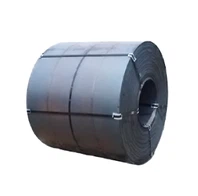
Low temperature can have a significant impact on the performance of Plate A516 Gr 70, a widely used carbon steel plate in various industries, especially those involving pressure vessels and boilers. As a supplier of Plate A516 Gr 70, I have witnessed firsthand the importance of understanding how low temperatures affect its properties and performance. In this blog post, I will delve into the key aspects of how low temperature influences the performance of Plate A516 Gr 70 and why it matters for your projects.
Mechanical Properties at Low Temperatures
One of the primary concerns when dealing with Plate A516 Gr 70 at low temperatures is its mechanical properties. At room temperature, Plate A516 Gr 70 exhibits excellent strength, toughness, and ductility, making it suitable for a wide range of applications. However, as the temperature drops, these properties can change significantly.
Tensile Strength
The tensile strength of Plate A516 Gr 70 generally increases with decreasing temperature. This is because the atoms in the steel lattice become more closely packed at lower temperatures, which restricts their movement and makes it more difficult for the material to deform. As a result, the steel becomes stronger and more resistant to fracture under tension. However, this increase in tensile strength is not linear, and there is a point at which the steel becomes brittle and loses its ductility.
Yield Strength
Similar to tensile strength, the yield strength of Plate A516 Gr 70 also increases with decreasing temperature. The yield strength is the stress at which the material begins to deform plastically, and it is an important parameter for determining the allowable stress in a structure. At low temperatures, the yield strength of Plate A516 Gr 70 can be significantly higher than at room temperature, which means that the material can withstand higher loads without permanent deformation.
Ductility and Toughness
Ductility and toughness are two important properties that describe the ability of a material to deform plastically and absorb energy before fracture. At low temperatures, Plate A516 Gr 70 can become brittle and lose its ductility and toughness. This is because the movement of dislocations, which are responsible for plastic deformation, is restricted at low temperatures. As a result, the material is more likely to fracture under stress, especially if there are any pre-existing defects or flaws in the material.
Impact of Low Temperature on Weldability
Weldability is another important consideration when using Plate A516 Gr 70 at low temperatures. Welding is a common method for joining steel plates, but it can introduce residual stresses and heat-affected zones (HAZs) in the material. At low temperatures, these residual stresses and HAZs can have a significant impact on the performance of the welded joint.
Cold Cracking
Cold cracking is a common problem in welded joints at low temperatures. It occurs when the residual stresses in the weld metal and HAZ exceed the yield strength of the material, causing the material to crack. Cold cracking can be particularly severe in Plate A516 Gr 70 because of its relatively high carbon content, which makes it more susceptible to hardening and cracking. To prevent cold cracking, it is important to use proper welding procedures and preheating techniques.
Hydrogen Embrittlement
Hydrogen embrittlement is another potential problem in welded joints at low temperatures. It occurs when hydrogen atoms diffuse into the steel lattice and cause the material to become brittle. Hydrogen can be introduced into the weld metal and HAZ during the welding process, especially if the welding electrodes or filler metals contain moisture. To prevent hydrogen embrittlement, it is important to use low-hydrogen welding electrodes and filler metals and to ensure that the welding environment is dry.
Applications in Low-Temperature Environments
Despite the challenges associated with using Plate A516 Gr 70 at low temperatures, it is still a popular choice for many applications in low-temperature environments. Some of the common applications include:
Pressure Vessels
Pressure vessels are used to store and transport fluids and gases under pressure. In low-temperature environments, Plate A516 Gr 70 can be used to construct pressure vessels that are designed to withstand high pressures and low temperatures. However, it is important to ensure that the pressure vessel is designed and fabricated to meet the relevant standards and codes for low-temperature service.
Boilers
Boilers are used to generate steam for power generation and industrial processes. In low-temperature environments, Plate A516 Gr 70 can be used to construct boilers that are designed to operate at high temperatures and pressures. However, it is important to ensure that the boiler is designed and fabricated to meet the relevant standards and codes for low-temperature service.
Pipelines
Pipelines are used to transport fluids and gases over long distances. In low-temperature environments, Plate A516 Gr 70 can be used to construct pipelines that are designed to withstand high pressures and low temperatures. However, it is important to ensure that the pipeline is designed and fabricated to meet the relevant standards and codes for low-temperature service.
Mitigating the Effects of Low Temperature
To mitigate the effects of low temperature on the performance of Plate A516 Gr 70, several measures can be taken:
Material Selection
When selecting Plate A516 Gr 70 for low-temperature applications, it is important to choose a grade that is specifically designed for low-temperature service. These grades typically have lower carbon and alloy content, which makes them more ductile and less susceptible to cracking at low temperatures.
Heat Treatment
Heat treatment can be used to improve the mechanical properties of Plate A516 Gr 70 at low temperatures. Normalizing, quenching, and tempering are common heat treatment processes that can be used to refine the grain structure of the material and improve its ductility and toughness.
Welding Procedures
Proper welding procedures are essential for ensuring the integrity of welded joints at low temperatures. This includes using low-hydrogen welding electrodes and filler metals, preheating the material before welding, and controlling the welding parameters to minimize the heat input and residual stresses.
Inspection and Testing
Regular inspection and testing are important for detecting any defects or flaws in Plate A516 Gr 70 at low temperatures. Non-destructive testing methods, such as ultrasonic testing, radiographic testing, and magnetic particle testing, can be used to detect internal and surface defects in the material. Destructive testing methods, such as tensile testing and impact testing, can be used to evaluate the mechanical properties of the material.
Conclusion
In conclusion, low temperature can have a significant impact on the performance of Plate A516 Gr 70. It can affect the mechanical properties, weldability, and overall integrity of the material. As a supplier of Plate A516 Gr 70, I understand the importance of providing high-quality materials and technical support to our customers. If you are considering using Plate A516 Gr 70 in a low-temperature application, I encourage you to contact us to discuss your specific requirements. We can provide you with the information and guidance you need to ensure the success of your project.
If you are interested in exploring other related products, you can check out A573GR58 Carbon Steel Plate A283GRC, A537CL1 A537CL2 A537CL3 Asme Sa516, and A572GR60. These products also offer excellent performance in various applications.
If you have any questions or would like to discuss your procurement needs, please feel free to reach out. We are here to assist you in finding the best solutions for your projects.
References
- ASME Boiler and Pressure Vessel Code, Section VIII, Division 1
- ASTM A516/A516M - Standard Specification for Pressure Vessel Plates, Carbon Steel, for Moderate- and Lower-Temperature Service
- Welding Handbook, Volume 1: Welding Science and Technology, American Welding Society