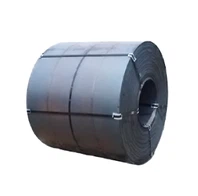
High temperature can have a significant impact on the creep behavior of Plate A516 Gr 70, a common carbon steel used in various industrial applications, especially in pressure vessels and boilers. As a supplier of Plate A516 Gr 70, I have witnessed firsthand the importance of understanding how high temperatures affect this material's creep characteristics. In this blog post, I will delve into the science behind creep, explore the specific effects of high temperatures on Plate A516 Gr 70, and discuss the implications for its use in high-temperature environments.
Understanding Creep
Creep is a time-dependent deformation that occurs under a constant load at elevated temperatures. It is a phenomenon that can lead to significant changes in the shape and dimensions of a material over time, potentially compromising its structural integrity. Creep typically occurs in three stages: primary creep, secondary creep, and tertiary creep.
- Primary Creep: Also known as transient creep, this stage is characterized by a relatively rapid rate of deformation that gradually decreases over time. During primary creep, the material's internal structure adjusts to the applied load, and the rate of deformation is influenced by factors such as temperature, stress level, and material properties.
- Secondary Creep: Also known as steady-state creep, this stage is characterized by a constant rate of deformation. In this stage, the material reaches a balance between the rate of deformation and the rate of recovery, resulting in a stable creep rate. The secondary creep rate is primarily influenced by temperature and stress level.
- Tertiary Creep: This stage is characterized by an accelerating rate of deformation that eventually leads to failure. Tertiary creep occurs when the material's internal structure begins to break down, and the rate of deformation exceeds the rate of recovery. Factors such as microstructural changes, damage accumulation, and the formation of voids and cracks contribute to the onset of tertiary creep.
Effects of High Temperature on Creep of Plate A516 Gr 70
Plate A516 Gr 70 is a carbon steel with good weldability, notch toughness, and strength. However, like all materials, its mechanical properties are affected by temperature. At high temperatures, the creep behavior of Plate A516 Gr 70 becomes more pronounced, and the material is more susceptible to deformation and failure.
Increased Creep Rate
One of the most significant effects of high temperature on the creep of Plate A516 Gr 70 is an increase in the creep rate. As the temperature rises, the atoms in the material gain more energy, which allows them to move more freely. This increased atomic mobility facilitates the deformation process, resulting in a higher creep rate. The relationship between temperature and creep rate is typically described by the Arrhenius equation, which shows that the creep rate increases exponentially with temperature.
Microstructural Changes
High temperatures can also cause microstructural changes in Plate A516 Gr 70, which can further affect its creep behavior. At elevated temperatures, the material may undergo processes such as grain growth, precipitation, and phase transformations. These microstructural changes can alter the material's mechanical properties, including its strength, hardness, and ductility, and can also affect the creep rate and the onset of tertiary creep.
For example, grain growth can occur at high temperatures, which can lead to a decrease in the material's strength and an increase in its creep rate. Precipitation of carbides and other second-phase particles can also occur, which can strengthen the material and reduce the creep rate. However, if the precipitation is not properly controlled, it can also lead to the formation of brittle phases and an increased susceptibility to cracking.
Oxidation and Corrosion
In high-temperature environments, Plate A516 Gr 70 is also susceptible to oxidation and corrosion, which can further degrade its mechanical properties and increase the risk of creep failure. Oxidation occurs when the material reacts with oxygen in the atmosphere, forming a layer of oxide on the surface. This oxide layer can act as a barrier to further oxidation, but it can also cause dimensional changes and reduce the material's cross-sectional area, which can increase the stress level and the creep rate.
Corrosion can also occur in high-temperature environments, especially in the presence of moisture and corrosive agents. Corrosion can cause pitting, cracking, and other forms of damage, which can weaken the material and increase the risk of creep failure.
Implications for Use in High-Temperature Environments
The effects of high temperature on the creep of Plate A516 Gr 70 have important implications for its use in high-temperature applications. When selecting Plate A516 Gr 70 for a high-temperature environment, it is essential to consider the following factors:
Temperature and Stress Levels
The temperature and stress levels in the application will determine the creep rate and the expected service life of the material. It is important to ensure that the material is operating within its recommended temperature and stress limits to minimize the risk of creep failure.
Microstructural Stability
The microstructural stability of Plate A516 Gr 70 is also an important consideration. It is important to select a material with a stable microstructure that is resistant to grain growth, precipitation, and phase transformations at the operating temperature. This can help to maintain the material's mechanical properties and reduce the risk of creep failure.

Oxidation and Corrosion Resistance
In high-temperature environments, it is also important to consider the oxidation and corrosion resistance of Plate A516 Gr 70. Coatings and other protective measures can be used to improve the material's resistance to oxidation and corrosion and to extend its service life.
Alternative Materials
In some cases, the effects of high temperature on the creep of Plate A516 Gr 70 may make it unsuitable for a particular application. In such cases, alternative materials may be considered. Some alternative materials that may be suitable for high-temperature applications include SM520C, A572GR55 Heavy Plate, and S355JR. These materials have different chemical compositions and mechanical properties, which may make them more suitable for high-temperature environments.
Conclusion
In conclusion, high temperature can have a significant impact on the creep behavior of Plate A516 Gr 70. The increased creep rate, microstructural changes, and susceptibility to oxidation and corrosion at high temperatures can compromise the material's structural integrity and lead to failure. When using Plate A516 Gr 70 in high-temperature applications, it is essential to consider the temperature and stress levels, the microstructural stability, and the oxidation and corrosion resistance of the material. In some cases, alternative materials may be more suitable for high-temperature environments.
As a supplier of Plate A516 Gr 70, I am committed to providing high-quality materials and technical support to our customers. If you are considering using Plate A516 Gr 70 in a high-temperature application, or if you have any questions about the effects of high temperature on the creep of this material, please do not hesitate to contact us. We can help you select the right material for your application and provide you with the information and support you need to ensure its successful use.
References
- Callister, W. D., & Rethwisch, D. G. (2017). Materials Science and Engineering: An Introduction. Wiley.
- Hertzberg, R. W., Vinci, J. P., & Hertzberg, R. D. (2013). Deformation and Fracture Mechanics of Engineering Materials. Wiley.
- Shackelford, J. F. (2016). Introduction to Materials Science for Engineers. Pearson.