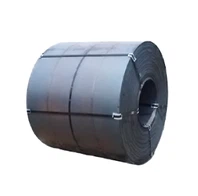
Welding high strength plates is a complex and critical process that requires careful planning and execution. As a high strength plate supplier, I have witnessed firsthand the challenges and risks associated with welding these materials. In this blog post, I will share some essential precautions that should be taken when welding high strength plates to ensure a successful and safe welding operation.
Understanding High Strength Plates
High strength plates are designed to provide superior mechanical properties, such as high yield strength and tensile strength, compared to conventional steel plates. These plates are commonly used in various industries, including construction, automotive, and heavy machinery, where structural integrity and durability are crucial. Some popular high strength plate grades include S460QL, S550QL1, and S890QL.
However, the high strength and alloy content of these plates also make them more susceptible to certain welding defects, such as cracking, porosity, and reduced toughness. Therefore, it is essential to understand the specific characteristics of the high strength plate being welded and to follow the appropriate welding procedures and precautions.
Pre-Welding Precautions
Material Selection and Inspection
- Compatibility: Ensure that the welding consumables, such as electrodes and filler metals, are compatible with the high strength plate being welded. The chemical composition and mechanical properties of the consumables should match or exceed those of the base metal to ensure a strong and durable weld joint.
- Quality Inspection: Before welding, carefully inspect the high strength plate for any surface defects, such as cracks, scratches, or rust. These defects can affect the quality of the weld and may lead to premature failure of the joint. If any defects are found, they should be repaired or removed before welding.
Joint Design and Preparation
- Proper Fit-Up: Ensure that the joint is properly designed and prepared to provide adequate access for welding and to minimize the risk of welding defects. The joint edges should be clean, straight, and free of any contaminants, such as oil, grease, or paint.
- Bevel Angle and Root Gap: The bevel angle and root gap of the joint should be carefully controlled to ensure proper fusion and penetration of the weld metal. The recommended bevel angle and root gap may vary depending on the thickness of the high strength plate and the welding process being used.
Preheating
- Purpose: Preheating is an important step in welding high strength plates to reduce the cooling rate of the weld metal and to minimize the risk of cracking. Preheating helps to relieve the residual stresses in the base metal and to improve the toughness and ductility of the weld joint.
- Temperature and Time: The preheating temperature and time should be determined based on the thickness and composition of the high strength plate, as well as the welding process being used. Generally, the preheating temperature for high strength plates ranges from 100°C to 200°C, and the preheating time should be sufficient to ensure uniform heating of the joint area.
Welding Precautions
Welding Process Selection
- Suitability: Choose the appropriate welding process for the high strength plate being welded. Some common welding processes used for high strength plates include shielded metal arc welding (SMAW), gas metal arc welding (GMAW), and submerged arc welding (SAW). Each welding process has its own advantages and limitations, and the selection should be based on factors such as the thickness of the plate, the joint design, and the required weld quality.
- Welding Parameters: Optimize the welding parameters, such as welding current, voltage, and travel speed, to ensure proper fusion and penetration of the weld metal. The welding parameters should be adjusted based on the thickness and composition of the high strength plate, as well as the welding process being used.
Welding Technique
- Proper Technique: Use proper welding techniques, such as backstepping, weaving, and stringer beads, to ensure uniform heat distribution and to minimize the risk of welding defects. The welding technique should be consistent and smooth to avoid any sudden changes in the welding arc or heat input.
- Interpass Temperature Control: Control the interpass temperature during welding to prevent excessive heat input and to avoid overheating of the weld metal. The interpass temperature should be maintained within the recommended range to ensure proper fusion and to minimize the risk of cracking.
Weld Quality Control
- Visual Inspection: Continuously monitor the quality of the weld during welding by performing visual inspections. Look for any signs of welding defects, such as porosity, cracks, or lack of fusion. If any defects are found, they should be immediately corrected to ensure the quality of the weld joint.
- Non-Destructive Testing (NDT): After welding, perform non-destructive testing, such as ultrasonic testing (UT), radiographic testing (RT), or magnetic particle testing (MT), to detect any internal defects in the weld joint. NDT can help to ensure the integrity of the weld and to identify any potential problems before the structure is put into service.
Post-Welding Precautions
Post-Weld Heat Treatment (PWHT)
- Purpose: Post-weld heat treatment is often required for high strength plates to relieve the residual stresses in the weld joint and to improve the toughness and ductility of the weld metal. PWHT can also help to reduce the risk of hydrogen-induced cracking and to enhance the corrosion resistance of the weld joint.
- Temperature and Time: The post-weld heat treatment temperature and time should be determined based on the thickness and composition of the high strength plate, as well as the welding process being used. Generally, the post-weld heat treatment temperature for high strength plates ranges from 550°C to 650°C, and the holding time should be sufficient to ensure uniform heating and cooling of the weld joint.
Stress Relief and Finishing
- Stress Relief: After PWHT, allow the welded structure to cool slowly and uniformly to room temperature to relieve any residual stresses. This can help to prevent distortion and cracking of the weld joint.
- Finishing: Once the welded structure has cooled, perform any necessary finishing operations, such as grinding, machining, or painting, to improve the appearance and durability of the weld joint.
Safety Precautions
Personal Protective Equipment (PPE)
- Welding Helmet: Wear a welding helmet with a proper shade lens to protect the eyes and face from the intense light, heat, and radiation generated during welding.
- Welding Gloves: Wear welding gloves to protect the hands from the heat, sparks, and molten metal.
- Welding Apron and Jacket: Wear a welding apron and jacket made of flame-resistant material to protect the body from the heat and sparks.
- Safety Glasses and Ear Protection: Wear safety glasses and ear protection to protect the eyes and ears from the flying debris and noise generated during welding.
Ventilation
- Adequate Ventilation: Ensure that the welding area is well-ventilated to remove the fumes and gases generated during welding. Welding fumes can contain harmful substances, such as metal oxides, ozone, and carbon monoxide, which can pose a health risk to the welder and other workers in the area.
- Local Exhaust Ventilation: If possible, use local exhaust ventilation systems, such as welding fume extractors or downdraft tables, to capture and remove the welding fumes at the source.
Fire Prevention
- Fire Extinguishers: Keep a fire extinguisher nearby and ensure that it is in good working condition. Welding can generate sparks and heat, which can ignite flammable materials in the area.
- Fireproof Barriers: Use fireproof barriers, such as welding curtains or screens, to prevent the spread of sparks and heat to other areas.
- Hot Work Permit: Obtain a hot work permit before welding in areas where there is a risk of fire or explosion. Follow all the safety procedures and regulations associated with the hot work permit.
Conclusion
Welding high strength plates requires careful planning, preparation, and execution to ensure a successful and safe welding operation. By following the appropriate pre-welding, welding, and post-welding precautions, as well as the necessary safety precautions, the risk of welding defects and failures can be minimized, and the quality and durability of the weld joint can be ensured.
As a high strength plate supplier, I am committed to providing high-quality products and technical support to our customers. If you have any questions or need further information about welding high strength plates, please feel free to contact us for procurement and negotiation. We look forward to working with you to meet your high strength plate needs.


References
- American Welding Society (AWS). Welding Handbook, Volume 1: Welding Science and Technology.
- International Institute of Welding (IIW). Recommendations for Welding of High Strength Steels.
- Steel Construction Institute (SCI). Welding of High Strength Steels in Structural Applications.